
Worn or Unsafe? How to Tell If a Deck Board Is Dangerous
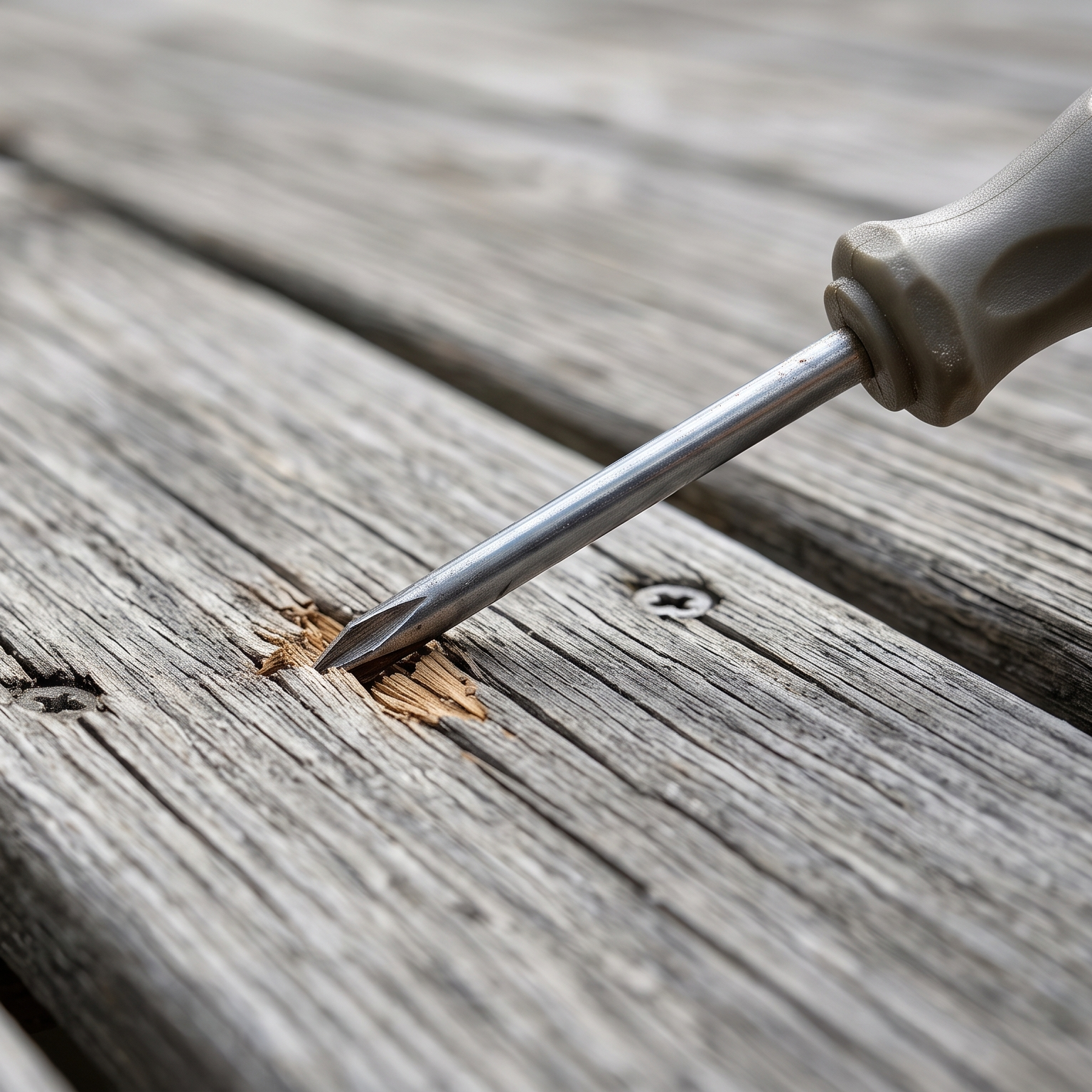
Quick Answer: A worn deck board is faded, gray, splintery, or rough on the surface — cosmetic issues that affect looks, not strength. An unsafe board is soft or spongy underfoot, rotted (a screwdriver sinks in easily), cracked through or splitting along its length, badly cupped or loose, or sitting over failing joists below. The test is structural, not visual: press and probe the wood. Surface wear can be sanded, cleaned, and sealed; soft, rotted, or cracked boards — and any movement in the deck's frame, railings, or stairs — need replacement or repair before they fail under weight.
A deck ages in the weather, and at some point, you look at the grayed, splintery boards and wonder whether it's just tired-looking or getting dangerous. It's an important difference. A worn deck is a cosmetic project you can do on your own schedule; an unsafe one is a hazard that can give way under someone's weight. The good news is you can tell them apart with a few simple checks, because the line between worn and unsafe is about the wood's structure, not its appearance.
Looks Are Cosmetic — Strength Is Safety
The mistake homeowners make is judging a deck by its appearance. Sun, rain, and the Mid-Atlantic's humid summers and freeze-thaw winters all weather the surface of deck boards, turning them gray, rough, and splintery. But surface weathering doesn't necessarily mean a board has lost strength. Conversely, a board can look acceptable on top while it's rotting from below or at the joist. So the real question isn't "does it look bad" — it's "is it still structurally sound." That shifts the inspection from your eyes to your hands and a screwdriver.
Signs a Board Is Just Worn (Cosmetic)
These are the issues that affect appearance and comfort but not safety, and they're fixable without replacement:
Surface graying and fading, where the wood has lost its color from UV exposure but is still solid underneath. Light surface splintering and roughness, which make the deck unpleasant for bare feet, but don't mean failure. Faded or peeling stain and sealer, which is a maintenance cue rather than a structural one. Minor surface checking — small, shallow cracks on the surface from weathering. This deck is telling you it's due for cleaning, sanding, and resealing, not replacement.
Signs a Board Is Actually Unsafe (Structural)
These are the ones that mean a board — or more — needs to come out, because they signal lost strength:
Soft or Spongy Wood
The single most important test. Walk the deck and press on the boards; anywhere that feels soft, spongy, or bouncy has rot inside, even if the surface looks okay. Soft wood has lost its structural integrity and can break under weight. This is the clearest sign a board is unsafe.
Rot a Screwdriver Sinks Into
Probe suspect areas — especially board ends, spots that stay damp, and anywhere near the joists — with a screwdriver or similar tool. If it pushes in easily or the wood crumbles, that's rot, and rot spreads. Wood that fails the probe test needs to be replaced, and you should check the framing beneath it, too.
Cracks Through the Board or Long Splits
Deep cracks that go through the board, or long splits running along its length, are different from shallow surface checking — they compromise the board's ability to bear weight and can give way. A board that has cracked through or is splitting along the grain is a replacement, not a sanding job.
Cupping, Warping, or Loose Boards
Boards that have badly cupped (curled at the edges), warped, or worked loose from their fasteners are both trip hazards and signs of moisture damage or failing connections. Loose boards that move underfoot need refastening or replacing.
Problems Below: Joists, Ledger, Railings, and Stairs
The boards are only part of the deck. Soft or rotted joists under the boards, a failing ledger board where the deck attaches to the house, wobbly railings, and loose or rotted stairs are serious safety issues — sometimes more dangerous than the surface boards. A wobbly railing or a soft stair tread can cause a fall, and a failing ledger or joists can drop a whole section.
| Sign | Worn or unsafe | What to do |
|---|---|---|
| Gray, faded, surface splinters | Worn (cosmetic) | Clean, sand, reseal |
| Peeling stain, shallow checking | Worn (cosmetic) | Refinish and maintain |
| Soft or spongy underfoot | Unsafe (structural) | Replace; check joists below |
| Screwdriver sinks in (rot) | Unsafe (structural) | Replace board and framing as needed |
| Cracked through / long splits | Unsafe (structural) | Replace the board |
| Wobbly railing, loose/soft stairs | Unsafe (structural) | Repair before use |
Pay special attention to railings, stairs, and the ledger board where the deck attaches to the house. These are the deck failures most likely to cause serious injury — a railing giving way or a ledger pulling loose can drop someone. If a railing wobbles, a stair feels soft, or the ledger shows rot or pulling, keep people off until it's inspected and repaired.
How to Check Your Deck
Do a hands-on walk-through, not just a look. Step across the whole surface, feeling for soft, spongy, or bouncy spots. Probe the suspect areas — board ends, anything that stays wet, the spots near joists — with a screwdriver to test for rot. Grab and shake the railings to check they're solid. Test the stairs for soft treads and loose connections. Look underneath if you can, at the joists and the ledger, for rot, rust on fasteners, or pulling away. Surface-only problems mean it's time to refinish; any soft, rotted, cracked, or loose structural findings mean repair or replacement before the deck takes weight again. When in doubt about the structure, have it inspected — a deck failure under a crowd is exactly the outcome worth preventing.
Frequently Asked Questions
Test it with your hands and feet, not just your eyes. Walk the surface feeling for soft or spongy spots, probe suspect wood with a screwdriver to check for rot, shake the railings, and test the stairs and the ledger where the deck meets the house. Solid wood and firm connections mean it's safe; soft, rotted, cracked, or loose findings — especially in railings, stairs, or the ledger — mean it needs repair before use. Cosmetic wear alone doesn't make a deck unsafe.
Not necessarily. Graying and surface splintering are cosmetic effects of weathering — the wood loses color and becomes rough on the surface but may still be structurally sound underneath. That kind of wear calls for cleaning, sanding, and resealing, not replacement. A deck only becomes dangerous when the wood loses strength: soft or spongy boards, rot, cracks through the board, or failing structure. So check whether the gray board is also soft before assuming it's unsafe.
It's a simple way to find rot: press a screwdriver (or similar pointed tool) into the wood in suspect spots — board ends, areas that stay damp, and near the joists. Healthy wood resists; rotted wood lets the tool sink in easily or crumbles. If a board fails this test, it's rotting and needs replacement. You should also check the framing beneath it, since rot can spread to adjoining wood and the joists below.
The railings, stairs, and the ledger board where the deck attaches to the house. A railing that gives way or a soft stair tread can cause a fall, and a failing ledger or rotted joists can drop an entire section of deck under weight. These structural elements are often more critical to safety than the surface boards, so they deserve special attention during any deck check, and any weakness in them should be addressed before the deck is used.
Yes, if the wear is only cosmetic. A deck that's gray, faded, splintery, or has peeling stain but is structurally sound — solid boards, firm railings and stairs, healthy joists and ledger — can be cleaned, sanded, and resealed rather than replaced. Refinishing restores the look and protects the wood. Replacement or repair is only necessary where the structure has failed: soft, rotted, cracked, or loose boards and framing. Sorting cosmetic from structural tells you which path you're on.
Test the Structure, Not the Surface
Whether a deck board is just worn or actually unsafe comes down to strength, not looks. Graying, splinters, and faded stain are cosmetic — clean, sand, and reseal. Soft or spongy wood, rot that a screwdriver sinks into, cracks through the board, loose boards, and any weakness in the railings, stairs, or ledger are structural, and they need repair or replacement before the deck bears weight. Check with your hands and a screwdriver, give the railings and stairs extra attention, and you'll know whether your deck needs a refresh or a repair before anyone gets hurt.
Not sure if your deck is just weathered or actually unsafe? — Get it inspected and repaired by a family-owned team before someone gets hurt. Precision Home Worx serves Wilmington, Bear, Newark. Call (302) 500-3676.


