

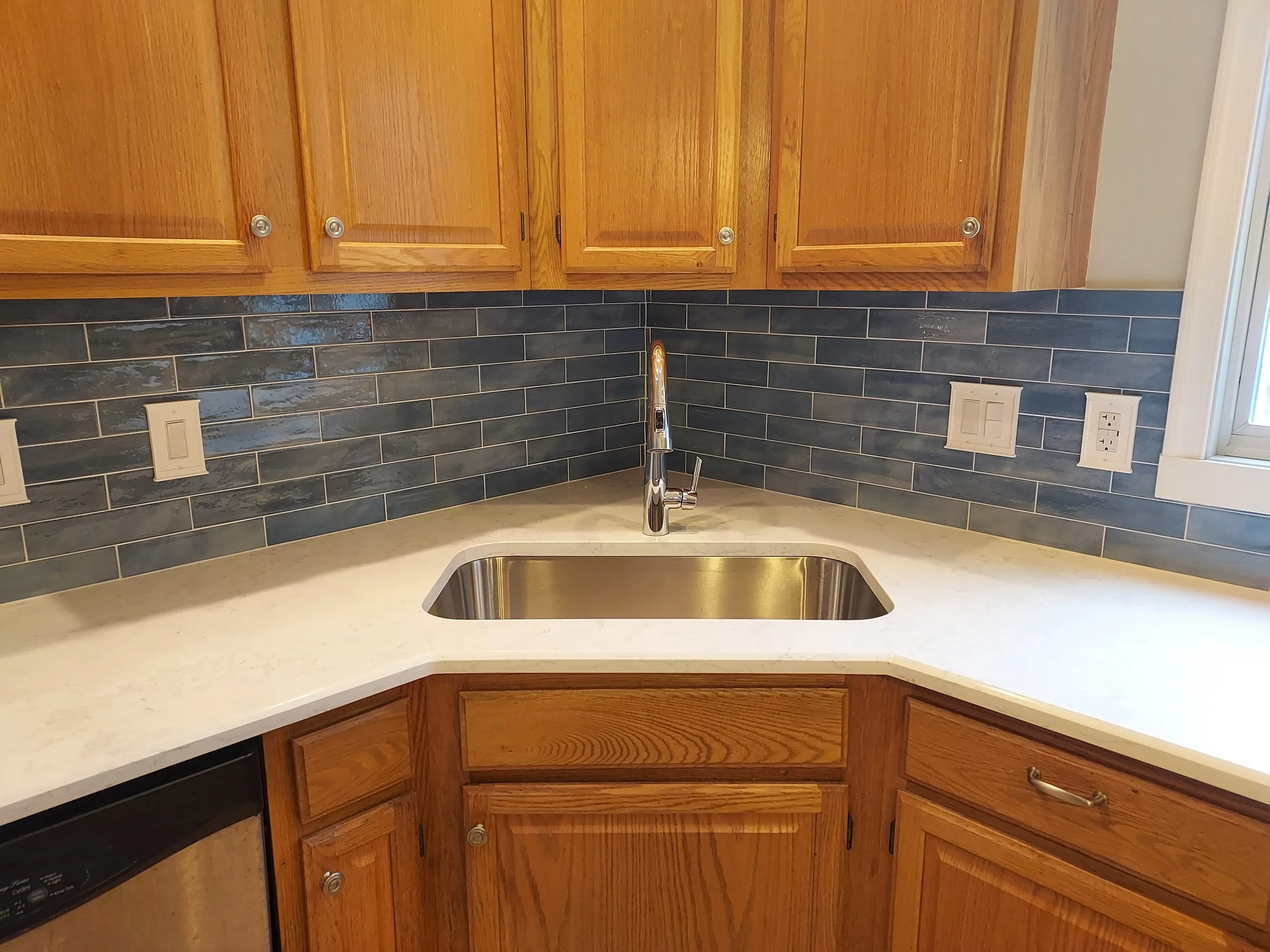
Built-Ins & Custom Carpentry in Wilmington, DE
Built-In Cabinetry · Crown Molding · Chair Rail · Wainscoting · Coffered Ceilings · Attic Staircase · Closets · Drywall · Featured Specialty: Built-In Cabinetry · Custom Wood Finish-Out · 1-Year Warranty

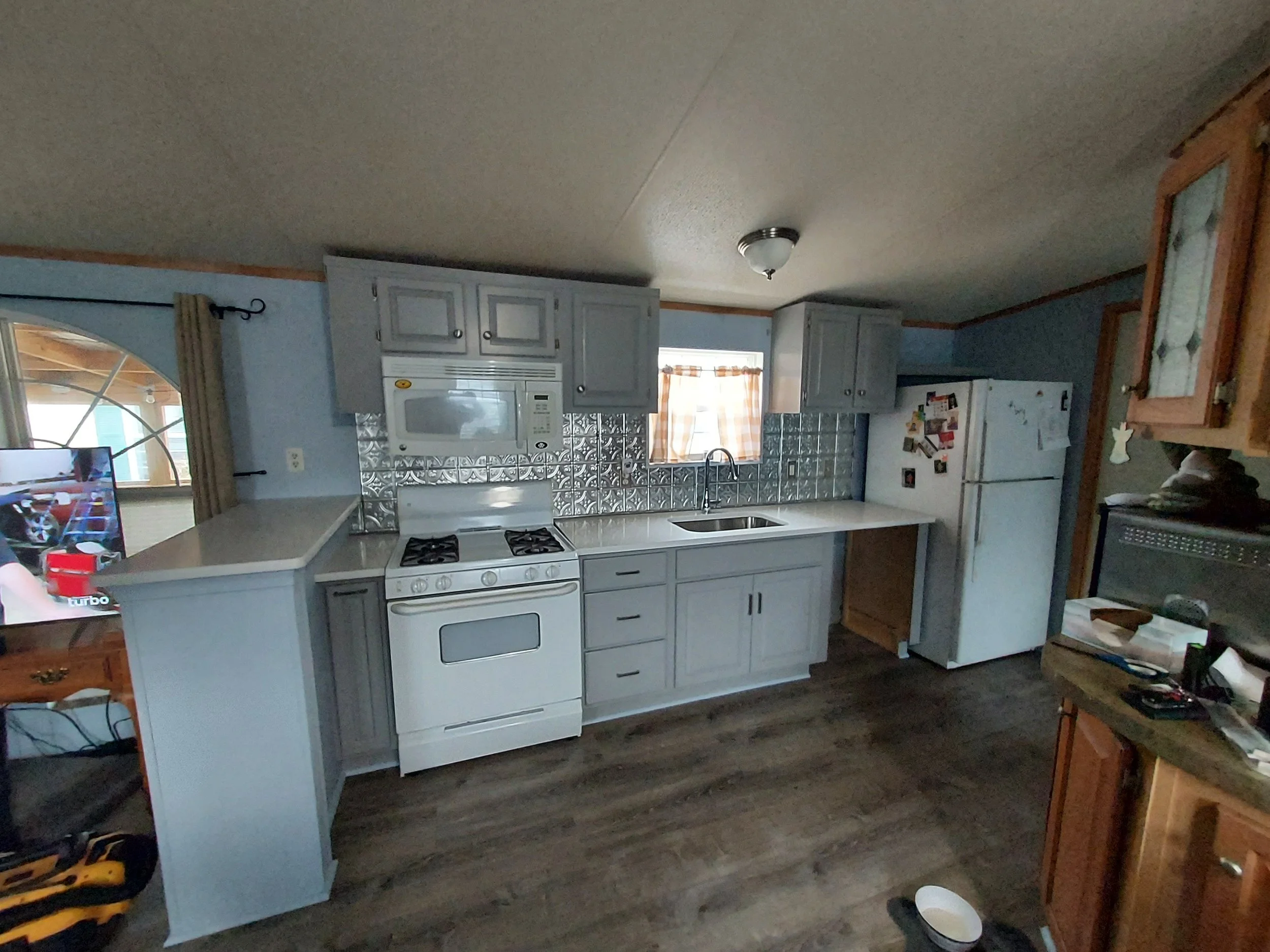

Carpentry is the work that separates a contractor from a craftsman. Built-in cabinetry, crown molding that meets at the corner without a visible gap, chair rail that lines up with the door casings, and wainscoting that finishes at the right height. Coffered ceilings that look like they were built with the house. The pieces that make a room look finished instead of just functional. Jimmy Grubb has been doing this work for 35 years, and built-in cabinetry is one of Precision Home Worx's featured specialties.
-
The work covers eight scopes — built-ins (libraries, banquettes, mudroom storage, primary-bath linen towers), crown molding, chair rail, wainscoting, attic staircase install, drywall repair and install, closet build-outs, coffered ceilings, and suspended / drop ceilings. Per-foot pricing on trim work ($25/ft crown, $15/ft chair rail, $25/sf wainscoting). Custom built-ins quoted per project.
Free in-home estimate within about a week. Call (302) 321-3577 or use the contact form.
When Wilmington Homeowners Call About Carpentry
Most carpentry calls fit one of these patterns:
A room that feels unfinished — needs trim
Builder-grade homes typically come with bare-minimum trim — small base molding, no crown, no chair rail, no wainscoting. The walls look fine, but the room feels incomplete. Crown molding + chair rail + wainscoting transforms a generic dining room or living room into something that looks like it was designed, not just built.
Wasted space that could be a built-in
Awkward corners in a living room, dead space at the end of a hallway, a deep alcove next to a fireplace, the wall behind a banquette in a kitchen. Built-in cabinetry turns these wasted spaces into bookshelves, mudroom storage, primary-bath linen towers, or home-office work surfaces. Built-ins are one of our featured specialties.
Coffered ceiling on a great room or office
Coffered ceilings are one of Precision Home Worx's featured specialties. A coffered ceiling adds architectural depth to a high-ceiling room (great room, dining room, primary suite, home office) and significantly increases the perceived value of the space. Most of the coffered ceilings we install are in Hockessin/Greenville/Chadds Ford homes, where the original ceiling height supports the look.
Closet that doesn't work for how you actually live
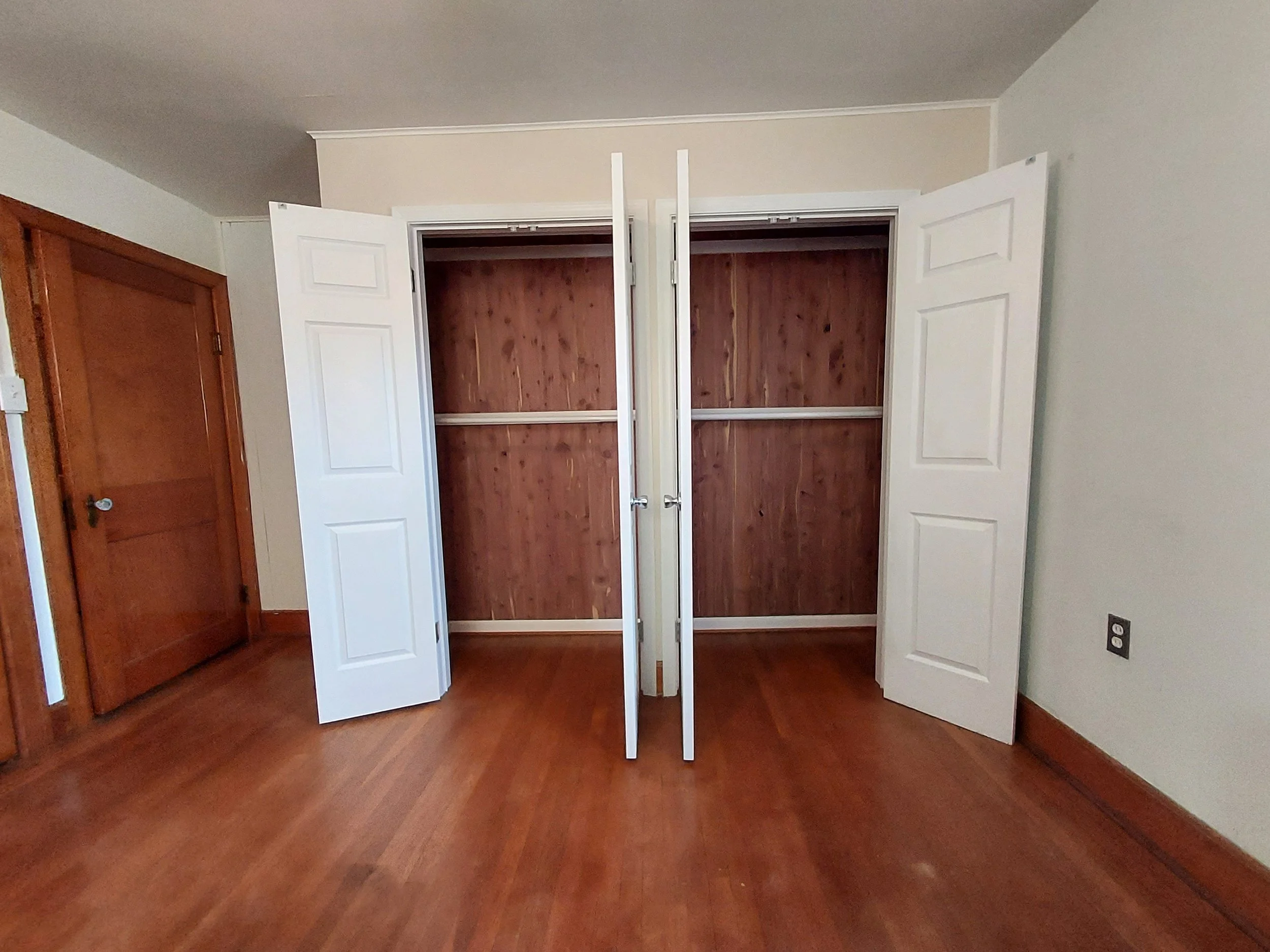
Original builder closets — single shelf, single hanging rod, wire shelves bowing under sweater weight. Closet build-outs with proper shelving, hanging at multiple heights, drawer towers, and shoe storage transform the space. Reach-in and walk-in closets both in scope.
Attic that needs a real staircase, not a pull-down
Attic pull-down ladders are awkward, often unstable, and dangerous for older homeowners. Attic staircase install gives you a proper set of stairs (sometimes folding, sometimes fixed) that anyone can use. Werner and Louisville are the brand standards.
Drywall damage that needs to look invisible after the repair
Doorknob holes, water damage patches, plaster cracks in older Wilmington row homes. Drywall repair is craft work — the patch needs to feather out so the texture matches and the paint touch-up disappears. Done badly, every patch is visible forever. Done right, you can't find it after the work is done.
Local Conditions That Affect Carpentry in Northern Delaware
Northern Delaware's housing eras each have their own carpentry realities — original trim, plaster substrates, picture rails, and the specific built-in opportunities that come with each construction style.
Pre-1978 Wilmington row homes — plaster walls, original trim, picture rails
Wilmington row homes — Brandywine, Trolley Square, the Highlands, Forty Acres, older Claymont sections — typically have plaster walls (not drywall), original deep base molding, original door and window casings, and sometimes picture rails near the ceiling. Trim work in these homes means matching the original profile. We mill profiles to match originals or source from suppliers that stock historic-match trim. Plaster walls also require a different fastener approach than drywall — we use proper plaster anchors and pre-drill to avoid cracking.
1980s-2000s Bear / Newark / Hockessin — basic trim, trim-upgrade opportunity
Homes built between 1985 and 2005 across Bear, Newark, Hockessin (newer sections), and Wilmington's newer neighborhoods typically came with the smallest possible base molding (2-1/4 inch colonial), no crown, and no chair rail. Adding crown molding ($25/ft) and chair rail ($15/ft) to a dining room and living room — a typical project around $1,500–$3,000 — transforms the rooms more than any paint color change.
Brandywine Hundred premium built-ins
Hockessin, Greenville, Centreville, Chadds Ford, and Garnet Valley homes built between 2000 and 2020 are the heaviest market for custom built-ins. Home offices with built-in desks, primary suite linen towers, library wall units, banquettes for breakfast nooks, and mudroom storage with bench seating. Premium hardwood (cherry, walnut, sometimes white oak) finished to match adjacent cabinetry. These projects typically run $5,000–$15,000 each.
55+ community downsizing built-ins
Concord-area 55+ communities — Columbia Place, Village of Brandywine, Rockland Place, Foulkstone Park — are heavy markets for downsizing built-ins. Homeowners moving from larger homes need storage built into smaller spaces. Closet build-outs, basement storage systems, mudroom benches with cubbies, and home office built-ins all see strong demand here. Universal design considerations (lower shelves, pull-out drawers, accessible hanging) factor into the layout.
Historic district trim matching requirements
Wilmington Brandywine, Forty Acres, and parts of the Highlands fall under historic-district overlays that may require trim profiles to match the original on visible exterior trim. Interior trim is usually unrestricted but homeowners often want to maintain consistency with the period of the home. We discuss this at the estimate.
Our Reviews
What's Covered
Built-In Cabinetry (Featured Specialty)
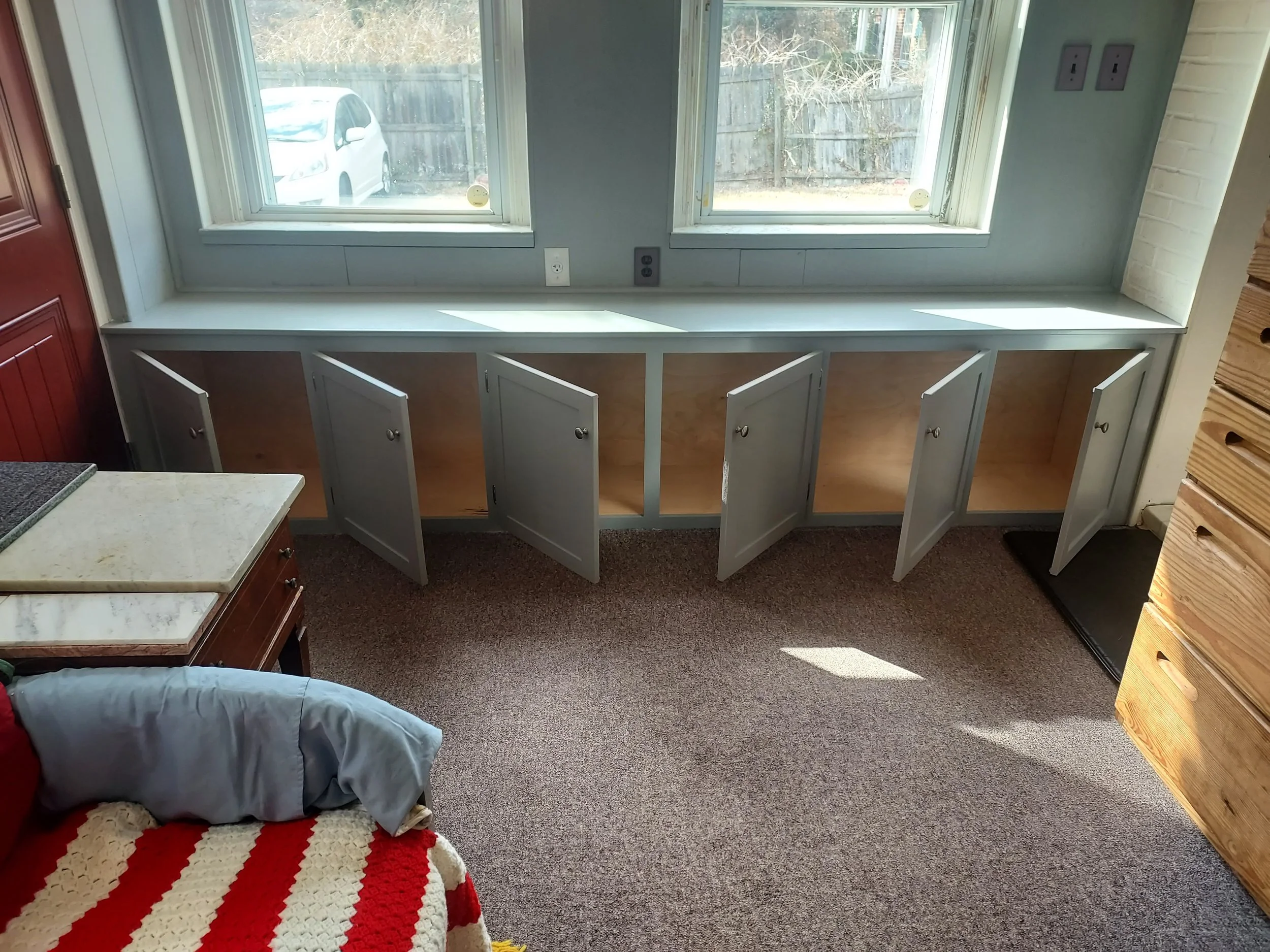
Libraries, home office desks and built-in storage, mudroom benches with cubbies and hooks, banquette seating with under-storage, primary suite linen towers, basement built-in entertainment centers, and custom-finished window seats. Standard finishes include painted (poplar, MDF, or maple), stain-grade hardwood (cherry, oak, walnut), or paint-grade with a matched stain. Hardware sourced to match adjacent cabinetry, where applicable.
Chair Rail
Chair rail install: $15 per linear foot. Standard height: 32–36 inches off the floor. Coordinated with existing door casing heights and window sill heights to look intentional, not arbitrary. Coped joints at inside corners.
Coffered Ceilings (Featured Specialty)
Coffered ceiling installation in great rooms, dining rooms, primary suites, home offices, and the occasional library. Standard grid patterns (2-by-2, 3-by-3, or custom asymmetric) built from MDF or poplar, painted on-site. Crown molding at the coffer edges. Premium versions in stain-grade hardwood. Typical project: $4,000–$12,000, depending on room size, grid complexity, and finish tier.
High-Ceiling Maintenance
High-ceiling fixture work (chandeliers, recessed lighting) for vaulted living rooms and two-story foyers. Coffered ceiling installations in vaulted ceilings are handled here.
Drywall Install & Repair
Patch repair (doorknob holes, water-damaged sections, small impacts): $250–$500 per area. Full sheet replacement (water damage section, after-plumbing repair): $400–$800 per area. Plaster repair on pre-1978 Wilmington homes done with proper bonding plaster, not generic drywall mud — the texture difference matters for invisibility after paint.
Crown Molding
Crown molding install: $25 per linear foot. Standard profile (3-1/4 to 4-1/2 inch) for most rooms; deeper profiles (5-1/4 to 7 inch) for high-ceiling rooms in Hockessin/Greenville premium builds. Coped corner joints — not miter-and-caulk. Painted on-site or pre-finished before install per the homeowner's preference.
Wainscoting
Wainscoting install: $25 per square foot. Beadboard, raised-panel, recessed-panel, or board-and-batten styles. Standard height is typically 36 inches; chair-rail height (32–34) and three-quarter wall (54–60) are also installed. Cap molding is integrated with the chair rail above.
Drop and Suspended Ceilings
Drop ceiling install for basement finish-outs — utility 2-by-4 grid systems with acoustic tiles, or premium suspended grid with decorative tin tiles. Most common in basement family rooms, home gyms, and finished workshop spaces. We coordinate with /electrical scope for recessed lighting cans and HVAC vent placement.
Attic Staircase Install
Werner or Louisville attic staircase systems — folding stair (most common, fits in standard 22-by-54 ceiling opening) or fixed stair (requires larger opening, more carpentry). Replacement of an existing pull-down ladder typically runs $800–$1,500; new install with framing for a new opening: $2,000–$3,500.
Closet Build-Outs
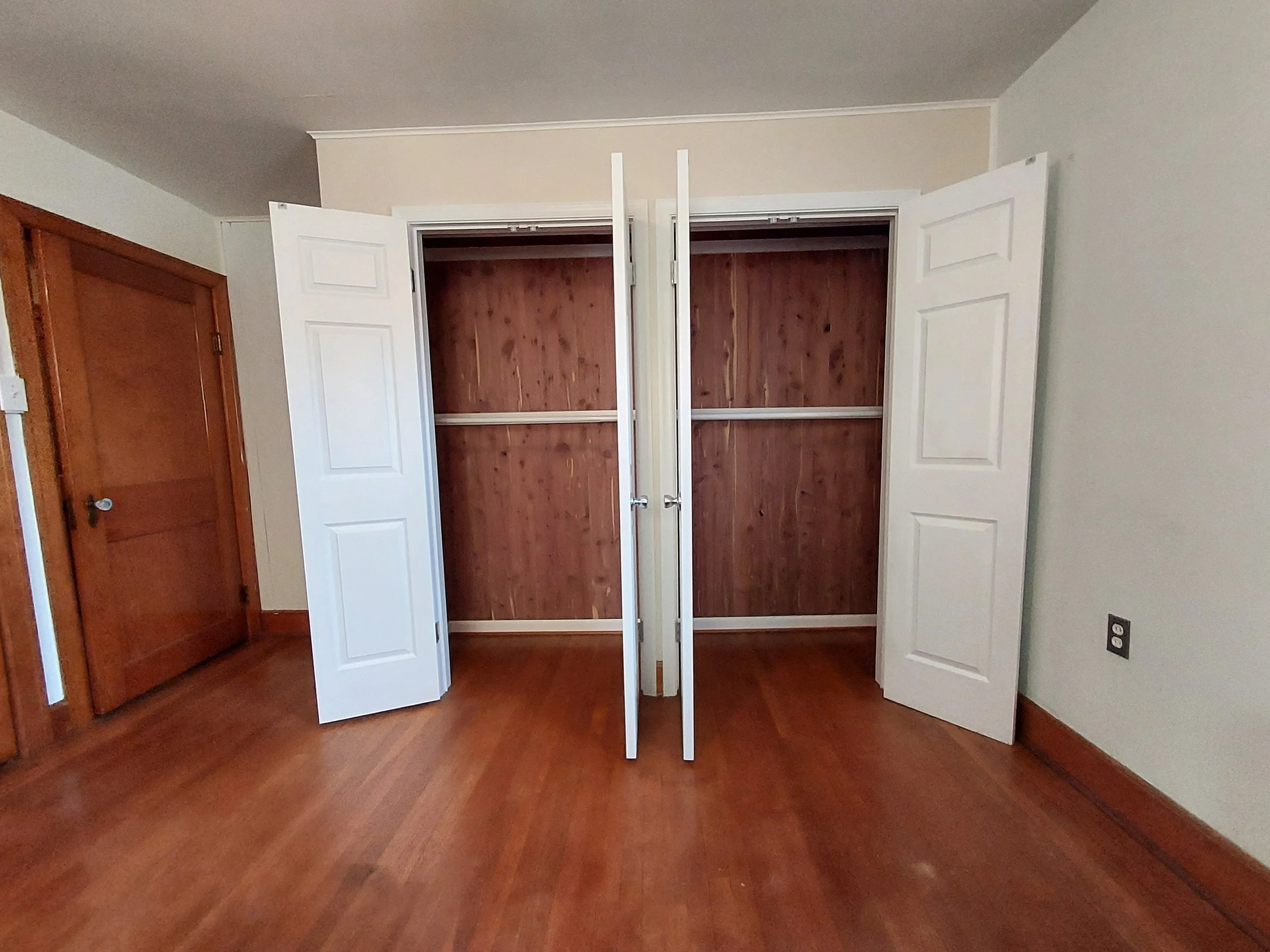
Reach-in closet build-out: $1,500–$3,000 typical, with shelves, hanging rods at multiple heights, and a drawer tower. Walk-in closet system: $3,000–$8,000 with island, multi-level hanging, shoe storage, and built-in mirrors.
Pricing
Per-linear-foot trim pricing and project-based pricing for built-ins and ceilings. Every estimate is written and good for 30 days.
| Service | Price | Notes |
|---|---|---|
| Chair rail install | $15 per linear foot | Coped corners |
| Crown molding install | $25 per linear foot | Coped corners |
| Wainscoting install | $25 per square foot | Multiple panel styles |
| Drywall patch repair | $250–$500 | Per area |
| Drywall — full section replacement | $400–$800 | Per section |
| Attic staircase — replace existing | $800–$1,500 | Werner / Louisville |
| Closet build-out — reach-in | $1,500–$3,000 | Shelves + rods + drawers |
| Attic staircase — new opening + install | $2,000–$3,500 | Includes framing |
| Closet build-out — walk-in system | $3,000–$8,000 | Full system |
| Coffered ceiling install | $4,000–$12,000 | Room size + finish tier |
| Built-in cabinetry — small (mudroom bench, single alcove) | $3,000–$6,000 | Featured specialty |
| Built-in cabinetry — full library or office wall | $8,000–$18,000 | Custom hardwood |
Discount stack: 10% off the first $1,000 of labor for new customers, military, and seniors (65+). Multi-service bundles (built-ins + crown molding + wainscoting in the same room) qualify for additional bundled pricing.
How a Carpentry Project Actually Happens
1. Free in-home estimate
Jimmy comes to your home with sample trim profiles, hardwood samples (for stain-grade projects), and a tape measure. Booties on. The walk-through usually takes 30–60 minutes for a single-room trim project, longer for built-ins where the layout needs design. We talk through profile choices, finish (paint vs. stain), and timeline.
2. Design layout (for built-ins and coffered ceilings)
Built-ins and coffered ceilings get a sketched layout before the written quote — basic floor-plan or wall-elevation drawings showing dimensions, finish, and hardware. The drawing is for both estimating accuracy and homeowner sign-off before we order materials. Pure trim projects (crown, chair rail, wainscoting) skip this step and go straight to the estimate.
3. Written estimate within about a week
Itemized: materials (trim profile, hardwood species if applicable, hardware), labor, paint or stain finish, disposal of any removed trim or drywall, and the timeline. Built-ins include the design sketch as part of the quote.
4. Order lead-time
Stock trim profiles: in-stock at regional lumber suppliers (84 Lumber, Ace, Home Depot Pro). Custom hardwood for built-ins: 1–2 weeks. Premium millwork (cherry, walnut): 2–4 weeks.
5. Installation — clean workspace
Drop cloths and runners from your entry to the work area. Trim work creates sawdust; built-ins create more. We use a HEPA-filtered shop vac at the work area and a dust barrier at room entrances when needed. Cuts made outside or in a controlled cut station inside, never freehand in the room.
6. Coped joints (crown, chair rail, wainscoting)
Inside corners on trim work get coped. Outside corners get tight miter joints. We pre-drill at fasteners on plaster walls and pre-finish edges where the trim meets a contrasting wall color.
7. Paint or stain finish
Paint-grade trim primed before install and finished after. Stain-grade hardwood pre-finished where possible, then touched up at joints after install. Final coat applied with the room dust-controlled and homeowner sign-off on color before we start.
8. Walk-through and 1-year warranty
Joint-by-joint walk-through with the homeowner. Any joints that don't look right come apart and get redone before we leave — not after a callback. One-year workmanship warranty dated from completion.

Why Precision Home Worx for Your Carpentry
Coped joints, not miter-and-caulk
Every inside corner on crown molding, chair rail, and wainscoting gets a coped joint — the corner cut to match the profile of the adjacent piece, not a 45-degree miter with caulk filling the gap. Coped joints last; mitered-and-caulked joints split open the first winter.
Plaster-wall trim work — not just drywall
Pre-1978 Wilmington row-home walls are plaster, not drywall. Most general carpenters treat them the same; they're not. Plaster cracks if you overdrive a finish nail; it crumbles if you don't pre-drill at fasteners. We've been working on Wilmington plaster walls for 35 years — pre-drill, proper anchors, no surprise cracks.
Per-foot trim pricing — published
$25 per linear foot for crown molding. $15 per linear foot for chair rail. $25 per square foot for wainscoting. No "trip fees" tacked on at the end. Easy to estimate your own project ballpark: measure the room perimeter, multiply by the per-foot rate, and you have a starting number.
Drywall and plaster patching that disappears
Patches are craftwork. A patch that doesn't feather out at the edges shows up forever as a visible halo when light hits the wall at an angle. We feather every patch with progressive setting compound coats and texture-match before paint. Plaster patches use proper plaster bonding, not drywall mud, on pre-1978 homes.
Built-in cabinetry is a featured specialty
Built-in cabinetry is one of Precision Home Worx's featured specialties, and it's the project Jimmy gets asked to show off most. Real built-ins from scratch — not pre-fab cabinet boxes screwed to a wall, not Ikea modular systems. Libraries, mudroom storage, banquettes, and primary-bath linen towers. We have been doing this every year for 35 years. Customer feedback on the work has been consistent — D.H.'s quote on the bath + kitchen project mentions "Great at carpentry, electrical and plumbing."
Coffered ceilings — featured specialty
Coffered ceilings are a featured specialty. We build them from MDF or poplar for paint-grade or premium hardwoods for stain-grade. The grid pattern gets designed with the room layout, lighting positions, and ceiling fan locations factored in. Most coffered work is in Hockessin/Greenville/Chadds Ford premium homes.
Why Cope Joints Beat Miter Joints on Crown Molding (And How to Spot a Carpenter Who Cuts Corners)
Crown molding meets at inside corners. There are two ways to make that joint: miter it (cut both pieces at 45 degrees and glue them together), or cope it (cut one piece square against the wall, then cut the second piece to match the profile of the first). The miter joint takes 2 minutes and looks fine the day the install finishes. The coped joint takes 15 minutes and stays looking fine for 20 years. Most trim installers cut miters because they're faster. Real carpenters cope inside corners because they last.
Why miter joints fail. The walls of every house move with temperature and humidity. Inside corners move the most because they have the most exposed surface area on both sides. A mitered joint at an inside corner is two cut faces meeting at 90 degrees — when the walls move even a fraction of a degree, those two cut faces separate. A visible gap opens between them. The caulk fills the gap initially, but caulk has its own movement limits — by the second or third winter, the joint splits open visibly and the caulk turns yellow or cracks.
Why coped joints don't fail. A coped joint has one piece sitting flush against the wall (no cut face exposed) and the second piece cut to match the profile of the first along its edge. When the walls move, the coped piece moves with them — but because the joint isn't relying on two cut faces meeting flush, the visible profile stays clean even if there's micro-movement at the wall. The joint can move 1/8 inch and still look perfect.
How to tell which one a contractor will give you. Ask: "Do you cope your inside corners on crown molding?" A real carpenter says "yes, every one." A trim installer who only knows miters either says "sometimes" or pivots to "miters are fine if they're caulked right." The miter-and-caulk approach is faster and cheaper for the installer — they can move twice as fast through a job. The cost is that your crown molding starts cracking at the corners by the second winter.
The visible test on existing work. Look at the inside corners of crown molding in your house. Get close. If you can see a hairline crack where the two pieces meet, that's a failed miter joint. If the corner looks like the profile flows into the next piece without a visible joint with no visible seam, that's a coped joint. Coped joints look better even when they're brand new — and they keep looking better for years longer.
FAQs
$25 per linear foot. Measure the perimeter of your room (in feet), multiply by $25, and you have a starting estimate. A standard 12-by-15 dining room runs about 54 linear feet, so the crown alone is around $1,350 installed plus the material itself.
Real built-ins. Built-in cabinetry is one of Precision Home Worx's featured specialties. We build cabinet boxes, face frames, doors, and drawers from scratch (or modify pre-fab boxes for budget-tier projects only when the homeowner specifically requests it). The finished result looks like it was built with the house.
Most coffered ceilings installation in 3–5 working days for a single room — design layout day 1, framing days 2–3, crown molding around coffers day 4, painting and finishing day 5. Larger rooms (great rooms over 20-by-20) can run 7–10 days.
Yes — we either source matching profiles from regional millwork suppliers, mill them ourselves for unusual profiles, or recommend the closest standard profile if exact match isn't economical. In historic district overlays (Wilmington Brandywine, Forty Acres) the exact match matters more; in newer homes a close standard profile usually works.
Yes — plaster patching uses proper bonding plaster (not generic drywall mud) so the texture matches and the patch disappears after paint. Most general carpenters do all wall patching with drywall mud regardless of substrate; the texture difference shows up forever on plaster walls.
Yes — pre-drill at every fastener, use proper plaster anchors at structural connections, and shoot finish nails into wood blocking where possible rather than directly into plaster. About 20% slower than drywall install but the plaster stays crack-free.
Not currently. We accept major credit cards, Zelle, checks, and cash. For larger built-in projects over $5,000, standard terms are 50% on order (when materials get ordered), balance at completion.
Our work is backed by a one-year comprehensive warranty dated at end of project completion. The warranty covers workmanship — the joints, the fasteners, the finish work. If a coped corner opens up, a built-in shelf sags, or a drawer doesn't track right, we come fix it under warranty. Wood is a natural material that responds to humidity — we factor that into the install but minor seasonal movement is normal.
Where We Do Carpentry Work
Precision Home Worx serves Northern Delaware and southern Chester County, PA — within roughly a 15-mile radius of Wilmington:
Wilmington (19801–19809)
Pre-1978 row homes, plaster trim work, historic-match profiles.
Claymont (19703)
Post-war trim upgrades, built-in additions.
Greenville / Centreville / Montchanin
Premium libraries, coffered ceilings, custom hardwood built-ins.
Winterthur / Rockland / Yorklyn
Brandywine Hundred premium tier.
Hockessin
Coffered ceiling specialty, home office built-ins.
Newark
University area + Pencader Hundred, mid-tier trim and closets.
Bear • New Castle • Delaware City
1990s–2000s homes, trim-upgrade markets.
Garnet Valley • Glen Mills • Chadds Ford (PA)
Brandywine Valley premium built-ins.
Need Custom Carpentry or Built-Ins? Call Precision Home Worx
Call Jimmy directly at (302) 321-3577, or fill out the contact form. We respond within 24–48 hours and schedule your free in-home estimate within about a week.
Monday – Sunday, 7 AM – 8 PM
221 New York Ave, Claymont, DE 19703

