

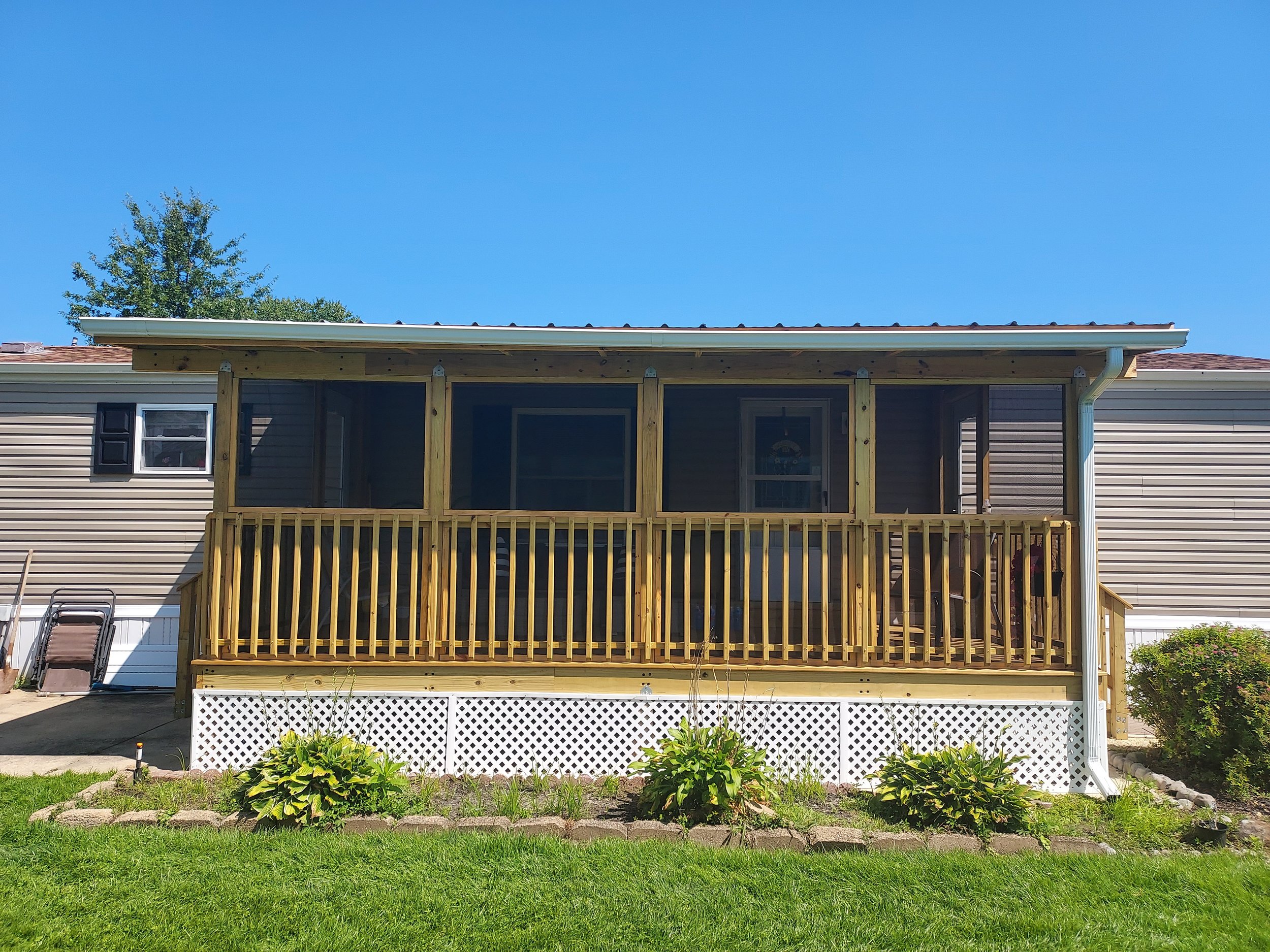
Newark, DE Home Repair, Rental-Property Maintenance & University-Area Work
Across Newark and the surrounding Pencader Hundred, Christiana, and Old Newark neighborhoods — Precision Home Worx works the largest secondary market in our service area, a mix of mid-century ranches, 1960s-80s split-levels, newer Pencader construction, and the University of Delaware-adjacent rental corridor.


Newark is the second-largest city in our service area after Wilmington (more than 32,000 residents) and the most diverse market by housing era. Within a five-mile radius, you find original mid-century post-war ranches, 1960s-80s split-levels along the older residential streets, newer 1990s-2010s subdivision construction in Pencader Hundred, and the dense rental-housing corridor surrounding the University of Delaware campus. Each housing era has its own predictable pattern of issues, and the work scope on a UDel-adjacent rental property is meaningfully different from that on a 1965 Christiana ranch or a 2005 Pencader colonial.
Newark is also unusual in our service area because it has two distinct jurisdictions: the City of Newark proper (an incorporated city with its own building department, public works, and water utility drawing from White Clay Creek) and the broader unincorporated New Castle County land surrounding the city. Precision Home Worx works, primarily on the unincorporated New Castle County side — Pencader Hundred, Christiana, Old Newark near the campus, and the streets stretching toward Glasgow. That's where most of the residential work happens and where the county's land-use process governs permits.
Why Newark Homeowners Hire Us
We do UDel rental-property turnover work and landlord coordination
Newark's University of Delaware corridor — Old Newark near campus and the surrounding streets — has a substantial inventory of single-family rentals, divided houses, and accessory units serving the student and faculty markets. Rental-property work is different from owner-occupied scope. The lease cycle runs on a roughly May-to-August turnover window with tight repair timelines. The wear patterns are accelerated — doors with damaged jambs from heavy use, scarred drywall from years of tenants, windows that have been opened and closed thousands of times more than typical residential, fixtures that show real-world wear rather than light residential use. We coordinate with landlords and property managers on multi-unit turnover work, repair lists across consecutive lease cycles, and the specific repair-vs-replace decisions that affect the property's long-term value.
We work the most diverse housing-era mix in our service area
Newark spans more housing eras under a single city's residential market than anywhere else we serve. A mid-century post-war ranch in Old Newark has a different scope of likely issues than a 1972 split-level in Christiana, which has a different scope than a 1998 Pencader Hundred colonial, which has a different scope than a 2010 newer-construction home off Route 273. We walk into Newark estimates ready to recognize all four housing-era patterns rather than treating Newark as a single uniform market. That diagnostic depth saves real money on mid-project surprises.
We know the Newark-city vs unincorporated New Castle County permit split
Newark addresses fall into two permit jurisdictions: the City of Newark (incorporated) for addresses within the city limits, and unincorporated New Castle County for the surrounding residential pockets. The two have different application forms, different inspector workflows, and different review timelines. The City of Newark also has its own water utility (drawing from White Clay Creek) and its own public works department for water-and-sewer-tap coordination. Our work is primarily on the unincorporated New Castle County side. We confirm jurisdiction at the estimate visit and pull the right permit type.
Newark Neighborhoods We Work In
Newark's residential footprint spans multiple identifiable areas, each with its own housing-era and project-scope character:
Old Newark near the UDel campus
Dense student-and-faculty rental corridor near University of Delaware Main Street and the surrounding residential streets. Mix of converted single-family rentals, divided houses, and small accessory units.
Mid-century single-family homes along the older residential streets — predictable mid-century construction with the typical issues that come with 60+ years of housing use (and in many cases rental wear on top).
Christiana
Established residential area east of Newark proper — mix of 1960s-80s split-levels, ranches on larger lots, and pockets of newer infill construction.
Christiana Mall and Route 273 commercial corridor edge — homes in the surrounding residential streets have specific traffic-and noise considerations affecting siting and window decisions.
Pencader Hundred
Larger residential area covering newer subdivisions on the eastern and southern sides of Newark — 1990s-2010s build wave, predictable construction techniques, established HOAs.
Some older pre-1990 housing scattered throughout where the subdivision build wave incorporated existing residential lots.
Glasgow and the Route 40 corridor
Western Newark residential pockets blending into the broader Glasgow corridor — mix of post-war singles and 1980s-90s subdivision homes.
The geographic boundary between Newark proper and Bear-area housing further south.
If your Newark address isn't covered above, call (302) 321-3577. After years of working in the area, we recognize most of these streets and can talk through what to expect at the estimate.

The Newark Housing Stock — What We See in Your Home
Newark housing breaks into four distinct eras with very different scope conversations:
Mid-century post-war ranches (1940s–early 1960s, much of Old Newark)
What we see most: original wood double-hung windows or first-generation aluminum replacements, original copper supply, cast-iron-to-PVC drain transitions, plaster-to-drywall transitions, original hardwood floors typically under carpet, original kitchens often still on original layout, original baths typically refreshed once decades ago.
What's tricky: lead-safe protocols apply to pre-1978 paint disturbance. Some Old Newark homes have additional wear from rental use on top of housing-era issues.
1960s–1980s split-levels and colonials (Christiana, older Newark)
What we see most: aluminum or first-generation vinyl windows past their service life, original kitchens and bathrooms ready for refresh, original copper supply (still sound), possible polybutylene supply in the 1978-1990 build window, original aluminum siding in some pockets reaching end of life.
What's predictable: predictable behind-the-wall conditions, reliable timelines, accurate estimates.
1990s–2010s subdivision construction (Pencader Hundred, newer Newark)
What we see most: original vinyl replacement-grade windows reaching the 20-25 year seal-failure mark, original pressure-treated decks at substructure rot point, original 1990s-2000s kitchens ready for refresh, original master baths at the 20-25 year shower-pan-and-tile failure point.
What's predictable: modern construction methods, predictable conditions, and no lead-safe protocols (mostly post-1978).
UDel-area rental property scope
Independent of housing era, rental properties in the UDel corridor carry their own scope: accelerated wear patterns, lease-cycle turnover repair timelines, multi-unit coordination, landlord-priority repairs vs cosmetic refresh decisions. Many rental properties are mid-century or 1960s-80s housing with a layer of rental-specific wear on top of the underlying era issues.
What Newark Projects Typically Cost
Newark project costs vary by housing era and by owner-occupied vs rental-property scope. Typical ranges in our actual Newark job mix:
Rental-property turnover repair list (per unit):
$1,500–$5,000 for typical lease-cycle repairs — interior paint touch-ups, door jamb repairs, drywall patching, fixture replacements, window operation servicing. Per framing as 'rental-property turnover work.'
Whole-home aluminum/first-generation vinyl window replacement (8–12 windows, mid-tier brand):
$14,000–$22,000 for typical 1960s-80s housing. Replacing windows past their service life is one of Newark's specifically called-out scopes.
Full bathroom remodel (mid-century housing):
$14,000–$22,000 for a typical Old Newark or Christiana home. Lead-safe protocols on pre-1978 paint disturbance add to the timeline and cost.
Full kitchen remodel:
$35,000–$60,000, depending on cabinet tier and whether the project opens between kitchen and dining (often load-bearing in 1960s-80s split-levels).
Composite deck rebuild:
$18,000–$32,000 for typical Pencader-era homes with original 1990s-2000s pressure-treated decks at substructure rot point.
Insurance-claim restoration (water damage, ceiling collapse, related):
Project-specific scope. We work with insurance carriers (Travelers and others) on documentation, claim coordination, and restoration to pre-loss condition. Timeline depends on claim approval, not on our scheduling.
These are ranges, not quotes. Every Newark project gets a real written estimate after an in-home visit. Lead-safe protocols apply on pre-1978 work and add to both the timeline and the cost on those projects.

Most-Requested Services in Newark
Rental-property turnover and landlord-coordinated repairs
UDel-corridor lease cycles drive a meaningful share of our Newark scheduling. Repair lists between tenants, multi-unit turnover work, landlord-priority diagnostic vs cosmetic-refresh decisions. We coordinate timelines with property managers and landlords on the May-to-August turnover window.
Aluminum and first-generation vinyl window replacement
Customers call out 'aluminum windows past their service life' as a Newark signature. Original 1960s-80s aluminum window units have failed seal, sash function loss, and frame corrosion. We replace with mid-tier modern vinyl or premium-tier specifications, depending on the home.
Kitchen and bathroom remodels across all housing eras
Newark's housing-era diversity means kitchen and bath scope ranges from mid-century-respectful refreshes to 1960s-80s split-level open-concept conversions to newer Pencader-era refreshes at the 25-30 year mark. We calibrate the scope to the housing era.
Insurance-claim work and restoration
We coordinate with insurance carriers on water damage, ceiling collapse, and related claim restoration scope. The work involves documentation, scope agreement with the carrier, and restoration to pre-loss condition. Timeline depends on claim approval workflow, not on our scheduling.
Composite deck rebuilds in Pencader-era homes
Pencader Hundred and the newer Newark subdivisions have 1990s-2000s pressure-treated decks at the substructure rot point. Substructure rebuild + composite surface materials with multi-decade warranties.
Front door, storm door, and entry replacement
Door scope varies by housing era. Mid-century ranches and 1960s-80s split-levels often have original wood entry doors with rot at lower jambs and weather-stripping failures. Newer Pencader-era homes have modern doors reaching the 15-25 year wear point.
Polybutylene plumbing replacement (1978-1990 pocket)
Some 1978-1990 Newark-area homes have polybutylene supply lines — failure-prone material worth proactive replacement.
Electrical, plumbing, and finish work
Maintenance-scope electrical (outlets, switches, fixtures, smart switches) on owner-occupied and rental work. We coordinate with a licensed DE electrician for service-panel work.
Handyman and exterior maintenance
Soffit, fascia, exterior trim repair, exterior shutter installation (HOA-compliant where applicable in Pencader subdivisions), exterior paint with lead-safe protocols on pre-1978 housing, power washing, and wallpaper removal.
Lead-Safe Practices on Pre-1978 Newark Homes
Old Newark, Christiana, and the older 1960s-80s pockets of Newark all have substantial pre-1978 housing shares. Lead-safe protocols apply to interior demo, sanding, or paint disturbance on these homes. We follow lead-safe work practices on every pre-1978 home: containment, wet methods, HEPA cleanup, and proper waste handling. Newer Pencader Hundred construction is mostly post-1978 and doesn't trigger these protocols.
How We Know Newark
The University of Delaware Main Street corridor — UDel's central campus and the surrounding residential streets shape much of the rental-housing market. The lease-cycle timing here drives a real share of our Newark scheduling.
Christiana Mall and the Route 273 commercial corridor — homes in the surrounding residential streets have specific traffic-pattern considerations affecting siting and window-orientation decisions.
The Glasgow-Newark-Bear corridor along Route 40 and Route 1 — shared for shopping, schools, and material delivery — connects Newark to our other southern New Castle County service areas.
White Clay Creek State Park — the largest state park within easy reach of Newark; homes in the surrounding park-adjacent pockets have specific drainage and mature-tree-canopy considerations.
Deer Park Tavern on Main Street — a recognizable Newark institution; the residential streets nearby carry the densest concentration of UDel-corridor housing.
Caesar Rodney School District and Christina School District boundaries — Newark sits across both, which affects residential-market behavior in different sub-areas.
Iron Hill County Park — additional preserved park land south of Newark; the homes between Iron Hill and the city have a recognizable mid-century-to-newer-construction architectural mix.
Newark Shopping Center and Trabant University Center — additional Newark anchors that define daily-life patterns for residents.
The reason this matters: Newark is the most diverse single-city market in our service area — by housing era, by owner-occupied vs rental mix, and by jurisdiction. Working with a contractor who recognizes the differences between an Old Newark rental, a Christiana 1970s split, and a Pencader 2005 colonial saves real money on bad-call estimates.
fAQs
Our work is primarily on the unincorporated New Castle County side of Newark — Pencader Hundred, Christiana, Old Newark near the campus, and the streets stretching toward Glasgow. City of Newark proper falls in a different permit jurisdiction; we confirm at the estimate visit.
Yes. UDel-corridor rental-property turnover work is a regular Newark service category. We coordinate with landlords and property managers on lease-cycle repair lists, multi-unit turnover, and landlord-priority repair vs cosmetic-refresh decisions.
Newark addresses fall into two permit jurisdictions — the City of Newark for addresses within incorporated city limits, and unincorporated New Castle County for surrounding residential pockets. We confirm jurisdiction at the estimate visit and pull the right permits.
Yes. We follow lead-safe work practices on every pre-1978 home. Most Old Newark and 1960s-80s housing triggers this protocol; newer Pencader-era construction generally does not.
Yes. We coordinate with insurance carriers (Travelers and others) on water damage, ceiling collapse, and related claim restoration scope. Timeline depends on claim approval workflow rather than our scheduling.
Estimate within a few business days of your call. Most Newark residential projects start within two to six weeks of contract signing, depending on materials and selections. Rental-property turnover work has tight timelines aligned with lease cycles.
For the major Pencader Hundred HOAs and several Newark-area subdivisions, generally yes. For smaller HOAs, we read the guidelines on the visit. Exterior changes get checked against your HOA documents before we order materials.
Get a Free Newark Estimate
Most estimate visits in Newark are scheduled within a week of the first call. Booties on at the door. Honest walk-through of the project. Written quote within a few days.
Monday – Sunday, 7 AM – 8 PM
221 New York Ave, Claymont, DE 19703

