
Outlet, Door, and Stair Fixes That Make a Home Safer for Kids
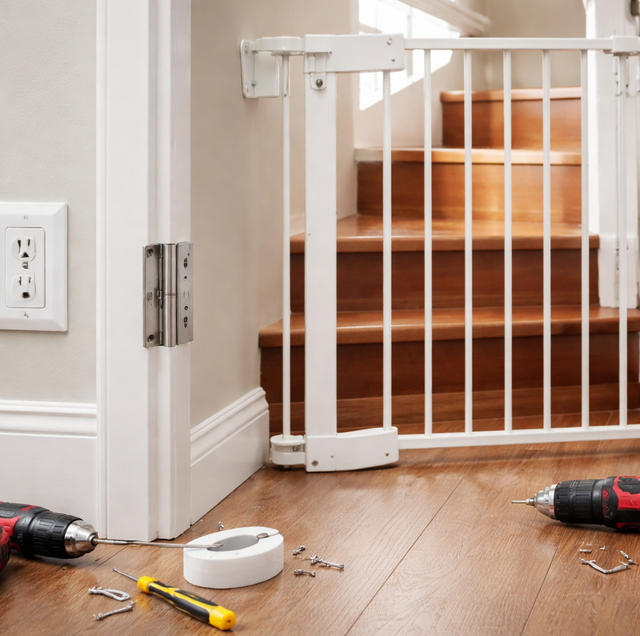
Quick Answer: The main risks for young kids: an outlet at hand height, a door that pinches or won't latch, and a stairway with no barrier. Tamper-resistant outlets, self-closing hinges, and an anchored gate fix all three as standard handyman work.
Three spots inside a home account for a lot of the near-misses and close calls parents describe with a young child. An outlet at exactly the height a crawling toddler's hand lands on. A door that either pinches small fingers when it swings shut or doesn't latch, so a basement stairway, a garage, or a spare room stays one push away from being open. And a stairway with nothing between the top step and a kid who just learned to climb. None of the three call for a renovation. Each one is a specific piece of hardware doing, or not doing, its job.
The fixes below stay inside the work a handyman already does regularly in an older home: outlet and switch hardware, door hinges and latches, and hardware mounted securely into real framing. None of it involves opening an electrical panel, adding a new circuit, or treating a stair gate as a packaged safety installation. It's targeted hardware work at the three spots where it actually matters.
The Outlets a Curious Hand Finds First
Older homes tend to have more outlets sitting at exactly the wrong height for a toddler, mounted low along a baseboard for a lamp or a vacuum, with no particular thought given to who might reach them decades later. The outlet itself, and what covers it, is where this starts.
Tamper-resistant outlets: Swapping a standard duplex outlet for a tamper-resistant (TR) version is a plain outlet swap, not a rewiring job. A TR outlet has spring-loaded shutters inside each slot that only open when both prongs of a plug press in at the same time and with equal pressure, which blocks a single object, a key, a hairpin, a fork, from making contact with anything live. A normal plug works exactly the way it always did.
GFCI outlets: GFCI protection solves a different problem than TR protection. It monitors the current flowing through the circuit and trips in a fraction of a second if it senses current leaking somewhere it shouldn't, through water or through a person, rather than physically blocking access to the slot. Kitchens, bathrooms, and anywhere near a water source should already carry GFCI protection regardless of who lives in the house, and a combination GFCI plus TR outlet covers both risks in a single device and a single swap.
Sliding-cover plates: Swapping a plain cover plate for one with built-in sliding covers over each slot closes the outlet automatically between uses, and it's done at the same visit as any other outlet or switch work rather than as its own job. Plug-in plastic outlet caps sold at hardware stores are a separate, store-bought item a family adds on its own; they're worth mentioning only so it's clear which parts here are hardware work and which aren't.
Outlet swaps, switch replacements, and lighting fixture work are normal handyman-scope electrical. But new circuits, an outdated panel, or relocating outlets into a wall crosses into work that requires a licensed master electrician.
Doors That Pinch Fingers or Won't Stay Shut
A door causes two very different kinds of trouble around a young child: it can pinch fingers as it swings, and it can fail to actually stay shut when it needs to.
Self-closing hinges: A spring-loaded hinge pulls a door shut on its own once it's released partway, which matters most on doors leading to a basement stairway, a garage, or straight outside, spots where a door left ajar even briefly is the real risk, not the door itself. Most residential self-closing hinges have adjustable spring tension, so the closing force can be set lighter on a door near where small fingers are likely to be, rather than swinging shut hard enough to be its own hazard.
Hinge-side finger guards: A slip-on foam or rubber sleeve fitted over the gap where a door meets the frame on the hinge side removes the pinch point directly, and it's a quick add-on at the same visit as other door hardware work rather than a separate trip.
Latches and strike plates: A door that looks closed but isn't fully latched defeats every other fix on this list. A misaligned strike plate, a warped door, or worn hardware can leave a door resting shut without the bolt actually seated, which a determined push, or a curious kid leaning on it, opens right back up. Realigning or replacing that hardware is standard door work. Adding a slide bolt or chain mounted well above a lever handle's height also keeps a door secured out of reach even after a child figures out how to work a standard lever.
Stairs and Hardware Mounted the Right Way
The stairway itself is rarely the actual hazard; what's usually missing is a barrier at the top, and what usually fails is how that barrier is attached.
Hardware, not a packaged service: Mounting a gate at the top or bottom of a stairway means anchoring it into something that can hold under a sudden push, a wall stud, the newel post, or solid framing behind the trim, rather than trusting pressure alone or driving screws into painted molding that's thinner than it looks. That's hardware-mounting work under general handyman service. The gate itself is a product a family chooses; the mounting is what actually determines whether it holds.
Pressure-mounted gates belong between rooms, not at the top of stairs: A pressure-mounted gate, held in place by spring tension against two door frames, works fine as a temporary barrier between rooms on the same level. At the top of a stairway, where a fall has real consequences, a gate needs to be hardware-mounted into something solid, not held by friction against trim that can give way.
Handrail condition affects the mount too: A stair gate's anchor point is often the same post or section of rail that everyone in the house leans on going up and down, so this is a good moment to check that the rail itself isn't loose. Wobbly hardware undermines both jobs at once, since a gate mounted into a rail that's already pulling away from the wall was never solidly anchored to begin with.
| Area | Fix | Why It Matters |
|---|---|---|
| Outlets within reach | Swap to a tamper-resistant (TR) or GFCI plus TR combo outlet | Spring-loaded shutters block a single object from entering the slot |
| Outlet cover plate | Swap for a plate with built-in sliding covers | Closes the slot between uses without loose plastic caps to lose |
| Door to a basement, garage, or outside | Add a self-closing hinge with adjustable tension | Door swings shut on its own instead of staying propped open |
| Door hinge-side gap | Add a hinge-side finger guard | Removes the pinch point where the door meets the frame |
| Door that looks closed but isn't | Realign or replace the strike plate and latch hardware | A door that isn't truly latched defeats every other fix behind it |
| Top or bottom of a stairway | Mount gate hardware into a stud or newel post | Pressure-mounted gates aren't built for the top of a stairway |
| Loose handrail near a gate mount | Re-anchor the rail into solid framing | The same section of wall often has to hold both the rail and the gate |
Where This Actually Fits Into a Punch List
None of these three jobs is large on its own, and that's the point: a couple of outlet swaps, a hinge or two, a latch realignment, and hardware mounted properly at the top of the stairs cover the spots where young kids actually run into trouble, without turning into a renovation or a service that doesn't exist. Doing them together, in one visit, is usually more efficient than treating each as its own errand, but there's no requirement to do all three at once. Start wherever the gap is most obvious in your own house, and the rest can follow on its own timeline.
Frequently Asked Questions
A GFCI outlet monitors the current flowing through the circuit and trips in a fraction of a second if it detects current leaking somewhere it shouldn't, protecting against shock from water or a person completing a circuit. A tamper-resistant outlet has physical shutters that block a foreign object from being pushed into the slot at all, and a GFCI won't stop a probing object from reaching a slot since it only reacts to an electrical leak. That's why the two solve different problems rather than standing in for each other. One added feature worth knowing: a single GFCI device wired at the first outlet in a run protects every outlet downstream of it through its LOAD terminals, and the TEST/RESET button on the face should be pressed periodically to confirm it's still tripping the way it should.
Barely. From across a room, a TR outlet and a standard one look identical. The only difference shows up when a plug is inserted unevenly: the internal shutters won't open unless both prongs press in together with roughly equal pressure, so a single misaligned prong meets more resistance than it would on a standard outlet.
Enough to pull a door shut from a few inches open, but the force is adjustable. On most residential self-closing hinges, that means inserting a pin into the top of the hinge barrel and rotating the internal spring cartridge one notch at a time until the door swings shut without slamming, not replacing every hinge on the door: a self-closing setup is usually just one spring hinge paired with the existing standard butt hinges. Worth checking too: a rug, a raised threshold, or a door stop that catches the door short of its normal swing can stop it from ever reaching the latch, which defeats a self-closing hinge no matter how the tension is set.
Often, yes. Hardware-mounted gates typically pair a wall-side mounting cup with a banister-side clamp kit that grips a round rail without a permanent screw into the wood itself. That clamp still needs a solid, tight rail to grip, which is one more reason to check the handrail's condition before mounting anything to it.
Yes, for most standard interior and exterior doors. A door with a restricted swing, like a bifold closet door or a very heavy exterior slab, can leave a generic slip-on sleeve sitting proud instead of flush. For those, a compressible foam profile sized to the specific hinge gap seats better than a one-size cover.
Outlet placement in an older home usually followed whatever was convenient for the wiring run and the furniture layout at the time, not a standard height, and much of this area's older housing stock was built before outlet spacing and height rules were codified, so a low baseboard outlet never had to meet a modern standard to begin with. A lamp outlet along a baseboard, or a low outlet added later for a window unit, ends up exactly where a crawling child's hand lands purely by coincidence of the original layout. One edge case worth checking on these older runs: a circuit that's still old two-wire wiring with no ground can't just take a standard grounded TR or GFCI outlet. It needs a GFCI unit specifically labeled "No Equipment Ground," so a straight swap isn't always as simple as it looks.
Ready to swap in safer outlets, add self-closing hinges, or mount stair gate hardware the right way? — Book a walkthrough and get a straightforward quote before any work starts. Precision Home Worx serves Wilmington, Bear, and Newark. Call (302) 500-3676.


