
LVP vs. Laminate Flooring: Which One Handles What?
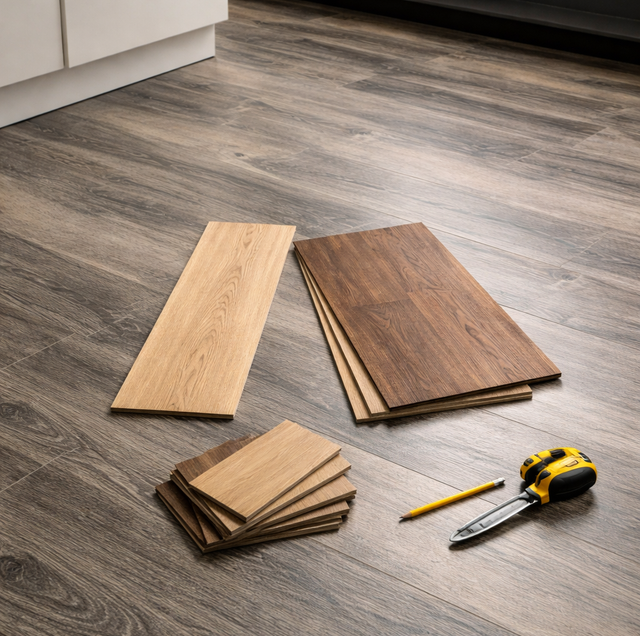
Quick Answer: LVP has a waterproof core, so it handles moisture and single-plank repairs better than laminate. Laminate isn't waterproof, but it feels firmer underfoot in dry rooms. The choice depends on the room and the subfloor.
They Look the Same in the Showroom. They Are Not the Same Product.
Set a plank of luxury vinyl plank flooring next to a plank of laminate, and most people cannot tell them apart from three feet away. Both come in wide planks, both mimic wood grain convincingly, both click together at the edges. That resemblance is exactly why so many homeowners assume the two are interchangeable, and it's the wrong assumption to carry into a flooring decision. Strip away the printed wood-look layer on top and the two products are built from almost nothing alike underneath, and that difference in construction is what decides how each one performs once it's down.
LVP is a vinyl product through and through: a dense core layer, usually rigid, topped with a printed design layer and a clear wear layer, all of it plastic-based. Laminate is a wood product wearing a photograph of wood: a fiberboard core, similar to what's inside a lot of furniture, topped with a printed paper layer and a hard, often melamine or aluminum-oxide-infused wear layer fused on top. One core shrugs off water. The other is built from compressed wood fibers, and wood fibers absorb water no matter how well the surface is sealed. That single fact drives most of the practical differences below, but it's not the only one that matters, and treating this as a two-line "vinyl is waterproof, laminate isn't" summary skips the parts that actually affect how the floor lives in your home.
Moisture Is the Real Differentiator, But the Claims Need a Hedge
Ask anyone in the flooring aisle, and they'll tell you LVP is waterproof and laminate isn't, and broadly, that's the right instinct. LVP's core is a synthetic plastic composite, either a rigid stone-plastic composite or a denser wood-plastic composite, and plastic does not swell, warp, or feed rot the way wood fiber does. A spill left overnight on LVP is a cleanup problem, not a structural one. Many LVP wear layers and cores are rated by their manufacturers as fully waterproof, but that rating describes the plank itself, not the whole installed floor. Water that sits long enough can still work down through the seams between planks to the subfloor below, and if that subfloor is untreated wood, the plank surviving doesn't mean the room did. So "waterproof LVP" is accurate about the material and incomplete about the installation.
Laminate's core is high-density fiberboard (HDF), which is wood fiber compressed under heat and pressure. It handles humidity reasonably well and shrugs off a quick wipe-up, but sustained moisture, standing water, a slow leak under a cabinet, and condensation from a window unit work into the seams and swell the fiberboard from the edges in. Once HDF swells, the swelling doesn't reverse when it dries; the plank stays raised, cupped, or delaminated at the joint where the printed layer separates from the core. This is why laminate manufacturers generally don't recommend it below grade, in full bathrooms, or in rooms with a floor drain, even though above-grade kitchens and mudrooms with careful sealing and prompt cleanup can work for some laminate lines. The honest way to frame it: LVP tolerates moisture at the plank level and needs a sound, sealed installation to protect the subfloor beneath it; laminate does not tolerate sustained moisture at the plank level at all, seams included, regardless of the installation.
LVP vs. Laminate at a Glance
| Attribute | LVP (Luxury Vinyl Plank) | Laminate |
|---|---|---|
| Core material | Synthetic composite (SPC or WPC), plastic-based | High-density fiberboard (HDF), wood-based |
| Moisture tolerance | Plank itself resists water; seams and subfloor still need protecting | Not moisture-tolerant; sustained water swells and delaminates the core |
| Wear layer | Clear vinyl wear layer, commonly measured in mil thickness | Hard melamine or aluminum-oxide layer fused over the printed design |
| Install method | Click-lock floating or glue-down, direct or over underlayment | Click-lock floating, almost always over a foam or felt underlayment |
| Underfoot feel | Slightly softer, more give, warmer to bare feet | Firmer and harder underfoot, can feel and sound more hollow |
| Handles uneven subfloor | Flexes over minor dips and ridges better | Less forgiving; visible imperfections telegraph through faster |
| Repair (single plank) | Individual click-lock planks can often be pulled and replaced | Also replaceable, but swelling damage often extends past one plank |
How Each One Feels and Sounds Underfoot
Stand on a floating LVP floor, and it tends to have a bit of give: a slight cushion when you walk, from the underlayment beneath the planks. A glue-down installation, bonded directly to the subfloor, feels more solid underfoot with much less of that cushion. Either way, LVP reads warmer to bare feet than laminate does, partly because vinyl is a poorer conductor of heat than the harder laminate surface and partly because the core itself has some flex to it. Rigid-core LVP (SPC) is stiffer than the older flexible vinyl planks, but it still isn't as hard underfoot as laminate.
Laminate, by contrast, sits directly on a thin foam or felt underlayment over the subfloor, and that combination tends to produce a firmer, sometimes hollower sound when you walk across it, especially in a room without much furniture or rug to absorb it. Some homeowners like that firmness; it reads as solid. Others find the sound distracting, particularly in an open floor plan where footsteps carry. Underlayment with a denser foam or a sound-rated pad narrows that gap somewhat, but it doesn't erase it. Neither floor is objectively better here; the choice hinges on whether you want a floor that gives slightly and stays quieter, or one that feels harder and more solid but carries more sound.
Subfloor Prep and How Each Handles an Uneven Subfloor
Older subfloors are rarely perfectly flat, and this is where the two products diverge in a way that matters more than most people expect going in. LVP, especially rigid-core products, has enough flexibility to bridge minor dips and slight unevenness without the seams opening up or the planks rocking underfoot. Most manufacturers still specify a flatness tolerance, commonly something like 3/16 inch over a 10-foot span, and going past that tolerance risks the click-lock joints working loose over time as the plank flexes at the low points. So LVP is more forgiving of a subfloor that's a little wavy, not a subfloor that's actually damaged or badly out of level.
Laminate is less forgiving. Its HDF core is stiffer and doesn't flex to match a subfloor's minor imperfections the same way; instead, those imperfections telegraph up through the plank, and a low spot can put a seam under enough repeated flex that it eventually clicks, separates, or wears at the joint. Laminate installers generally hold subfloor flatness to a tighter standard before laying it down, and self-leveling compound is a more common prep step ahead of laminate than ahead of LVP. Neither product is a substitute for fixing a subfloor that's actually damaged, springy, or sloped; both assume the framing underneath is sound and want the surface flat enough that the click-lock joints aren't taking on stress they weren't built for.
Repairing a Damaged Plank: One Piece vs. a Section
Every floor eventually takes a hit: a dropped cast-iron pan, a dragged appliance, a chair leg that finally wins the argument. How each product responds to that damage is a real point of difference, not a minor one.
A single click-lock LVP plank in a floating installation can often be worked loose and swapped without disturbing the whole floor, especially near a wall or doorway where there's room to disengage the surrounding planks and walk the damaged one out. It's still fiddly work; planks in the middle of a large room are harder to reach than planks at the edge, but the core material itself isn't compromised by moisture the way laminate can be, so a scratch or gouge is usually cosmetic rather than structural.
A damaged laminate plank is a different repair. If the damage is a scratch or a chip, it's often cosmetic and can be filled or touched up. But if the damage involved water, even water from a source you've since fixed, the swelling rarely stops at the plank that got wet. Water travels along the seam, so a plank-by-plank swap can turn into replacing several planks in a section once you see how far the swelling actually reached. That's less about the repair technique and more about the fact that moisture damage in laminate tends to spread sideways along the joint before it becomes visible on the surface.
Where Each Tends to Make More Sense
None of this makes one product universally better; it makes each one better suited to certain rooms. Kitchens, laundry rooms, mudrooms, and bathrooms are areas where spills, tracked-in snow, and appliance leaks are a matter of when, not if, and that's where LVP's moisture tolerance at the plank level earns its place, provided the seams and edges are still sealed and protected the way the installation calls for. Basements, which sit below grade and carry a baseline humidity risk even when they seem dry, are another spot where LVP is generally the safer call.
Bedrooms, living rooms, home offices, and other consistently dry areas are where laminate's firmer feel and different wear-layer hardness can be a genuine advantage, especially in a household with dogs whose nails scuff a softer surface or high foot traffic that would otherwise dull a finish faster. In those rooms, moisture tolerance isn't the deciding factor because moisture isn't really in play, so the decision rests on feel, sound, and how the subfloor underneath is holding up.
The Bigger Picture
Neither of these floors is a downgrade from the other; they're built to solve different problems, and the wood-look surface on top of each one hides how differently they behave the moment real conditions test them. The room does more to decide the right material than the showroom sample ever will: how much moisture that room realistically sees, how flat and sound the subfloor already is, and how the household actually uses the space day to day. Get an honest look at those three things before you get an honest look at the flooring, and the choice tends to make itself.
Homeowners rarely regret choosing between LVP and laminate for the reasons they worried about going in. They regret skipping the room-by-room thinking and picking one material for the whole house because it was easier to decide once. A kitchen and a bedroom face different conditions, and the floor that fits one room doesn't necessarily fit the other. Walk the rooms first, be honest about moisture and subfloor condition in each one, and let that guide which material goes where.
Frequently Asked Questions
Not always the same way. Laminate almost universally goes over a foam or felt underlayment for cushioning and minor sound dampening. LVP sometimes has an attached underlayment pad built into the plank itself, and some rigid-core products are rated for direct glue-down or floating installation over a bare, properly prepped subfloor with no separate pad at all, which changes the overall floor height and can matter where a floor transitions into an existing tile or hardwood room.
Some LVP and laminate products are rated for radiant floor heating, but not all are, and the rating usually caps the maximum surface temperature the core can handle before it risks warping or the adhesive softening. Laminate's HDF core is more sensitive to sustained heat cycling than most vinyl cores, so a radiant-heat installation is one of the few cases where checking the specific product's rating matters more than the general LVP-versus-laminate comparison.
That hollow sound usually traces to a floating installation over an underlayment pad rather than to the plank material itself. A floating floor isn't fastened to the subfloor, so it has a small air gap and pad layer beneath it that can resonate under footsteps, especially rigid-core planks, which are stiffer and transmit sound differently than the older flexible vinyl products. A glue-down installation directly to the subfloor typically sounds and feels more solid than a floating one, regardless of which material is on top.
It depends on how long the water sat and whether it reached the seam. A spill wiped up within a few minutes rarely swells the core because the fiberboard hasn't had time to absorb enough moisture. Once water sits long enough to seep past the edge seal into the seam between planks, though, the swelling starts at the joint and often isn't visible until the plank has already begun to lift or the edge has started to fray, which is why laminate damage tends to look worse a few days after the water event than it did on day one.
Running planks the long way down a hallway or parallel to the main light source is a common design choice for both materials, but it doesn't change moisture performance or durability for either one. What direction does affect is how visible any unevenness in the subfloor becomes; planks running perpendicular to floor joists can make minor dips between joists more noticeable than planks running parallel to them, which is worth considering with laminate in particular since it telegraphs subfloor irregularities more readily than LVP does.
Both can sometimes go over an existing hard floor if it's flat, well-bonded, and not cushioned vinyl that would flex too much underneath. The bigger concern with older vinyl flooring, especially sheet vinyl installed before the 1980s, is that some products contained asbestos, and sanding, cutting, or otherwise disturbing it isn't something to do without confirming what's actually under there first. A certified asbestos inspector or abatement professional can test the material and confirm whether it's safe to leave in place as a base layer before new material goes down.
Get a flooring consultation — a technician can walk your subfloor and help you decide where LVP or laminate makes the most sense room by room. Precision Home Worx serves Wilmington, Bear, and Newark. Call (302) 500-3676.


