
Settling Cracks vs. Foundation Trouble: How to Tell
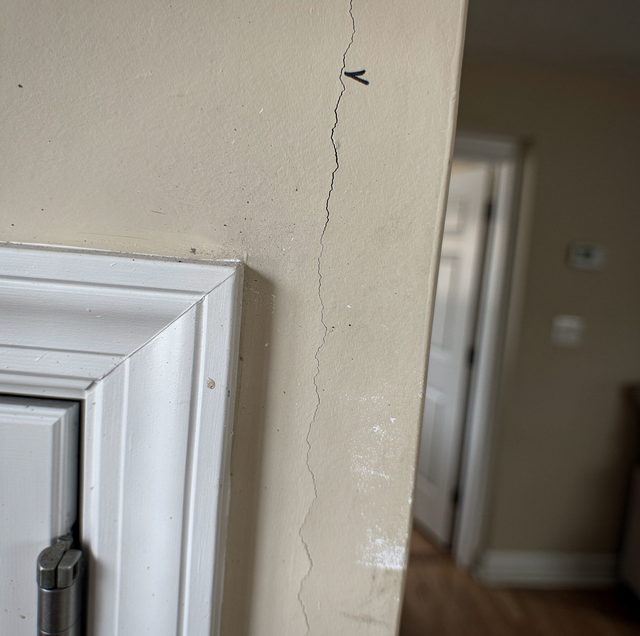
| Sign | Likely Normal Settling | Likely Foundation Trouble |
|---|---|---|
| Crack width | Hairline, under 1/8 inch | Wider than 1/4 inch, or growing |
| Crack direction | Vertical or diagonal at 45 degrees | Horizontal, or stair-step in block/brick |
| Crack location | Above doorways, drywall seams | Foundation wall itself, below grade |
| Doors and windows | Occasional sticking, seasonal | Won't latch at all, gap widens over months |
| Floor level | Minor unevenness, old and stable | New slope, or a bounce underfoot |
| Age of the home | Crack has existed for years, unchanged | Crack is new or actively getting worse |
A crack over a doorway has a way of turning into a Saturday spent on a ladder and three separate calls for estimates, especially the moment someone says the word "foundation." Most of the time, that reaction is bigger than the crack deserves. Wood shrinks as it dries, soil compresses under a structure's weight, and framing lumber shifts with the seasons for decades after a house is built, none of which is a defect. The real question isn't whether a house has cracks. It's whether the one on the wall right now is one of the harmless ones or the kind that's still actively getting worse.
Why Settling Happens and Why It's Usually Harmless
A new home's foundation and framing continue to move for the first several years after construction, as concrete fully cures, lumber releases moisture, and the soil around the foundation compresses under load. That process produces small, predictable cracks, most often at drywall seams, above door and window headers, and where two different building materials meet. Because the movement is gradual and eventually stops, these cracks appear once, stay the same width for years, and don't come with other symptoms like doors that won't close or floors that visibly slope.
Older homes settle too, just for different reasons. Seasonal soil moisture changes cause slight, repeated expansion and contraction each year, especially in soils with higher clay content, which swell when wet and shrink when dry. That cyclical movement can reopen the same hairline crack every year without it ever getting meaningfully wider, which is a very different pattern from a crack that's progressively growing.
What Actually Signals a Foundation Problem
The signs that separate ordinary settling from real foundation trouble come down to direction, width, and whether the problem is getting worse over time rather than staying put.
Crack orientation: Vertical cracks in drywall or foundation walls are far more often benign than horizontal ones. A horizontal crack in a poured concrete or block foundation wall suggests lateral pressure, often from expansive soil or hydrostatic pressure pushing inward on the wall, which is a different and more serious mechanism than simple settling.
Stair-step cracking: In a block or brick foundation, cracks that follow the mortar joints in a stair-step pattern rather than running straight through the material can point to differential settlement, one section of the foundation potentially sinking or shifting at a different rate than the section next to it. That's a pattern worth having a professional confirm rather than assuming from the crack alone, since a similar stair-step look can also come from a one-time settling event that already finished moving years ago.
Crack width and progression: A crack that measures a consistent eighth of an inch or less and hasn't changed in years is a very different situation from one that's a quarter inch or wider, or one where a small pencil mark dated on either side of the crack shows it's actively widening month to month.
Doors and windows that stop working entirely: Occasional seasonal sticking on a door is normal wood movement. A door or window that's gone from sticking to not latching at all, especially if the gap around the frame is visibly uneven top to bottom, suggests the frame itself has racked out of square, which points to movement in the structure supporting it.
Sloping or bouncy floors: A floor that's had a slight, old, and stable unevenness for as long as anyone remembers is a different situation from a floor that's developed a new slope, or one that feels bouncier underfoot than it used to, which can point to a settling or rotting support post or beam beneath it.
The Water Connection Most People Miss
Soil movement around a foundation is almost always tied to water, either too much saturating the soil against the foundation wall, or too little causing dry, shrinking clay soil to pull away and settle unevenly. Downspouts that dump water right at the foundation, grading that slopes toward the house instead of away from it, and gutters that overflow during heavy rain all concentrate water exactly where it does the most damage to soil stability. Correcting drainage around a foundation is frequently a bigger factor in whether cracking progresses than anything about the foundation material itself.
Events That Can Trigger New Movement
A handful of specific events tend to reactivate settling that had otherwise gone quiet for years. A stretch of heavy, sustained rain saturates soil around a foundation and can cause temporary swelling, especially in clay-heavy ground, followed by shrinkage as the soil dries back out over the following weeks. A prolonged drought works the opposite direction, pulling moisture out of the soil until it shrinks away from the foundation wall, sometimes leaving a visible gap between the soil and the concrete that wasn't there the season before. Nearby construction, whether it's a neighbor's addition, a new driveway, or utility trenching along the street, can also change how water drains around a foundation that has been stable for decades, since altering the grade or compacting nearby soil shifts where water goes during the next heavy rain. Removing a large, mature tree can have a similar effect: the tree's roots had been pulling significant moisture out of the soil for years, and once that's gone, the soil around the old root system can swell with moisture it hadn't been holding before, sometimes shifting slightly as it adjusts to the new balance.
Tracking Movement the Right Way
The simplest way to know whether a crack is stable or progressing is to measure it, not just look at it. A small pencil mark at each end of the crack, dated, gives an actual reference point to check against weeks or months later. A cheap crack monitor, essentially two overlapping plastic tabs mounted on either side of the crack, does the same thing more precisely and makes small amounts of movement easier to see than eyeballing a hairline crack from across the room. Photographing the crack next to a tape measure or a coin for scale each time it's checked builds a simple record that's far more useful to a professional than a description like "it seems a little bigger."
When to Bring in a Professional Assessment
A few situations call for a closer look regardless of how minor the crack looks at first glance: any horizontal crack in a foundation wall, stair-step cracking that's visibly widened since it first appeared, doors or windows across multiple rooms that have all started sticking or failing to latch around the same time, and any crack paired with a floor that's developed a new slope or soft spot. Cracks that appear suddenly after heavy rain or a period of drought are also worth documenting with photos and a dated pencil mark, since that timeline helps establish whether the movement is ongoing or a one-time event tied to that specific weather.
Frequently Asked Questions
Yes, if the conditions around the foundation change. A downspout that starts dumping water against the foundation because a gutter came loose, or a tree root that grows large enough to disturb soil near the footing, can reactivate movement in a crack that had been stable for a decade. Timing is useful to know here: reactivated movement tied to a specific event, like a hard storm or gutter failure, usually shows up within a few weeks to a couple of months, not years later. That's why it's worth rechecking a crack after any major storm or after grading or gutter work happens near that side of the house, rather than waiting for an annual walk-around.
Not necessarily. Basement doors and frames are especially sensitive to humidity because below-grade spaces run more humid than the rest of the house, so seasonal swelling is a common and harmless cause. It's the combination of sticking with new cracking or a floor that's changed that points toward something structural.
Not automatically, but it needs closer attention than a straight vertical crack because it can indicate two adjacent sections of foundation moving at different rates. It also shows up far more often in block or brick foundations than in poured concrete walls, simply because mortar joints are a weaker plane than the block itself, so movement tends to find that path first. A small, old stair-step crack that hasn't widened can be monitored; a new one, or one where the mortar joints have opened enough to see daylight or feel a ridge between courses, is worth having a professional take a closer look at rather than assuming which it is.
Sealing a crack with an epoxy or polyurethane injection can stop water intrusion through that specific crack, but it doesn't change the soil movement or drainage issue that caused it in the first place. Skipping the underlying drainage correction often results in a new crack forming nearby, even after the old one is sealed.
Wood framing can expand and contract enough seasonally to open and close a hairline gap of a millimeter or two at a joint, which is imperceptible day-to-day but adds up to the small seasonal cracking many homeowners notice reappearing every winter or summer in the same spot.
Most are, since poured concrete commonly develops shrinkage cracks as it cures that stay vertical and stable. The exception is a vertical crack that's noticeably wider at the top or bottom than in the middle, which can indicate that the foundation wall is bowing rather than shrinking evenly.
A dated pencil mark and a couple of photos next to a tape measure do more to answer the "is this a real problem" question than staring at a crack ever will. Start tracking it now, before deciding it's nothing or panicking that it's everything, and if a professional does eventually need to take a look, there's already a record showing whether it's actually moving.
Schedule a home inspection and repair consultation — get cracking, sticking doors, or uneven floors assessed before small issues grow. Precision Home Worx serves Wilmington, Bear, and Newark. Call (302) 500-3676.


