
6 Signs It’s Time to Replace Your Weatherstripping
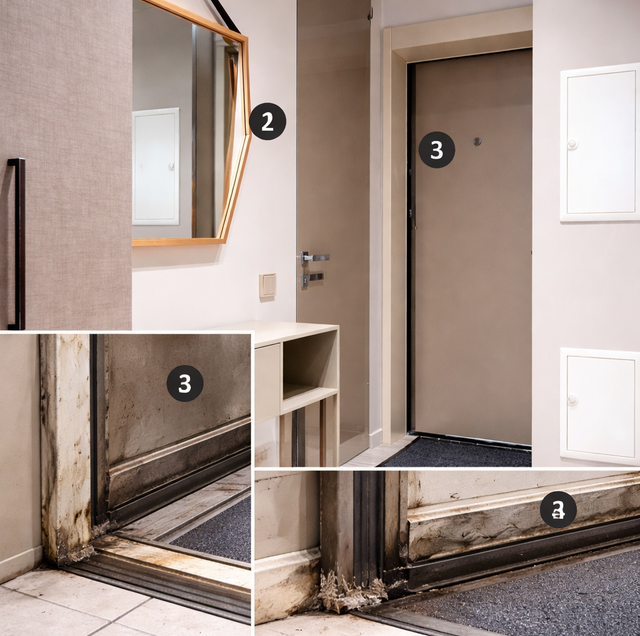
Quick Answer: Weatherstripping wears on its own schedule. Flattened foam, cracked or chalky vinyl, and metal strips that won't spring back all mean it's time to replace it. A gap only at the frame-wall joint calls for caulk instead.
Weatherstripping is not a permanent seal. It is a compressible material engineered to squash flat every time a door or window closes and spring back to its full shape every time it opens, thousands of times a year, for years in a row. That compress-and-release cycle is what lets a strip seal a gap that shifts by fractions of an inch as wood swells, hinges settle, and hardware wears. It is also what wears the material out. Eventually the foam stops springing back, the vinyl stops flexing, or the metal stops tensioning, and no amount of resealing the frame changes that: the strip itself has reached the end of its working life.
If you already suspect weatherstripping specifically, rather than a leak elsewhere in the door or window assembly, this is about that one component: how each type of strip actually fails, and how to tell a strip that has failed from a door or window that needs a different repair altogether.
Weatherstripping Types and How Each One Wears Out
Weatherstripping is not one product. Depending on the age of your doors and windows, you likely have two or three types installed, and each fails in its own characteristic way.
Foam tape strips: Open-cell or closed-cell foam with adhesive backing, common on window sashes and interior door jambs. Foam takes a compression set: after enough cycles of being squeezed flat, the cell structure stops recovering its shape. A strip that still looks the right thickness but no longer puffs back up once you release pressure has taken a set and is done.
Felt strips: An older style still found on original wood-sash windows. Felt seals by friction rather than compressing into a memory shape, wearing by matting down and thinning until the fibers pack flat and lose the loft that closed the gap.
Vinyl and rubber bulb gaskets: A hollow or solid tube of vinyl or rubber, often used around door edges and some window sashes. These fail from UV exposure and temperature cycling, which oxidize and harden the material until it cracks or splits along the bulb, especially on the sun-facing side of the house.
Metal tension strips: A thin strip of springy metal, usually spring bronze or stainless, found on older wood windows and some higher-end doors, that relies on its own spring tension rather than on compressing. These strips do not take a compression set; they fatigue. Repeated flexing, or a strip painted over and pressed flat, leaves the metal unable to spring back out and hold contact.
Door sweeps and bristle or fin strips: The horizontal seal at the bottom of an exterior door, made of vinyl fin, brush bristle, or a combination. These fail from wear against the threshold, UV exposure on south- or west-facing doors, and tearing when debris or ice catches underneath.
Signs the Strip Itself Has Failed
A few physical checks tell you whether the material has reached the end of its life, as opposed to a door or window that just needs adjusting.
Flattened or glazed foam: Press a section of foam weatherstripping between two fingers and let go. New foam pushes back within a second or two. Foam that has taken a compression set stays dented, or has a shiny, glazed look where it has been crushed so many times the surface texture has changed.
Cracking, splitting, or chalking vinyl: Run a fingertip along a vinyl or rubber bulb gasket. Cracked, split, or powdery ("chalking") vinyl has oxidized past the point of flexing back into shape, even in spots that still look intact from a few feet away.
Torn, missing, or damaged sections: Any run of strip with a gap in it, whether from wear, a pried-open storm window, or pest damage, has an opening no adjustment elsewhere will close.
Peeling or curling away from the surface: Adhesive-backed foam and vinyl strips fail at the glue line as often as in the material itself. A strip that has started to lift, curl, or hang loose has lost its adhesive bond even where the rubber or foam is otherwise fine.
A metal strip that stays flat when pressed and released: A tension strip should flex under light pressure and spring back out on its own. One that stays pushed in, or looks tarnished and brittle at the bend, has fatigued.
A visible line of daylight with the strip fully seated: Close the door or window, then check with a flashlight from the dark side of the room, or slide a sheet of paper along the seal and note where it pulls through without resistance. Either method shows exactly where the strip has stopped making contact.
Reading the Signs: Strip Failure vs. a Different Problem
Not every gap traces back to the weatherstripping itself. The table below separates what points to a worn strip from what points to a different repair:
| What You're Seeing | What It Actually Points To | The Fix |
|---|---|---|
| Foam is flat and doesn't spring back | Compression set; the foam has reached the end of its working life | Replace the foam strip |
| Vinyl or rubber bulb is cracked, split, or chalky | UV and temperature cycling have hardened the material | Replace the vinyl or rubber gasket |
| Strip is peeling, curling, or falling off in pieces | Adhesive has failed at the bond line | Replace the strip and adhesive backing |
| Metal tension strip stays flat when pressed | Metal fatigue, or a strip bent flat by paint or damage | Replace the tension strip |
| Whole section is torn out or missing | Physical or pest damage | Replace the missing run |
| Gap is only where the frame meets the siding or wall, not at the strip | Caulk has failed, not the weatherstripping | Re-caulk the joint |
| Door or window still gaps unevenly after new weatherstripping goes in | The door or sash itself is out of alignment | Adjust hinges, strike plate, or sash balance |
When Replacing the Strip Is the Right Call, and When It Isn't
Fresh weatherstripping only fixes a problem that lives in the weatherstripping. If the strip shows the wear signs above along its whole length, replacing that run solves it, and on most doors and standard windows it is simple, DIY-friendly work.
Two situations call for something else. First, if the strip presses evenly and looks intact but a gap still shows only at the outside edge of the frame, where the unit meets the wall or siding, that is a caulking job, not a weatherstripping job; new strip material will not close a joint that was never part of the compression seal. Second, if new weatherstripping goes in correctly and a gap still shows in the same spot, the strip was never the problem. A door sagged on its hinges, a window sash whose balance has failed, or a frame shifted by settling will keep gapping against brand-new material until the alignment itself is corrected. The weatherstripping was doing its job; the surface it needed to seal against had moved.
How Long a Strip Actually Lasts
How long a strip lasts depends more on exposure than on the calendar. A foam or vinyl strip on a west- or south-facing door that takes direct sun most of the day breaks down faster than the same material on a shaded, north-facing window, because UV and heat cycling age vinyl and foam, not cold alone. Winter does its own damage from the other direction: freeze-thaw cycling makes already-hardened material more likely to crack rather than flex, and cold makes foam that has lost resilience feel noticeably worse. In practice, the strip that finally fails often does so at a seasonal extreme, hot or cold, even though the wear that caused it built up all year round.
Letting the Strip Tell You What It Needs
Run the checks above once, and you walk away knowing exactly which strip failed and why: foam that lost its spring, vinyl gone brittle, a tension strip that fatigued, or an adhesive bond that let go, instead of a vague sense that a door or window feels drafty. That's enough to buy the right replacement part on the first trip, or to recognize that the strip was never the problem and the fix lies elsewhere. Either way, the couple of minutes spent checking beats another season of guessing.
Frequently Asked Questions
Yes, and it is common. A door might carry a vinyl bulb gasket down the sides and top, paired with a separate bristle or vinyl-fin sweep at the bottom, since those are different products built for different edges. What matters is matching the replacement to the mounting style already there: adhesive-backed foam or vinyl sticks to any clean surface, but a metal tension strip is usually let into a groove, called a kerf, or nailed into a track built for that exact profile, so it needs a same-style replacement, not a substitute stuck on top.
For a strip that is only slightly compressed, gently prying it away from the frame with a flat tool can restore enough tension to close a small gap, and that is a reasonable first try. It stops being a fix once the metal is tarnished, pitted, or cracked at the bend, or once it springs back flat within days. That means the metal has fatigued, and bending it again only buys a few more weeks before it needs full replacement.
Exposure matters more than material grade, but real differences exist. Open-cell foam is generally the least durable and often needs replacing within a few years on a heavily used door. Closed-cell foam and vinyl bulb gaskets typically hold up longer, especially out of direct sun. Silicone bulb seals resist UV and temperature swings better than standard vinyl, worth the upgrade on a south- or west-facing exposure. Felt tends to be shortest-lived in a high-traffic spot, since it wears by friction rather than weathering.
Yes. A gap wide enough to move air is usually wide enough for small insects, and torn or missing sections around a door bottom are a common entry point. Bulk water is a separate risk: a failed door sweep or bottom seal lets wind-driven rain wick into the threshold and subfloor by capillary action rather than through an obvious leak, which is how sill rot can develop even when nobody sees standing water.
Door weatherstripping and sweeps are usually the simplest repair: peel off the old adhesive-backed strip, clean the surface, and press on the new one, or unscrew and swap a sweep at the threshold. Window weatherstripping varies more by style. On most modern vinyl or aluminum sashes, the seal sits in an accessible channel you can pull and replace with the sash in place. On older double-hung wood windows with channel-set metal tension strips, the sash sometimes has to come out of the frame to access the full run, which is a common point where a homeowner project turns into a call for help.
Yes, and it is easy to overlook because it is a second, independent set of seals. A storm door has its own sweep and its own side and top weatherstripping, separate from the primary entry door behind it, and it usually takes the brunt of direct sun and weather as the outer layer. Storm door seals commonly wear out well before the main door's, so check both rather than assuming one inspection covers the opening.
Schedule a weatherstripping and seal inspection — get worn strips identified and replaced before the next round of drafts. Precision Home Worx serves Wilmington, Bear, and Newark. Call (302) 500-3676.


