
Routine Home Maintenance: The Habit That Prevents Big Repairs
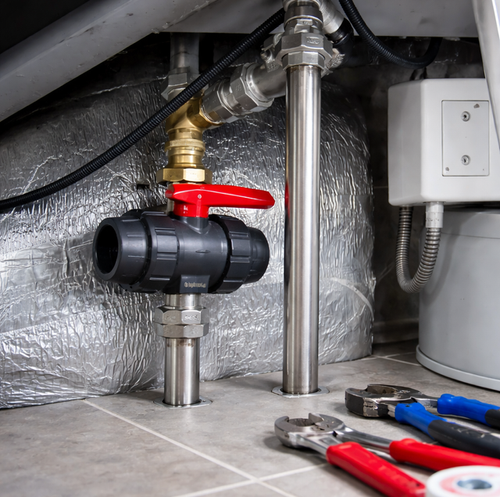
Quick Answer: Maintenance is the recurring habit that keeps systems working before a problem shows up, unlike inspection, which only spots existing damage. Schedule tasks by how they fail: monthly for disuse, twice yearly for exposure, annually for what's easy to forget.
There is a common assumption that home maintenance means catching problems while they're still small: walking around the house with a list, spotting a crack or a stain before it spreads. That's part of it, but it puts the emphasis in the wrong place. Most repairs that turn into real jobs don't happen because nobody was looking. They happen because the small task that would have prevented the problem in the first place was never a habit to begin with. Nobody inspects their way out of a GFCI outlet that quietly stopped protecting anyone two years ago, or a shutoff valve that seized from never being turned. Those get caught by doing something on a schedule, not by looking for something to be already wrong.
Maintenance Solves a Different Problem Than Inspection
A seasonal walk around the outside of a house is an inspection: checking for damage that has already started, like a caulk joint pulling loose or paint that's chalking. Learning to read early warning signs- a stain that keeps returning, a door that sticks worse each month- is diagnosis: deciding whether something you've already noticed needs attention now or can wait. Routine maintenance is a third, different thing. It's the set of small, recurring actions that keep a home's systems doing what they were built to do, done often enough that most of them never produce a symptom worth noticing at all. Testing a GFCI outlet doesn't tell you it's about to fail; it tells you whether it can still do the one job it has right now. Flushing a water heater doesn't wait for a rumbling noise; it clears out the sediment before that noise ever starts.
Both inspection and diagnosis matter, but they only catch problems after something has already begun. Routine maintenance is the layer underneath both of them, the habits that keep the number of things worth catching lower to start with.
Interior Tasks That Get Skipped Because Nothing Looks Wrong
Exterior wear is visible: peeling paint, a sagging gutter, a gray deck board. Interior systems fail quietly, which is exactly why they get skipped. None of the following require a tool bag, just a few minutes and a habit of actually doing them.
Test GFCI outlets: Push the test button on every GFCI outlet in the kitchen, bathrooms, garage, and outdoors, then press reset. If it doesn't trip when tested, or won't reset afterward, it's protecting nobody even though the outlet still has power flowing through it, a difference you can't see, only test for.
Work the shutoff valves under sinks and behind toilets: Turn each valve closed and back open a couple of times a year. A valve that never moves can seize from mineral buildup or corrosion on the stem, and the only time most people discover that is during a leak, exactly when turning it fast matters most.
Check the water heater, not just its birthday: Tank-style heaters collect sediment at the bottom over time, and that sediment insulates the burner or element from the water it's supposed to be heating, which makes the unit work harder and shortens how long it lasts. A short flush through the drain valve clears it out.
Re-caulk high-moisture joints before the bead fails, not after: Around tubs, showers, and sink backsplashes, caulk is the only thing keeping water from getting behind tile and drywall. Waiting until a bead has visibly cracked or pulled away means water has likely already found the gap.
Lubricate door hardware: Hinges, deadbolts, and sliding door tracks stiffen with age and everyday use. A door that's started to squeak or a deadbolt that takes more force to throw is friction building up, not a sign the hardware needs replacing yet.
Test smoke and carbon monoxide detectors, not just when the low-battery chirp starts: Press the test button on each unit and replace batteries on a schedule you control, rather than reacting to whichever unit complains first.
Why the Schedule Matters as Much as the List
A list of tasks without a rhythm attached to it tends to get done once, with good intentions, and then not again. What actually keeps a house running is matching each task to the interval that matches why it fails. GFCI outlets and shutoff valves aren't wearing out from exposure; they fail from disuse, so a monthly habit of simply operating them is what keeps them working. Caulk, paint, and exterior hardware wear from exposure to heat, cold, and moisture, so checking them twice a year, once as the weather turns warm and once as it turns cold, lines up with the two extremes doing most of the damage between visits. Water heater flushes and smoke detector battery swaps sit somewhere in between: not urgent monthly, but easy to lose track of if they're only tied to memory instead of a fixed point on the calendar, like the twice-yearly clock change many households already use as a smoke detector reminder.
The tasks themselves aren't complicated. What separates a household that avoids bigger repairs from one that doesn't is usually whether these small actions happen on a repeating cadence or only get remembered after something has already gone wrong.
What Skipping the Routine Actually Changes
Skipping one of these tasks rarely causes an immediate failure. What it changes is how much disruption shows up later and how long it lasts. A shutoff valve that's seized doesn't matter until there's a leak, and then it's the difference between turning a handle in seconds and searching for the main water shutoff while water keeps running through the house. A water heater that's never been flushed doesn't fail on a predictable timeline; sediment buildup can shorten its working life enough that a household goes from a short service visit to several days without hot water while a full unit gets replaced. A caulk joint left to fail, instead of refreshed while it was still intact, can mean water sitting behind tile long enough that the repair involves opening a section of wall rather than running a new bead. In every case, the task itself stays small. What grows is the scope of what has to happen, and how much of the house is out of commission while it gets fixed.
None of these tasks are dramatic on their own, and that's exactly why they're easy to let slide for another month. A GFCI outlet that's failed silently still looks identical to one that's working. A shutoff valve that's seized looks the same as one that isn't, right up until it's needed. Households that avoid the bigger repairs generally aren't inspecting more carefully than everyone else; they've built these small actions into a repeating rhythm, testing, flushing, lubricating, checking, so that keeping the house running doesn't depend on remembering that something is wrong.
Frequently Asked Questions
Once a month is the standard homeowner cadence, since these are mechanical switches with moving internal parts, not just wiring. Manufacturers generally rate the internal sensor for a service life somewhere in the 10-to-15-year range regardless of how many times it's tripped. Hence, an outlet that's original to an older home is worth having swapped even if it's never failed a test.
The valve's stem, the part that actually turns, sits outside the water flow and isn't exposed to the water moving through the pipe. Mineral scale and corrosion build up on that stem when it never moves, effectively bonding it in place. Older multi-turn compression valves seize far more often than newer quarter-turn ball valves, so if one you test won't budge, replacing it with a quarter-turn valve while it's already apart is worth doing rather than forcing the old one.
A popping or rumbling sound means water trapped under a layer of sediment is boiling and escaping through it, but the sediment itself also causes a slower problem: it insulates the tank from the heating element or burner, so the unit runs longer to reach the same temperature. Tank-style heaters also have a sacrificial anode rod that corrodes to protect the tank lining from the inside; that rod is worth checking every two to three years, separately from an annual flush.
Yes: caulking directly over an old, failing bead without removing it first just traps moisture between two layers instead of one, and the new caulk fails faster than if nothing had been done. A proper re-caulk means removing the old bead down to the bare surface, letting it dry completely, and giving the fresh caulk its full cure time, often 24 to 48 hours depending on the product, before that joint gets wet again.
Yes. The sensors inside both types of detectors have their own rated service life, usually printed on the back of the unit and typically eight to ten years, and they degrade with age even when the batteries are fresh. A unit past that printed date should be replaced outright, since a new battery doesn't reset how sensitive the sensor still is.
Two items on this list don't always match the default routine. A kitchen or bathroom that was never upgraded has ordinary outlets with no test or reset button on the face at all, so there's nothing to press monthly until a GFCI outlet is swapped in, which is an outlet-level fix rather than a full rewire. Tankless units don't collect a sediment layer at the bottom the way tank-style heaters do, so there's no tank to flush; instead, mineral scale builds up on the heat exchanger, and the equivalent maintenance point is an annual descale, circulating a vinegar or manufacturer-specified descaling solution through the unit with a pump kit rather than draining a tank.
Schedule a seasonal maintenance visit — we'll handle the caulk, hardware, and small repair items on your list in one trip. Precision Home Worx serves Wilmington, Bear, and Newark. Call (302) 500-3676.


