
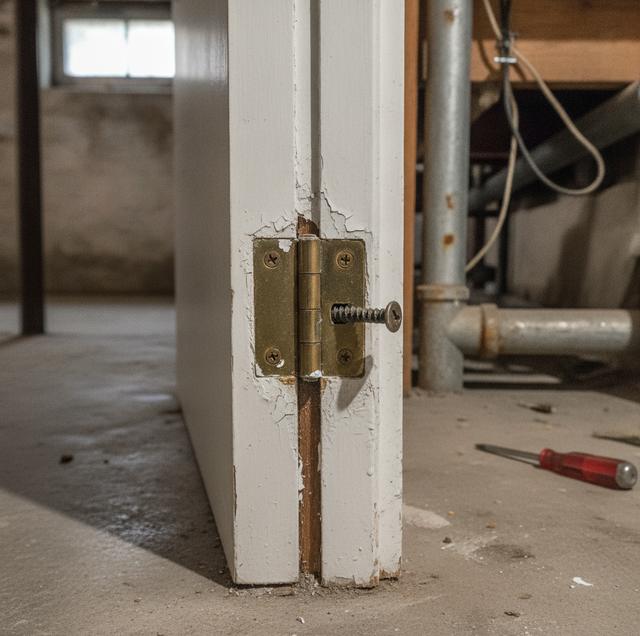
Quick Answer: A door that sticks, rubs, or refuses to latch has almost always drifted out of square with its frame. The usual causes are humidity swelling the wood, loose hinge screws letting the door sag, the house settling and pushing the frame out of square, a strike plate that the latch no longer lines up with, paint buildup on the edges, or a warped slab. The fix depends entirely on where the door binds, so read the door before you reach for a plane.
An interior door is a rectangle hung inside another rectangle, and it only swings cleanly while both stay square to each other. The moment one corner shifts, wood meets wood where it used to have clearance, and you get the drag, the scrape, or the latch that clicks past the strike without catching. The good news is that the door itself is usually telling you what went wrong. The spot where it rubs, and whether the trouble comes and goes or gets steadily worse, points straight at the cause. Match the fix to that cause, and the door swings free again. Guess wrong, and you can plane a perfectly good door down to a permanent gap.
Read The Door Before You Touch It
Before any sanding or unscrewing, close the door slowly and watch the gap all the way around. That thin, even reveal between the slab and the jamb is your diagnostic tool. Where the reveal pinches to zero is where the door is binding, and that location narrows the cause more than anything else.
A door that scrapes along the top of the latch-side edge, the corner farthest from the hinges, is the classic signature of a door that has dropped. When the top hinge loses its grip, the slab pivots down and swings that far top corner into the head jamb and the latch-side jamb. A door that binds along the entire latch edge, top to bottom, and gets harder to close season after season, is more likely a framing problem due to settling. A door that sticks in midsummer or a rainy stretch and then swings fine again once the air dries out is swelling with humidity. And a door that closes flush but whose latch clicks past the opening without grabbing is a strike-plate alignment issue, not a binding issue at all.
Run a business card or a thin putty knife into the tight spot. If it stops at one specific corner, you are chasing a sag or a warp. If it is snug the whole length of the edge, think of moisture or framing. Two minutes of looking saves an hour of the wrong repair.
Humidity: The Stick That Comes And Goes
Solid-wood doors and even wood-core doors breathe. Wood is full of tiny cells that pull moisture out of humid air and release it back into dry air, and the slab physically grows and shrinks as it does. In a damp summer or a stretch of wet weather, a solid door can swell just enough, sometimes a hair over a sixteenth of an inch across its width, to close the reveal and start rubbing the jamb. Come the dry heat of a running furnace in the dead of winter, that same door shrinks back and swings freely with clearance to spare.
This two-way behavior is the tell. Humidity sticking is seasonal and reversible: tight when it is damp, loose when it is dry. That cuts both ways through the year, so a door that only drags in July is not necessarily a door that needs wood removed. If you plane it down to fit in the humid season, it will rattle loose with a wide gap once it dries and contracts.
When a door truly needs a little clearance for its swollen state, the durable move is to remove the slab, take a whisker off the binding edge with a block plane or a sanding block, and then, before rehanging, seal that bare edge. Which brings us to the part most people skip.
Loose Hinge Screws And The Sagging Door
The single most common reason a door starts rubbing its top corner has nothing to do with wood moving and everything to do with the screws that hold it up. Every time the door is pushed, pulled, or leaned on, the top hinge takes the most strain. Over the years, the short screws that came with the hinge, often only three-quarters of an inch long, work loose in the jamb. Once the top hinge pulls away even slightly, the whole slab tips down and drives its top latch-side corner into the frame.
The repair here is deeply satisfying because it costs almost nothing and often fixes the door in ten minutes. Open the door, back out the two center screws in the top hinge, and drive in a pair of three-inch screws in their place. Standard hinge screws only bite into the soft jamb board. A three-inch screw reaches past the jamb, through the shim space, and into the wall stud framing behind it. As it snugs down, it physically pulls the loosened jamb and the whole door back up and tight against the frame, lifting that dropped corner out of the bind. Check the bottom hinge screws while you are there and snug any that spin.
When The House Itself Has Moved
Sometimes the door is fine, and the framing has shifted. Houses settle over decades as soil compacts, framing dries and shrinks, and loads redistribute. When settling racks a door opening even slightly out of square, the door binds against the new, no-longer-parallel jamb.
Settling has its own signature that separates it from the other causes. It is persistent, and it worsens: the stick never eases up in dry weather the way humidity does, and tightening the hinges pulls the door up but does not fully cure the drag. You will often find hairline cracks stair-stepping from the upper corners of the door casing, the frame's way of showing it has moved. A settling problem is a bigger job than a screw or a plane. The honest handyman fix is to adjust the hinges and the strike to chase the door back into the racked opening, sometimes shimming a hinge to shift the slab within the frame, and in a stubborn case, to plane the binding edge to follow the new geometry. If the opening is badly out of square, the real cure is reframing the jamb plumb again.
The Latch That Won't Catch
A door that swings and closes flush but pops back open, or needs a shoulder to stay shut, is a different animal. Here, the slab is not binding at all. The latch bolt and the hole in the strike plate have simply fallen out of alignment, so the bolt hits metal or wood instead of dropping into the pocket.
Close the door and watch the latch bolt against the strike. If the bolt lands high or low of the strike hole, the door has usually dropped a touch, and tightening the top hinge as described above may re-center it. If the bolt is close but catching on the edge of the strike opening, the fastest fix is to enlarge the opening: unscrew the strike plate, clamp it, and file the opening a fraction of an inch in the direction the bolt needs. For a larger miss, move the whole plate, which means chiseling the mortise a little deeper on one side and filling and re-drilling the screw holes. A strike that is off by an eighth of an inch is a five-minute file job, not a new door.
Paint Buildup And A Warped Slab
Two smaller culprits round out the list. Coat after coat of paint on a door's edges and inside the jamb adds real thickness over the years, and eventually the layers meet, and the door binds on its own finish. If the tight spot is glossy and thick with paint rather than raw wood, the fix is to scrape or sand the built-up edges back down and repaint thin.
A truly warped slab, one that has twisted so it no longer sits flat in the frame, is the least common and the least forgiving. A warped hollow-core door usually earns replacement. A solid door with a mild twist can sometimes be coaxed back by adjusting the hinge and strike positions so the slab meets the stop evenly, but a severe warp is a new door.
Seal The Edge So It Does Not Come Back
Whenever you plane or sand a door edge, you expose bare, thirsty wood, and bare wood drinks humidity far faster than a sealed surface. A freshly planed edge left raw will swell right back into the frame the next damp season and undo your work. Prime and paint, or at least seal, every edge you cut before rehanging the slab. That thin film slows how fast the wood trades moisture with the air and keeps a summer-fit door from becoming a summer-stuck door again.
Work through the causes in the right order, and most sticking doors are an afternoon of hand-tool work: look at where it binds, tighten the hinges first, address moisture or the strike as the door tells you to, and save the plane for last.
Frequently Asked Questions
Wood movement really kicks in once indoor relative humidity swings past roughly 50 percent, which is the threshold where the slab pulls in enough moisture to grow and rub the frame, then shrinks back below it. Because the trigger is the indoor humidity level rather than the calendar, running a dehumidifier or adding better ventilation cuts the seasonal swelling at its source, and often frees the door without touching the slab at all.
That pattern usually means the top hinge screws have worked loose and the door has dropped on that side. Replacing the two center screws with longer three-inch screws that reach the stud behind the jamb pulls the corner back up. If a screw just spins and never snugs, the hole itself is stripped: glue a golf tee or a wood dowel into the worn hole, snap it off flush, and let it dry, and the screw then bites into fresh wood and holds.
The latch bolt and the hole in the strike plate are no longer lined up, so the bolt hits the plate instead of dropping into the pocket. Either the door has shifted position, or the strike itself needs to move. Filing the strike opening slightly larger in the direction the bolt needs, or repositioning the whole plate a fraction of an inch, usually lets the bolt seat and hold again.
Check the reveal, the gap running around the door, against its target of about an eighth of an inch. A reveal that goes tight in one season and returns to that even eighth in another is humidity moving the wood, while a reveal that stays permanently uneven no matter the weather is the frame itself sitting out of square from settling. Settling also tends to crack the casing at the upper corners and does not ease when you tighten the hinges.
Always tighten and check the hinges first. A sagging door very often rubs only because it has dropped, not because it is too big, and if you plane wood off to clear that drag, you will be left with an ugly gap the moment the hinges are corrected, and the door lifts back into place. Planning is the last step, done only after the door is confirmed to hang square and still bind.
It can, because a freshly planed edge is bare wood that soaks up humidity faster than a finished surface. To prevent a repeat, seal the cut edge with primer or paint before you rehang the slab. That film slows how quickly the wood trades moisture with the air, so the door holds its new fit instead of swelling right back into the frame the next damp stretch.
Book a handyman visit and get every sticking door swinging free in one trip — no more shoulder-shoving to close a bedroom door. Precision Home Worx serves Wilmington, Bear, and Newark. Call (302) 500-3676.


