
Why a Window Sticks or Won’t Stay Up, and How to Fix It
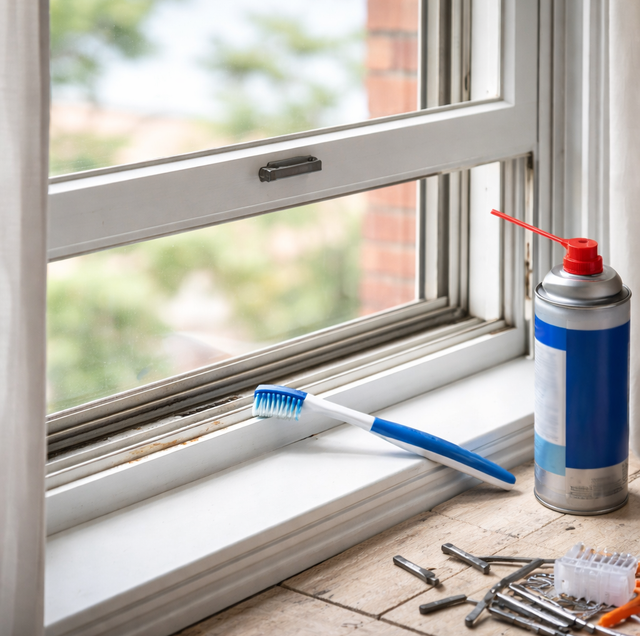
Quick Answer: A sticking window is usually caused by dirt in the track, paint sealing the sash, or a swollen wood frame, and all three are DIY fixes. A window that won't stay up on its own has a failed balance or spring, which means replacing that part. Clean and lubricate first, free any paint second, and never force a jammed sash.
A window that fights you every time you open it, or one that creeps shut the moment you let go, rarely means the whole unit is failing. Most of the time the culprit is small: grit packed into the track, a bead of old paint bridging the sash to the frame, wood that has swollen a couple of hundredths of an inch, or a balance spring that has quietly given up. Nearly all of those are fixable in an afternoon with hand tools and the right lubricant. The trick is diagnosing which one you have before you start prying, because forcing a stuck sash is the fastest way to turn a cheap fix into a cracked pane.
Know the Parts Before You Start
Fixing a window is a lot easier once you can name what you're looking at, because the fix depends entirely on which piece is binding.
Sash: The moving frame that holds the glass. A double-hung window has two, an upper and a lower, and either can stick.
Jamb and track: The channel the sash rides in. On vinyl and aluminum windows, the track is a molded groove; on older wood windows, it's a painted wooden channel with a parting bead separating the two sashes.
Balance or spring: The mechanism that counterweights the sash so it stays put at any height. Older homes used a rope-and-pulley system with a hidden iron weight; modern double-hungs use a spiral or block-and-tackle balance tucked into the jamb. When this fails, the window won't stay open.
Operator and rollers: Casement and awning windows swing outward on a hinge and are driven by a crank operator with a gear. Sliders ride on small rollers along a bottom track.
Lock and keeper: The latch that pulls the sash tight. A misaligned lock can make a window feel like it's binding when it's really just catching on the keeper.
Dirt and Grime in the Track
The most common reason a window drags is the least dramatic one: years of dust, pollen, and dead insects have compacted into the track and turned to a hard crust. On sliders and vinyl double-hungs, this grit acts like sandpaper against the sash.
Clean it out first: Vacuum the track with a brush attachment, then work a stiff nylon brush or an old toothbrush into the corners. For hardened grime, a plastic putty knife wrapped in a rag and a spray of household cleaner will lift most of it. Wipe the channel dry.
Then lubricate, but choose right: Use a dry silicone spray or rub the track with a paraffin candle or a bar of paraffin wax. Do not use petroleum grease, WD-40, or cooking oil. Oily lubricants attract the exact dust and grit you just removed, and within a season the track is worse than when you started. Dry silicone leaves a slick film with nothing for dirt to cling to.
Paint That Has Sealed the Sash Shut
On repainted older homes, a window that won't budge at all has usually been painted shut. A single careless coat can bridge the gap between the sash and the stop, gluing the two together as it cures.
Free it before you pull: Run a stiff putty knife or a dedicated window-zipper tool along the entire seam where the sash meets the frame, inside and out, working the blade in and gently rocking it to break the paint bond. A utility knife scored along the seam first makes the job cleaner. Tap the putty knife with a light hammer where the paint is thick. Only after the whole perimeter is free should you try to lift the sash, and even then, lift evenly from both sides.
Homes built before 1978 may have lead-based paint on the sashes and jambs, and the constant friction of a window generates dust. Do not dry-scrape or sand painted-shut windows of that age without a lead test and lead-safe work practices.
A Swollen Wood Sash
Wood windows move with the weather, and that movement is the two-sided truth behind a lot of seasonal sticking. In humid stretches, the wood absorbs moisture and swells, tightening the sash in its channel until it binds. In dry stretches, the same wood shrinks and can rattle loose. If your window sticks worse in muggy weather and eases up when the air dries out, swelling is almost certainly the cause.
Let it dry, then take off material: Wait for a dry spell so the wood is at its smallest before you cut anything, or you'll remove too much and end up with a gappy, drafty sash come winter. Find the tight spot by sliding a thin strip of paper around the closed sash and noting where it drags. Sand or plane a whisker off that edge, test the fit, and repeat. Once it slides freely, seal the bare wood with primer and paint or a coat of sealer so it stops drinking in moisture. An unsealed edge is what let the wood swell in the first place.
A Window That Won't Stay Open
A sash that slides shut on its own, or drops the second you stop holding it, is not sticking at all. Its balance has failed. On a spiral-balance or block-and-tackle window, the spring inside the jamb has lost tension or broken; on an old rope-and-pulley window, the sash cord has snapped, and the counterweight is sitting at the bottom of the wall cavity.
This one matters for safety more than the others. A heavy sash that won't hold can slam down on fingers, and a bedroom or ground-floor window that won't open and stay open is a blocked fire escape, so treat a failed balance as a repair to make soon rather than someday.
The fix is replacement, not repair: Balances are matched to the weight and height of the sash, so the reliable path is to note the type and part number stamped on the old balance, or take it to a supplier, and fit an identical replacement. Support the sash with a prop or a helper while you swap the part so it can't drop. A snapped sash cord on a weight-and-pulley window is a bigger job, since it means opening the jamb to re-string the cord over the pulley and reattach the weight, but the parts themselves cost little.
Sliders, Casements, and Racked Frames
Sliders and aluminum windows: These bind when the bottom track gets dented or clogged. Clean the channel as above, then check the track edge for a bent lip; a small bend can often be tapped straight with pliers and a block of wood. If the window rides on rollers, gummed or flat-spotted rollers are usually adjustable from a screw at the base of the sash or replaceable as a unit.
Casement and crank windows: When a crank window gets stiff or the handle spins without moving the sash, the operator gear is worn, or the hinge track is dirty. Clean the hinge arm track and give it a shot of dry silicone. If the crank feels gritty or slips, the operator is a bolt-in part you can replace; lubricate the gears of the new one lightly.
A racked, out-of-square frame: If a window binds along a diagonal, or the gap between sash and frame is wider at one corner than the other, the opening itself may have shifted as the house settled. That is beyond a clean-and-lube. This is one to hand off, because forcing a sash into a frame that has gone out of square only cracks glass and splits the sash.
When to Call a Pro
Plenty of window trouble is honest DIY work: clearing a track, freeing paint, easing a swollen sash, swapping a balance. Hand off the jobs where a wrong move gets expensive or unsafe. A rotted sill or jamb, a frame that has racked out of square with the house, a fogged or moisture-filled insulated glass unit that has lost its seal, or any second-story sash you can't safely support while you work all belong with someone who does this daily. The same goes for lead-suspect painted windows if you're not set up to work wet and clean up to standard.
One rule holds across every type: don't force it. A window that won't move is telling you something is in the way, and muscling a stuck sash almost always cracks the glass or splits the wood before it frees anything. Find the cause, clear it, and the window will move the way it was built to.
Frequently Asked Questions
A spiral balance is a metal tube with a twisted rod inside that tensions as the sash moves, common on lighter vinyl windows. A block-and-tackle balance uses a coiled spring pulling through a tiny pulley cluster and is used for heavier sashes, like double-pane wood-clad units. They are not interchangeable, so match the type when you buy a replacement.
Yes, for the candle. Rubbing a plain paraffin candle or a bar of paraffin wax along a clean track leaves a dry, dirt-shedding film and works well on vinyl and wood. Bar soap is a poor substitute because it draws moisture and can go tacky, and in a wood channel it can even encourage swelling.
On a double-hung window, the upper sash sits behind the parting bead and is used far less, so paint and grime build up undisturbed for years. It also carries its own separate pair of balances, so if the upper won't stay up while the lower does, the upper balances have failed independently.
No, and it can make it worse. Weatherstripping seals gaps against drafts; adding it to a sash that already binds only increases the friction. Solve the sticking first, then add compression or V-seal weatherstripping if you still feel air movement around the closed sash.
A failed insulated glass unit shows condensation, fog, or a cloudy film trapped between the two panes that you cannot wipe off from either side. That is a broken seal letting the gas escape, and it has nothing to do with sticking. The sash itself may still slide perfectly, but the glass unit needs replacing.
Lightly, and only the gears and the hinge track. Use a dry silicone spray or a dab of white lithium grease on the operator gear teeth, not an oil that will run and collect grit. Skip lubricant on the crank shaft seal, and if the handle turns freely without moving the sash at all, the operator gear is stripped and needs replacing rather than oiling.
Stop wrestling a stuck window before it cracks the glass — get it diagnosed and fixed right. Precision Home Worx serves Wilmington, Newark, and Hockessin. Call (302) 500-3676.


