
Why Cold Air Comes in Around Doors and Windows
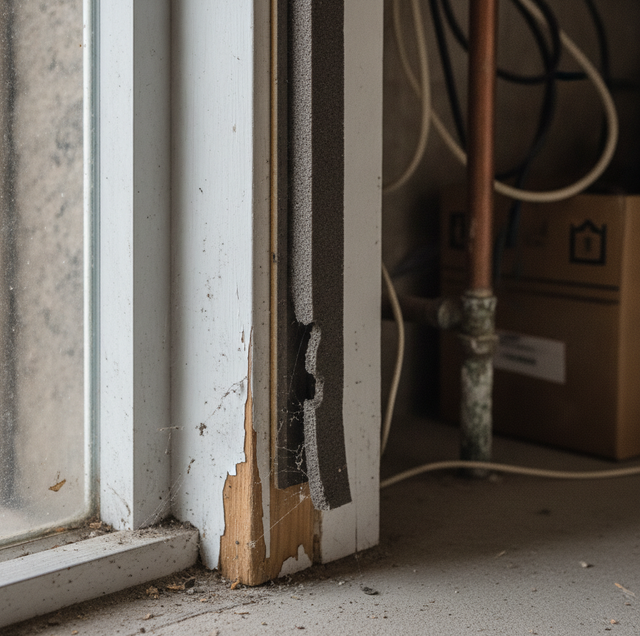
Quick Answer: A draft around a door or window means the assembly is no longer sealing tight, and air is moving through a gap driven by differences in pressure and temperature between inside and out. The usual culprits are worn weatherstripping, a bad or missing door sweep, failed caulk where the frame meets the wall, or a lock that no longer pulls the sash into its seal. Find the leak with a candle flame or incense stick on a windy day, then work from the cheapest fix up: replace weatherstripping and the sweep, re-caulk the frame joints, adjust the door so it seats, and only consider replacement when the unit itself has failed.
You close the door, you lock the window, and you can still feel a thread of moving air against the back of your hand. That draft is not your imagination, and it is not a sign that the whole door or window has failed. It means one specific seal in the assembly has stopped doing its job, and air is slipping through the gap that opened. The good news is that most of those gaps are small, cheap to close, and easy to find once you know what you are looking for.
This walks through what actually lets the draft in, how to locate the leak, and the order to work through the fixes, so you spend money where it counts.
What a Draft Actually Is
Think of your house like a slightly leaky boat sitting in water. Wherever there is a gap below the waterline, the pressure difference pushes water in, and it does not matter whether you notice the gap or not. Air behaves the same way. Inside and outside almost never sit at the same pressure and temperature, and that difference is a force looking for any opening. Warm air rises and escapes high, cooler air gets pulled in low, wind presses on one side of the house, and your heating or cooling system nudges the balance further. Every one of those forces drives air through whatever gap it can find.
So a draft is not really about cold weather. It is about a broken seal and a pressure difference, and both of those exist year-round. On a cold winter morning, the gap lets in frigid air and pulls out your heated air. On a humid summer afternoon, that same gap works in reverse: it lets hot, sticky outside air in and lets your cooled, dried air escape. The seal does not care about the season. It only cares whether it still touches tight, and once it stops, the air trades places in either direction.
Where the Seal Breaks Down
A door or window is a moving part set into a fixed hole in a wall, and there are several separate seals holding back the air. Any one of them can fail on its own.
The most common failure is the weatherstripping, the flexible strip that runs around the door or window where the moving part meets the frame. New weatherstripping is soft and springy and compresses against the sash to close the gap. Over the years, it hardens, cracks, flattens, or peels loose, and once it can no longer spring back, it stops sealing. Run a finger along it: if it feels stiff and brittle instead of soft, or if it has gone flat and thin, that is your leak.
At the bottom of a door, the seal is the job of the door sweep, the strip or bristle that bridges the gap between the door and the threshold. When you can see a line of daylight under a closed exterior door, the sweep is worn, bent, missing, or set too high. That gap is often the single biggest leak in a house because it sits low where cold air is pulled in hardest.
Then there is the threshold itself and the door's fit. A door that has warped, sagged on its hinges, or shifted as the house settled no longer meets the jamb evenly. You will see the daylight change from tight at the top to wide at the bottom, or the reverse. The weatherstripping can be perfect, and the door will still leak if the two surfaces no longer press together.
Caulk is the seal you almost never think about. Where the door or window frame meets the wall or siding, a bead of caulk closes that joint on both the interior and exterior. Caulk dries out, shrinks, and cracks over the years, and when it separates from either surface, it opens a path straight through to the wall cavity. This is the leak people miss, because the draft feels like it comes from the window when it is really coming from around it.
On the glass side, an old single-pane window simply passes cold through, and an insulated-glass unit that has failed, shown by fog or moisture trapped between the panes, has lost the sealed air layer that slows heat transfer. On older wood windows, the glazing putty that holds the pane in the sash dries, shrinks, and crumbles, opening gaps right at the glass edge.
A window that will not lock tight is its own kind of leak. On most windows, the lock does more than secure the sash; it pulls the sash firmly into its weatherstripping. If the lock is loose, broken, or not engaged, the sash sits slightly proud of its seal, and air walks right past. Finally, the leak can be in the wall around the frame rather than in the window at all. When a frame was installed without the gap behind it properly sealed and insulated, air moves through the wall cavity and shows up at the trim, which is why a newer window can still feel drafty.
How to Find the Leak
You cannot fix a draft you cannot locate, and the leak is rarely where it feels like it is. A few simple tests will pin it down, and they all work better on a windy day, when the pressure difference is biggest, and the air movement is easiest to detect.
The hand test is the crudest and fastest. Wet the back of your hand slightly and move it slowly around the frame, sash, threshold, and trim. Moving air feels cold on damp skin, and you will feel the draft strengthen as you cross the gap.
For precision, use a small flame or smoke. Hold a lit incense stick or a candle flame a couple of inches from the frame and move it slowly along the edges. Where air leaks, the smoke stream or flame visibly flickers and bends. A smoke pencil made for this does the same thing with more control. Check the sash edges, the threshold, and the joint where the frame meets the wall as three separate areas, because the fix for each is different. And do the obvious check first: with the door or window closed, look for any daylight showing around it. Visible light means an open-air path, full stop.
Fixes in Order, Cheapest First
The reason to find the exact leak before buying anything is that the repairs run from a few dollars to a major project, and the cheap ones fix most drafts. Work down this list in order and stop when the draft stops.
Start with weatherstripping and the door sweep. Peeling off old, hardened weatherstripping and pressing on a fresh strip is the single highest-value draft fix, and swapping a worn door sweep for one that meets the threshold closes the biggest low leak. Both are inexpensive and go on with basic hand tools.
Next, re-caulk the frame joints. Cut out the old cracked caulk where the frame meets the wall or siding, inside and out, and lay a clean bead. One important exception: on the exterior frame of many windows, there are small slots at the bottom called weep holes that let rainwater drain out. Never caulk those shut, or you trap water in the frame. Caulk the fixed joints, not the drains, and never seal a sash that has to move.
If the door still leaks after new weatherstripping, the problem is fit. Adjusting the strike plate or the hinges so the door pulls in tighter, or shimming a hinge to correct a sag, brings the door back against its seal. Where the threshold gap is the issue, adding or adjusting a threshold or an under-door sweep closes it. On old wood windows with crumbling glazing, re-glazing, which means scraping out the dried putty and pressing in fresh glazing compound, reseals the pane at the glass edge.
Only after the small seals are handled does full window or door replacement make sense, and it is worth it mainly when the unit itself has failed: a fogged insulated-glass unit, a rotted frame, a single-pane window you want gone for good. For everything short of that, sealing the small gaps is far cheaper than replacement and frequently more effective, because a brand-new window installed over an unsealed wall gap will still let air through. Air sealing solves the actual leak; replacement only helps when the thing you are replacing is the leak.
None of these fixes is dangerous for a careful homeowner. The one thing to mind is ventilation: caulk and some sealants give off fumes as they cure, so open a window or run a fan while you work and let the room air out afterward.
Frequently Asked Questions
Hold a lit candle a couple of inches from the frame and watch the flame flicker and bend where air is leaking. No candle handy? A stick of incense or even a slightly damp hand does the same job, since moving air feels cold on wet skin. For a whole-house picture, an energy auditor's blower-door test depressurizes the house and pinpoints every leak at once, but for a single window, the flame-flicker method is enough. Do it on a windy day, and check the sash edges, the threshold, and the frame-to-wall joint as three separate areas, since each has a different fix.
Order matters because the cheap fixes address where the air actually moves. Weatherstripping and a door sweep are low-cost and DIY-friendly, so start there and stop if the draft stops. Much of the leak travels through the gap around the frame, not through the glass, so replacing a window that sits over an unsealed rough opening still leaves you with a draft. Re-caulk the frame-to-wall joints next, inside and out. Full replacement belongs last and earns its cost only when the unit itself has failed, such as a fogged double-pane or a rotted frame.
Newer glass does not fix a gap that is not in the glass. The leak is often the frame-to-rough-opening gap hidden behind the trim, the space that was never foamed with insulation at install, so air tracks through the wall cavity and surfaces at the casing. A failed insulated-glass seal is a different symptom: it shows as fog or moisture trapped between the panes rather than as a draft, so a foggy pane points to the glass unit while a felt draft points to the frame gap or the lock. Confirm every lock is fully engaged, since a loose lock lets the sash sit slightly off its weatherstripping.
They seal different edges of the same door, and you usually need both. The door sweep is the strip or row of bristles at the very bottom that bridges the gap between the door and the threshold, so it handles the low leak you see as daylight under a closed door. Weatherstripping runs up the two sides and across the top, sealing the gap where the door meets the jamb as it closes. A perfect sweep does nothing to seal a leak along the side of the door, and perfect side weatherstripping does nothing to seal the gap at the floor.
Caulk only the fixed joints, never anything that moves. The joint where the frame meets the wall or siding is fixed and should be sealed on both the interior and exterior. Never run caulk across a sash that has to slide or swing, or you'll glue the window shut. And never seal the weep holes, the small slots at the bottom of the exterior frame that let rainwater drain out of the window; blocking them traps water inside the frame and invites rot. If a slot at the bottom outside edge looks intentional, leave it open.
It helps in both, because the gap does not care which direction the air moves. In winter, the leak lets cold air in and pulls your heated air out. In a humid summer, the same gap lets hot, sticky outside air in and lets your air-conditioned, dried air escape, which makes rooms feel muggy and pushes your cooling system to run longer. Sealing the gap cuts the load on your equipment and steadies comfort in every season, so the work you do once pays back year-round rather than only on cold days.
Book a draft-sealing checkup — get every door and window sealing tight before the next season swing. Precision Home Worx serves Wilmington, Bear, and Newark. Call (302) 500-3676.


