
Wood Deck Maintenance Checklist: What to Do Each Season
Quick Answer: A wood deck that ages well runs on routine, not luck: clear debris from board gaps each fall, reseal only when a water-bead test says so, and shovel snow with a plastic blade, not metal.
Two decks, same age, same lumber, built by the same crew in the same week. One still looks close to new after five winters. The other is graying, splintering at the edges, with screws backing out of their holes. The lumber didn't know the difference. The maintenance did.
That is what separates a deck that ages gracefully from one that doesn't: not the wood species, not even the climate, but whether anyone gave it a handful of deliberate touches a year instead of ignoring it until something looked wrong. None of what follows is a diagnosis of a problem already underway. It's the routine that keeps problems from starting, built around what actually stresses a deck year-round: ice and thaw cycling in winter, and humidity and UV exposure the rest of the time.
Why Deck Maintenance Is a Calendar, Not a Checklist You Run Once
Wood moves. It swells when it absorbs moisture and shrinks as it dries out, and every board on your deck goes through that cycle dozens of times a year regardless of climate. Winter adds a second layer on top of that: water in a crack or fastener hole can freeze, expand, and widen the opening it started in, then thaw and let more water in for the next freeze. Repeated over a whole winter, that cycle can turn a hairline check in a board into something you'd actually notice.
Summer stresses the wood differently, not less. Humidity keeps boards swollen for longer stretches, straining fasteners and finish, and ultraviolet light breaks down the lignin that gives wood its color and some of its stiffness, which is why unsealed decking grays and gets brittle at the surface even in a dry summer. Treat the two seasons as different stressors on the same wood, not one dangerous season and one safe one. A routine built only around winter misses half the year's wear.
Fall and Spring: Clear What's Trapping Moisture
The single most useful habit on a wood deck is also the simplest: get debris out of the places it collects before it can hold water against the wood.
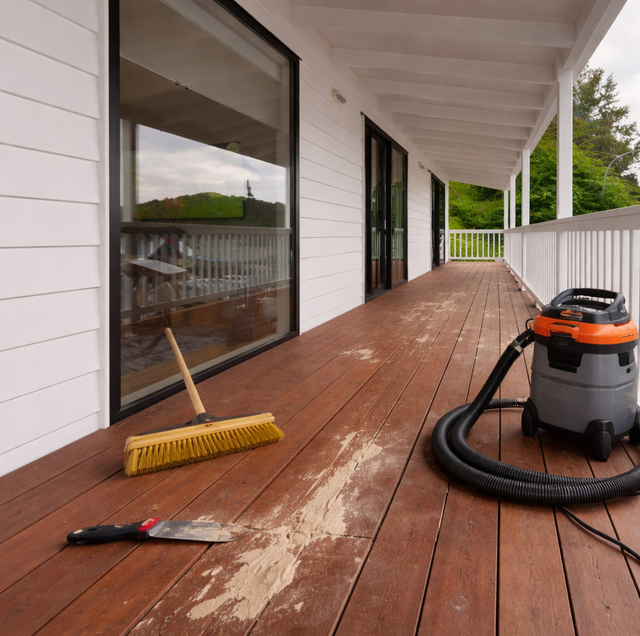
Board gaps: Leaves, pine needles, and dirt pack into the narrow gap between boards and act like a sponge, holding moisture against the board edges long after the surface has dried. Run a putty knife, an old butter knife, or a dedicated deck-gap tool along the gaps a couple of times a year, especially in fall once leaves have dropped, to keep that channel open.
The wall-side edge: Debris tends to collect where the deck meets the house, the same joint that has the least airflow to begin with. A stiff brush or a shop vac with a narrow nozzle clears that strip faster than a broom does.
Under railings and around posts: Anywhere airflow is already limited, a buildup of leaves or dirt makes it worse. A quick sweep during your fall and spring pass keeps those spots from holding moisture the longest.
A general wash: A deck-safe cleaner and a stiff bristle brush, followed by a rinse, removes surface grime and mildew and gives you a clean surface to actually inspect. Pressure washers can work but are easy to overdo; a fan-tip nozzle and moderate pressure avoid gouging the wood grain, which itself becomes a moisture trap.
The Sealing Schedule: Read the Wood, Not the Calendar
The most common deck maintenance mistake isn't skipping sealer; it's reapplying it on autopilot every couple of years instead of checking whether the deck actually needs it. Run the water-bead test before you decide: sprinkle a cup of water on a few spots on the deck. If it beads up and sits on the surface, the sealer is still doing its job. If it soaks in within a minute or two, the wood is due.
Penetrating (oil-based, semi-transparent) sealers soak into the wood fiber instead of sitting on top of it, so there's no surface film to crack or peel. That makes them forgiving through freeze-thaw cycling, since there's no film for ice to lift or split. The trade-off is that they wear out faster, typically needing reapplication every one to two years depending on sun exposure and foot traffic.
Film-forming finishes (solid-color stains, deck paints, and clear film varnishes) sit on the surface and generally last longer between coats, often two to three years. That surface film is exactly what freeze-thaw cycling stresses hardest: as the wood underneath swells and shrinks with moisture and temperature, a film that can't flex with it is what cracks and peels first, usually at board edges and end grain. Once a film-forming finish cracks, water gets trapped underneath the intact sections instead of shedding off, which is worse than having no finish at all in that spot.
Whichever type you use, timing the application matters as much as the product. Reseal when the wood is clean, fully dry, and the forecast has a few consecutive dry days above roughly 50°F, which usually means a window in fall before the first hard freeze or a stretch in spring after the freeze-thaw cycle has settled down. Sealing over damp wood, or right before a cold snap, traps moisture in rather than out.
Hardware: An Annual Snug-Down, Not a Repair Job
Screws, bolts, and structural connectors expand and contract along with the wood around them, and normal seasonal movement works some of them fractionally looser over time, even on a deck with nothing wrong. That's a maintenance item, not a red flag: walk the deck each spring, and again in fall, with a drill or a wrench and snug anything backed out enough to catch a fingernail under the head. Composite decking with hidden fastener clips benefits from a visual walk-through too, checking that boards haven't shifted enough to expose a clip edge.
This is a check-in, not a diagnosis. A handful of screws needing a quarter-turn is normal seasonal movement. A post, railing, or stair connection loose enough to move under hand pressure, rather than just a screw head sitting slightly proud, is a different category of finding and worth a closer look before you keep using that section.
Winter-Specific Care: Snow and Ice Without Damaging the Deck
Clearing snow is where a lot of otherwise well-maintained decks pick up avoidable damage, usually from the tool rather than the weather.
Skip the metal-edge shovel: A standard metal snow shovel gouges the wood surface and can tear right through a sealer film with a single pass, especially at board edges where the blade catches. A plastic-blade shovel or a push broom for lighter snow does the job without cutting into the finish.
Shovel with the grain, not across it: Working in the same direction as the boards reduces the chance of catching an edge or a raised nail head.
Don't let cleared snow pile against the house wall: A drift banked against the siding or the ledger connection keeps that joint wet far longer than open snow on the rest of the deck, since it's shielded from sun and slow to melt. Shovel that snow off the deck entirely instead.
Skip rock salt near the wood: Deicing salt can accelerate corrosion in exposed fasteners and leave a residue that affects how the next coat of sealer takes. A wood-safe, calcium-based ice melt, or plain sand for traction, is the safer call on the decking.
Keep the Drainage Path Open Year-Round
Every point above connects back to one idea: wood that stays wet is wood under stress, whatever the season. The gaps between boards exist by design so water can drain through rather than pool on the surface, and that only works if the gap stays clear. A deck with packed debris in every gap behaves like a shallow tray instead of a drained surface, holding water against the underside of the boards long after a rain or a thaw. Keeping those gaps clear is arguably the highest-value five minutes of deck maintenance there is, and it costs nothing but a putty knife and a little attention.
A Simple Seasonal Rhythm
You don't need a complicated schedule to stay ahead of this. Spring: wash the deck, snug loose hardware, and run the water-bead test. Summer: watch for UV wear on south- and west-facing sections, which fade fastest. Fall: clear every gap and edge of leaves before snow buries them, and reseal if the wood needs it while dry days remain. Winter: shovel with a plastic blade, keep snow off the house-side edge, skip the rock salt. Four short passes a year, each one small, add up to the difference between the deck that still looks new and the one that doesn't.
Frequently Asked Questions
The two look similar but aren't the same thing. Surface graying is UV breaking down lignin in the outermost wood cells, a cosmetic change that a light sanding or a brightening wash can often reverse. Actual damage shows up differently: wood that feels soft or spongy under a thumbnail press, fibers that lift and splinter rather than discolor, or checking deep enough to catch a fingernail. End grain and the cut ends of boards weather faster than the flat field of a board, since the exposed fiber ends soak up moisture more readily than a planed face, so that's often where real deterioration shows up first even on a deck that still looks fine everywhere else.
No sealing is needed since composite doesn't absorb water like wood fiber, but the gap-clearing, snow-shoveling, and hardware-check steps still apply. Composite boards expand and contract with temperature more than most expect, so hidden fastener clips can still work loose seasonally, and packed debris between boards causes the same drainage problems it does on wood.
Most sealer manufacturers set a minimum application temperature around 50°F: colder wood doesn't absorb a penetrating sealer evenly, and film-forming products can cure improperly, leaving a tacky or uneven finish.
Yes, but a narrow, high-pressure tip can etch the softer spring-growth grain out of the board, leaving a raised, fuzzy texture that holds more dirt and moisture afterward than a smooth surface would. Keep the wand moving in smooth, overlapping passes and test an inconspicuous spot first before doing the whole deck.
It's worth doing, mainly because anything sitting in one spot all winter, especially something with a flat base and little airflow underneath, traps moisture and blocks sun on that patch of decking. Moving furniture periodically, or covering it and propping it up slightly, keeps one part of the deck from weathering differently than the rest.
Yes. A south- or west-facing deck gets more UV exposure and dries out faster between rains, which usually means faster fading and a shorter interval between resealing. A north-facing or heavily shaded deck dries more slowly after rain or snowmelt, which can mean more moisture-related wear even with less visible sun damage, so it deserves just as much attention to the gap-clearing and drainage side of the routine.
Keep your deck ahead of the wear — Get your deck cleaned, sealed, and its hardware checked. Precision Home Worx serves Wilmington, Bear, and Newark. Call (302) 500-3676.


