
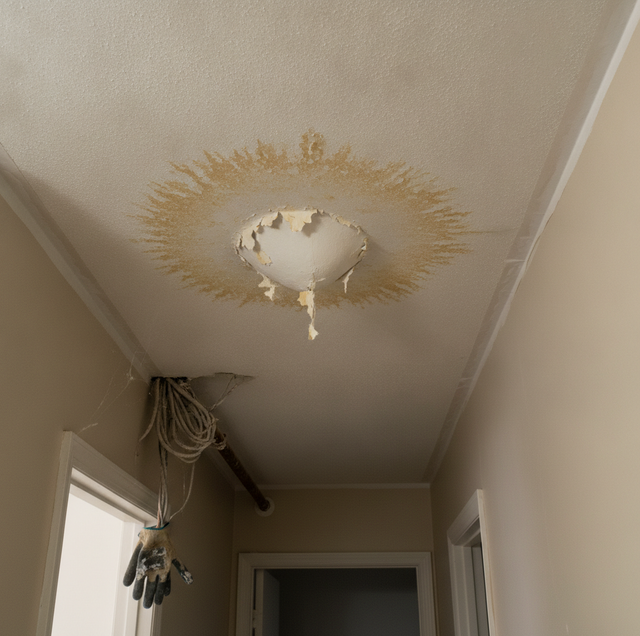
Quick Answer: Look for staining, bubbling, or peeling paint, soft drywall, warped floors, cracked caulk in wet areas, condensation, a musty smell, and unexplained jumps in the water bill. Check under sinks, around appliances, at toilets and tubs, the water heater, the attic, and the basement. Find and stop the source first, dry the area fully, then repair the surface last.
Water finds the cheapest path down and the slowest path out. That combination is exactly why a small leak stays hidden for weeks before anything shows on the surface, and it is also why water damage is one of the least expensive problems in a house to fix if you catch it in the first stage. A damp spot on drywall is a repair that can be measured in an afternoon. The same leak, ignored through a full cycle of wetting and drying, rots the framing behind the wall, feeds mold into the cavity, and eventually leads to structural damage. The gap between those two outcomes is almost entirely about how early you noticed.
The good news is that a house gives you warning signs long before the framing is at risk. Most of them are visible, a few you smell, and one shows up on your water bill. Knowing what each sign means, and where the water is most likely coming from, lets you act while the fix is still small.
What Water Damage Actually Does Behind the Surface
Building materials handle water in very different ways, and understanding that is the whole game when you are reading the signs. Drywall is gypsum wrapped in paper, and paper is where mold starts. Once drywall gets wet and stays wet, it loses stiffness and turns soft and spongy, and it does not recover its strength even after it dries. Framing lumber can take occasional wetting, but repeated soaking without a chance to dry out is what invites rot and the fungus that causes it. Paint is a thin, waterproof skin, so when moisture pushes from behind, the paint lifts away from the wall in bubbles or peels, which is often the first thing you see.
Think of it the way a sponge left in the corner of the sink behaves. The surface looks fine, but the underside stays wet, holds that moisture for days, and starts to smell before anything about its appearance changes. A wall cavity does the same thing. The visible drywall may look dry, while the insulation and the wall's bottom plate remain damp long enough for problems to take hold. That is why the smell often arrives before the stain, and why pressing on a suspect area tells you more than looking at it.
Early Signs of Water Damage, Sorted by Area
Most warning signs fall into a handful of categories. None of them is proof on its own, but two or three together in the same spot is a strong signal.
Ceilings and upper walls: Yellow or brown rings are the classic tell. A ring forms because water carries dissolved minerals and old drywall compound with it, and those deposits stain the surface as the water spreads and dries at the edges. A stain directly below a bathroom, near a roof valley, or under a plumbing run deserves a close look.
Walls and paint: Bubbling, blistering, or peeling paint means moisture is pushing out from behind the surface. Wallpaper that lifts at the seams is the same story. If the drywall feels soft or spongy when you press it, water has already soaked in, and the board has lost its structural integrity.
Floors: Wood and laminate react to moisture from below or from a slow surface leak by cupping, where the edges of each board rise higher than the center, or by warping and buckling. Tile can loosen or sound hollow when the subfloor beneath it has gotten wet.
Wet rooms: In bathrooms and kitchens, cracking or missing grout and caulk around tubs, showers, and counters is both a symptom and a cause, as those gaps allow water to reach the material behind the tile.
Smell and mold: A persistent musty, earthy odor is one of the earliest signs of all, because mold and damp release it well before anything is visible. Actual mold spots, black, green, or gray, confirm that moisture has been present long enough to grow something.
Windows, pipes, and the bill: Fog or beads of water on window glass and on cold pipes point to condensation and high indoor humidity. And a water bill that climbs with no change in how much water you are using is a strong hint of a leak running somewhere you cannot see, often underground or inside a wall.
Where to Look First
Water damage clusters around a short list of usual suspects, because those are the places with plumbing, connections, and hoses that fail slowly and out of sight.
Start under the kitchen and bathroom sinks, where supply valves and drain traps weep for weeks before a puddle forms. Check the floor and cabinet behind or beside the dishwasher and along the refrigerator water line, two of the most common slow-leak sources in any kitchen. Look at the base of every toilet and along the bottom edges of tubs and showers. Inspect the water heater and the floor around it, since tanks seep from fittings and the bottom seam as they age. Go up into the attic and look at the underside of the roof and around anything that penetrates it, and go down into the basement or crawlspace, where poor drainage and grading push groundwater against the foundation. Finally, run your eye along interior window and door frames, where failed exterior seals let rain track inward.
What Actually Causes It
The signs above trace back to a handful of sources. Slow plumbing leaks at valves, joints, and drain connections are the most common and the sneakiest. Roof and flashing leaks let rain in around chimneys, vents, and valleys, then travel along framing before dropping onto a ceiling far from the actual entry point. Poor drainage and grading around the foundation send water toward the house instead of away from it. Appliance hoses, especially the rubber ones on washing machines and older dishwashers, split or work loose. Failed caulk and grout in wet areas open a path to the substrate. And plain condensation, driven by indoor humidity, wets cold surfaces enough to cause real damage over time.
Leaks are a year-round problem, not a seasonal one, and it helps to hold both sides of that in mind. Cold-weather months bring their own version, from freezing pipes to ice pushing water under roofing, while warm, humid stretches drive condensation and heavier storm runoff. A slow supply-line drip under a sink does not care what month it is. Checking your usual suspects a couple of times a year keeps you ahead of whatever the season happens to be throwing at the house.
Telling a Fresh Leak From an Old, Fixed One
Not every stain is an emergency. A house that has been around a while often wears the scars of leaks that were repaired long ago, and knowing the difference saves you from tearing open a wall for no reason. An active leak reads as wet or damp to the touch, feels soft, and often has a defined dark edge where the water is still advancing. An old, already-fixed stain is dry, hard, and stable, and it has not changed in a long time. The most reliable field test is to mark the outer edge of the stain with a pencil and check it again after a few dry days and after the next heavy rain. If the mark is still the boundary, the leak is history. If the stain has pushed past your line, water is still moving.
It is also worth separating a true leak from ordinary condensation. High indoor humidity makes cold glass and cold pipes sweat, and that sweat can drip and wet a surface without any leak being involved at all. Wipe the surface dry and watch it. Condensation returns gradually and tracks with humidity, while a leak keeps a surface actively wet and reappears in the same spot with a source you can usually trace uphill.
What to Do When You Find Something
The order of operations matters more than the tools. Find and stop the source first. Patching the ceiling or repainting the wall before the leak is fixed hides an active problem that keeps soaking the material behind your fresh finish. Once the source is stopped, dry the area completely, giving the cavity, insulation, and framing time to release moisture, not just the visible surface. Only after it is dry should the drywall, paint, or flooring be repaired. A moisture meter is the one tool that takes the guesswork out of both ends of that process, confirming whether a suspect spot is truly wet and, later, whether the area has actually dried out before you close it back up.
A few situations call for a professional rather than a weekend fix. Anything involving standing water near outlets, wiring, or the electrical panel is an electrical hazard and needs to be treated as one. Visible mold across a large area, or that persistent musty smell with no source you can find, means moisture is likely working inside the structure and should be assessed rather than painted over. And once water has reached framing, subfloor, or a ceiling that is sagging, you are past cosmetic repair and into work that needs a trained eye to scope correctly. Catching it early is what keeps it in the small-repair category, which is the entire reason to know these signs in the first place.
Frequently Asked Questions
A pinless moisture meter settles it fastest: a damp reading means the leak is active, a dry one means it is old. The look of the stain gives you a second read. An old, already-fixed stain tends to have a brown, feathered bleed at its outer edge, where the water spread slowly and dried, while an active leak holds a sharper, darker boundary because it is still advancing. Between the meter reading and the character of that edge, you can usually call it without opening the wall, and only mark-and-wait if both are ambiguous.
Two that homeowners rarely think to open up are worth adding to the list. Check the HVAC condensate line and its drain pan, which can overflow or drip when the line clogs, and the ice-maker line behind the refrigerator, a small flexible tube that works loose at its fitting. Both are slow drips rather than gushers, so they can run for weeks out of sight before any stain appears on a ceiling or floor. Pull the fridge out and look behind it, and trace the condensate line from the air handler to where it drains, because neither shows itself where you would normally walk past.
A musty, earthy odor with nothing to see usually means moisture and mold are already active inside a wall, under a floor, or in the back of a cabinet, before any of it has reached the surface, where a stain would show. Treat the smell as an early warning that outranks your eyes on this one, and go looking behind and underneath things, pulling out the toe-kick or the back of a cabinet, rather than waiting for a stain to appear and confirm what your nose already told you.
Yes, and a pinless model is the easy choice for a homeowner because it reads through the surface without leaving holes. It tells you how wet the drywall or wood is behind the paint, which lets you confirm whether a suspicious area is actually damp or just discolored, and just as importantly, whether an area has fully dried out after a repair. That second use matters because the eye alone cannot tell a dry wall from one that is still holding moisture in the cavity behind it.
Often, yes, and keeping indoor humidity around 50 percent cuts most of it, which is a quick way to test the theory. Condensation also clusters on the coldest surfaces in the room, single-pane or north-facing glass, and uninsulated pipes, so sweating that follows the cold spots and eases when the air dries out is almost always moisture from the air. A real leak behaves differently: it wets the same spot regardless of the weather and keeps returning even after you drop the humidity. Watch which one you are dealing with over a few days before you tear anything open.
Beyond stopping the water, the wet framing has to dry first, often for several days, and best confirmed with a meter rather than guessed by eye. Closing up or painting over damp wood traps that moisture inside the cavity, where it keeps feeding rot and mold. It also spoils the repair itself: paint applied over a surface that is still releasing moisture re-bubbles as the wall dries out behind it, and many paint warranties are voided when the coating goes onto a damp substrate. So the drying step is not just about the framing; it protects the finish work you are about to pay for.
Book a water-damage inspection before a small stain becomes a big repair — catch it early and keep the fix simple. Precision Home Worx serves Wilmington, Bear, and Newark. Call (302) 500-3676.


