
Windows Fogging Between the Panes: What It Actually Means
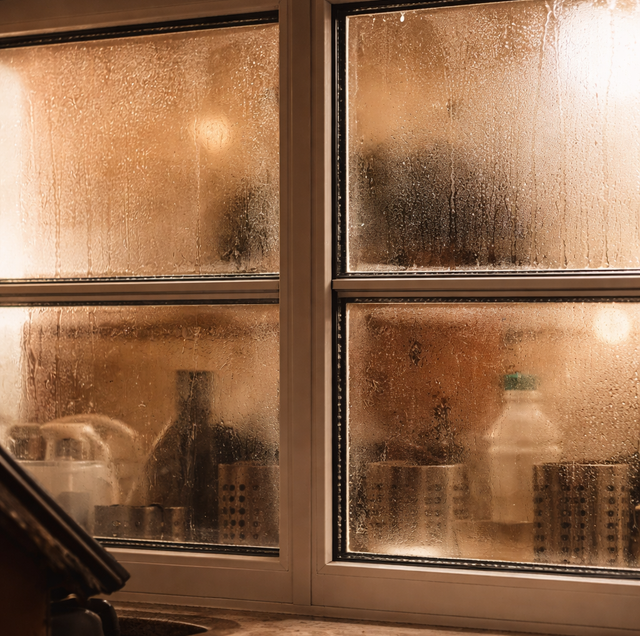
Quick Answer: Fog trapped between the panes means the glass unit's seal has failed — replacing the glass pack or sash is the fix, not caulk or weatherstripping. Fog on the glass itself is just condensation from humidity.
The glass looks clean from a few feet away, and it looked just as clean when you wiped it down last weekend. Get close on a bright day, though, and there is a soft, milky ring sitting inside the pane itself, not on either face you can reach with a rag or a squeegee. No amount of glass cleaner touches it, because the haze is not on the glass. It is between two pieces of it.
What's Actually Sealed Inside That Glass
A modern double- or triple-pane window is not just two sheets of glass sitting near each other. Each pair of panes is built into a sealed unit, called an insulated glass unit or IGU, with a metal or composite spacer bar running around the perimeter between them. That spacer bar is hollow, and it is filled with a desiccant, a drying material similar to the small packets that ship inside a shoebox, whose job is to absorb the trace of moisture sealed inside during manufacturing. Many units are also filled with argon or krypton gas instead of plain air, since a heavier, slower-moving gas conducts less heat across the air space than ordinary air does.
Two separate seals hold that sandwich together at the edge. A primary seal, usually a rubbery compound called polyisobutylene, sits between the spacer and the glass and does the actual job of keeping air and moisture out. A secondary structural seal, typically silicone, polysulfide, or polyurethane, sits outside that and holds the unit together mechanically. As long as both seals hold, the space between the panes stays dry, and the desiccant stays dormant. The moment either seal opens even slightly, outside air, carrying whatever humidity it has, starts working its way in.
Why the Edge Seal Lets Go
The seal does not fail all at once, and it usually gives no warning before the day it does.
Age: Many glass manufacturers back the seal with a separate warranty that runs a decade or two, and it's common for the first sign of fogging to show up right around when that coverage lapses. That is not a coincidence: the sealant compounds are built to hold for roughly that span, and the desiccant only has so much capacity to pull moisture out of the air space before it fully saturates and stops working.
Thermal cycling: Every day the sun-facing pane heats up while the shaded pane and the frame stay cooler, and every night that reverses. The spacer bar and the glass expand and contract at slightly different rates through that daily swing, which flexes the seal at the corners and seams over and over, the same way flexing a paperclip back and forth eventually snaps it. A south- or west-facing unit that runs through a wider daily temperature swing typically reaches that fatigue point sooner than a shaded, north-facing window installed the same year.
Manufacturing and material quality: Not every IGU is built to the same standard, and a unit with a thin or unevenly applied primary seal, or a manufacturing defect at the corner joint where the spacer bar meets itself, can fail years before an otherwise identical window in the same house. There is no way to inspect this from outside once the unit is glazed into the sash; the seal is doing its job invisibly until the day it stops.
Three Kinds of Foggy Glass, and Only One Means a Failed Seal
"My windows are foggy" describes three different things, and mixing them up leads to the wrong fix.
| What You're Seeing | Cause | What It Means | What To Do |
|---|---|---|---|
| Haze or moisture *between* the panes doesn't wipe off from either side | IGU edge seal has failed; desiccant is saturated | The sealed air space is gone for good | Replace the glass unit or sash; caulk and resealing do nothing |
| Dew on the *outside* face of the glass, usually early morning, clears by mid-day | Outdoor humid air meeting glass that's colder than the outdoor dew point | Normal weather condensation; often a sign the glass is insulating well | Nothing. It clears on its own as the day warms |
| Fog or beading on the *room-side* face of the glass, especially near a bathroom or kitchen | Indoor humid air meeting a cold glass surface, most often single-pane, storm-window, or a double-pane unit in an especially humid room | An indoor humidity or ventilation issue, not a window defect | Run exhaust fans, crack a window, or reduce indoor humidity; consider upgrading the glass if it's single-pane |
Interior-pane fog is the only one of the three that means the glass unit itself has failed. The other two are about humidity meeting a temperature difference, not a broken seal, and both clear up with airflow or the time of day rather than a repair to the window.
What Actually Fixes a Failed Seal
Once the edge seal has opened and the desiccant has saturated, there is no product that reseals it from outside. Caulking the frame, replacing weatherstripping, or running a bead around the sash treats the joint between the window and the wall or the gap around a moving sash, and none of those are anywhere near the seal that failed, which sits buried inside the glass unit itself. If what you're feeling is moving air rather than a hazy pane, that's a different problem with a different fix, and the two are easy to tell apart by symptom. A haze on the glass that no amount of wiping clears, especially haze that sits between the panes rather than on either face, points to a failed seal in the glass unit itself. A draft you can feel with your hand near the sash or frame on glass that still looks perfectly clear points to a worn seal at the moving sash or a gap where the frame meets the wall, not to the glass at all, and that's a separate repair path with its own fix.
For fogged glass, the repair is replacing the glass pack, the sealed IGU itself, inside the existing sash and frame, or replacing the whole sash if the frame and hardware are still sound. Full window replacement, tearing out the frame down to the rough opening, is usually only necessary if the frame itself has also failed, from rot, warping, or damage, rather than just the glass inside it.
Frequently Asked Questions
Some companies offer a drill-and-refill service that vents the sealed air space, dries it out, and injects a fresh drying agent through a small hole, then plugs the hole. It can clear the haze for a while, but it does not repair the seal that failed in the first place, so the same unit commonly fogs again within a year or two, and most glass manufacturers won't extend or honor a seal warranty on a unit that's been drilled into.
Not necessarily faster, but the failure can be invisible for a while before it turns visible. Argon molecules are smaller than the molecules that make up ordinary air, so once a seal starts to weaken, argon can slowly diffuse out over months or years before enough humid outside air has worked its way in to actually fog the glass. That means a unit's insulating performance can already be dropping well before you ever see haze, since the argon that made it an efficient window is leaking out the same tiny gap.
Mostly cosmetic and a sign of lost insulating performance, but it's worth acting on rather than watching it for years. On a wood-framed sash, moisture trapped against the inner glass surface for an extended stretch can eventually wick into the wood at the corners of the sash, which is where rot tends to start on an otherwise sound window. Catching it while it's still just haze avoids that becoming a sash-rot repair down the line.
That pattern usually means the seal is failing rather than fully gone. A small, early gap in the seal may only let in enough moisture to hit the dew point inside the air space under specific temperature swings, like a cold snap or a big day-to-night difference, then clear again as conditions change. A seal that has fully let go tends to fog steadily regardless of the weather outside. Intermittent haze is worth tracking, since it usually means the same unit fogs permanently before long.
Triple-pane glass has two separate sealed cavities, one between the outer and middle pane and one between the middle and inner pane, each with its own spacer and desiccant. Holding a flashlight at a low angle against the glass at dusk or in a dim room usually shows which cavity the moisture is sitting in, since the haze appears layered at one depth rather than the other. That detail matters for ordering the correct replacement glass pack, since only one of the two seals may need replacing.
Often, yes. Most IGU manufacturers etch or laser-mark a fabrication code directly onto the spacer bar between the panes, showing the production date or batch number. Holding a flashlight at a low, raking angle against the edge of the glass, where the spacer is visible between the panes, usually makes the marking readable. That matters because two windows installed in the same remodel and recorded under the same install year are not guaranteed to be the same batch. A late substitution, a backordered unit, or a mid-project supplier swap can put a different production run into the same house, and seal quality can vary from batch to batch even within a single claimed installation year. If one window in a group fogs years ahead of its neighbors, checking the spacer date is a quick way to find out whether it was ever really the same batch to begin with.
Once you can name what's happening between the glass, edge seal, spacer, and desiccant, the next foggy window you notice stops being a mystery. A ring of haze that stays no matter how many times you clean the glass points to the unit itself; dew that burns off by midday, or fog that only shows up over a hot shower, points somewhere else entirely, and neither of those calls for the same fix as a failed seal. Knowing which one you're looking at is most of the work of deciding what happens next.
Get a fogged or failing window assessed — find out whether the glass pack, the sash, or the full unit needs replacing. Precision Home Worx serves Wilmington, Bear, and Newark. Call (302) 500-3676.


