
Why Grout Cracks and Crumbles: Normal Wear or Bigger Problem?
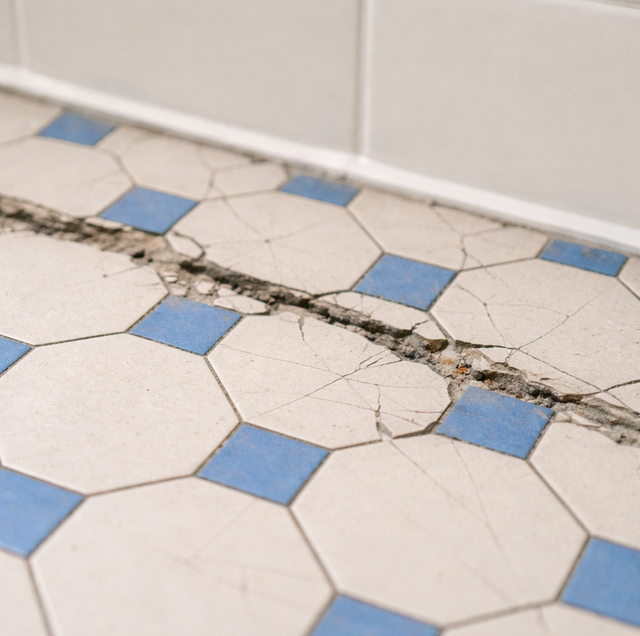
Quick Answer: Hairline cracks in grout are normal wear — a regrout usually fixes them. Grout crumbling out in chunks, especially near a tub or shower, means water softened the setting bed underneath and needs a closer look.
Grout is a rigid, porous material troweled into a joint that never actually stops moving. That's the whole story behind almost every cracked grout line in a tile job: the tile, the wall or floor behind it, and the framing or slab underneath all expand, contract, and settle by fractions of an inch with every temperature swing and every year the house ages. Grout has almost no give to absorb that movement. Ask it to hold still through years of it, and eventually it cracks.
That single fact splits into two different problems, and telling them apart matters. A grout line that develops a hairline crack here and there, especially in an older bathroom or a well-used kitchen floor, is closer to a maintenance item: normal, expected, and usually a simple regrout. Grout that's crumbling out in visible chunks, especially near a tub, shower pan, or sink, is a different animal. Chunks don't fall out of grout on their own; something is usually working on it from behind, and in a wet area that something is almost always water.
Grout Is Rigid; Almost Nothing Around It Is
Cementitious grout, the sanded or unsanded cement-based type in most tile jobs, cures into a hard, stone-like joint with essentially zero flexibility. Epoxy grout, a resin-based alternative some installers use in wet areas for its stain resistance, cures rigid too, just with a different chemical makeup and, in general, less porosity than cement-based grout. Neither type is built to flex.
Everything around that joint moves anyway. Tile and the substrate under it expand and contract at slightly different rates as temperatures shift through the day and across the year, a wood subfloor gains and loses moisture with the seasons, and a house keeps settling on its foundation for years after it's built. Older homes, with decades of settling and repair history already behind them, have usually done most of that shifting but rarely all of it. A grout joint only has to be asked to stretch or compress a hundredth of an inch more than it can tolerate, over and over, before a crack shows up.
Transitions Need a Flexible Joint, Not More Grout
Grout cracks fastest where two different surfaces meet: where tile turns a corner onto another wall, where a tiled wall meets the tub or shower pan below it, and where a tiled floor meets a doorway threshold or a different material. Those transition points move independently of each other, sometimes more than the field of tile does, so standard tile installation practice calls for a flexible caulk joint there instead of grout. Caulk, typically a silicone or siliconized acrylic sealant rated for wet areas, compresses and stretches with that movement; grout can't.
A shower is the clearest example: wall tile and the tub or shower pan settle independently, so that joint needs to flex constantly. If it was grouted straight through instead of caulked during the original install, or a proper caulk joint later failed and got regrouted over as a quick patch, it's set up to crack again almost immediately. Large tiled expanses need the same treatment internally: a flexible joint worked into the field of tile itself every so many feet, and anywhere the tile crosses an expansion joint already built into the slab or subfloor. A crack that keeps reopening in the same spot after more than one regrout usually points to a missing movement joint underneath, not grout that needs replacing again.
Cracking vs. Crumbling: Two Different Failure Modes
| What You're Seeing | Likely Cause | What It Means |
|---|---|---|
| A few thin, hairline cracks scattered across older grout lines | Normal expansion/contraction over years, or surface wear from foot traffic | Routine maintenance; regrout is usually enough |
| A crack running the same line every time it's patched | Missing or undersized movement joint underneath | Needs a proper flexible joint, not another regrout |
| Grout crumbling out in a corner or along a tub/shower edge | A missing or failed caulk joint at that transition | Repair the transition, not just the grout |
| Grout crumbling and the tile nearby sounds hollow when tapped | Water has softened the setting bed, and the tile has debonded | Bigger repair; the substrate likely needs to come out |
| Grout feels soft or comes out in a wet paste rather than hard chunks | Ongoing water intrusion, often behind the wall | Active leak; needs prompt attention before it spreads |
When Grout Crumbles, Look at What's Underneath
Cracked grout that's just cracked is largely a cosmetic and maintenance issue. Crumbling grout is a different conversation, because grout doesn't disintegrate on its own; something is usually breaking it down from behind. In a shower or around a tub, that something is almost always water that found a way past a cracked or missing joint and never fully dried out. Once water reaches the mortar bed or backer board underneath the tile, it starts softening the bond between the tile and the substrate, and grout sitting on top of a debonding tile has nothing solid left to hold onto. It crumbles because the structure underneath it is failing, not because the grout itself was defective.
The tells worth checking for: tile that sounds hollow or dull rather than solid when tapped, grout that feels soft or damp rather than hard, discoloration or a musty smell near the joint, or tile that shifts slightly underfoot. Any of those point to water intrusion rather than ordinary cracking, and that's a job for a proper evaluation rather than a fresh tube of grout. That's exactly the situation Shower Tile Repair is built to handle: pulling the affected tile, checking how far the moisture damage extends into the setting bed or wall assembly, and rebuilding from a sound substrate outward instead of resurfacing over a problem that's still active underneath. In a bathroom where the damage has spread past a single wall or floor section, that evaluation sometimes points toward a broader Bathroom Remodeling scope instead of a spot repair.
Years of Foot Traffic Wear Grout Down With No Leak Involved
Not every crumbling grout line traces back to water. Grout is a relatively soft, porous material compared to the tile around it, and years of foot traffic, especially on an entryway or kitchen floor, gradually abrade the surface the way grit tracked in on shoes acts almost like sandpaper underfoot. Over a decade or two, that slow wear can leave grout lines looking pitted, thinned, or lightly crumbled at the surface even where there's no moisture problem at all. This wear tends to be shallow and spread across a whole floor rather than concentrated in one wet corner, and it's a normal aging pattern, not a sign of a hidden leak. It still calls for a regrout to keep the joints sealed against staining and future water absorption, just not the deeper look a wet-area crumble deserves.
A hairline crack or two in older grout is routine and worth a regrout once it starts looking dated or letting water soak in. Grout crumbling near a tub, shower pan, or sink deserves a closer look before anyone packs fresh grout into the gap, because fresh grout over a softened setting bed buys a few months at best before the same spot fails again.
Frequently Asked Questions
Not effectively. Old grout needs to be ground out to roughly two-thirds of the joint's depth first, because a thin skim coat over old material doesn't bond well and typically cracks again within a season. A grout saw or oscillating tool with a grout-removal blade clears the joint without chipping the tile edges.
Not always. Grout mixed with too much water during the original installation cures weaker and more porous than it should, and that kind of grout can crumble from the start even in a dry area, since it never reached its intended strength. Worth ruling out if the crumbling shows up somewhere never exposed to moisture, like a kitchen backsplash away from the sink.
No, and this is a common misconception. Grout sealer fills the pores in cementitious grout to resist staining and slow water absorption, but it doesn't add flexibility, so it does nothing to prevent movement-related cracking. Sealing is still worth doing on a regular basis in wet areas, just for a different reason: it buys time before absorbed moisture can reach the substrate through a crack that does eventually form.
A shower joint cycles through a wider swing of conditions than most other tiled surfaces: hot water followed by cool air, repeated soaking and drying, and steam that raises humidity, all within the span of one shower. That cycling happens year-round with every use, not just in one season, and it puts more repeated stress on the joint than a floor that mostly just sees foot traffic.
No. Caulk doesn't bond well over grout and tends to look uneven once it's smeared across a textured surface it wasn't designed to sit on, and it does nothing to address whatever caused the grout to crumble, whether that's a failed transition joint or water intrusion behind the tile. Patching over the symptom this way usually just delays the same crumbling by a few months.
There's no fixed lifespan since it depends on how the original joints were built and how much moisture or traffic the tile sees, but grout in a shower with correctly placed caulk joints tends to hold up for many years before it needs more than routine sealing. Epoxy grout stretches that interval further than standard cementitious grout because its resin base resists water absorption and staining, so a shower grouted in epoxy typically goes longer between reseals, though it costs more and is harder to work with during installation. A properly built movement joint at a curb or threshold sits slightly recessed from the surrounding grout line and has a smooth, slightly springy caulk bead rather than a hard, flush seam; if you press a fingernail into it and it gives instead of feeling like stone, that's a real flexible joint doing its job.
Schedule a grout and tile inspection — a technician can check whether cracked or crumbling grout is a simple regrout or a sign of water damage behind the tile. Precision Home Worx serves Wilmington, Bear, and Newark. Call (302) 500-3676.


