
Why Your Toilet Keeps Running (and the Fix That Lasts)
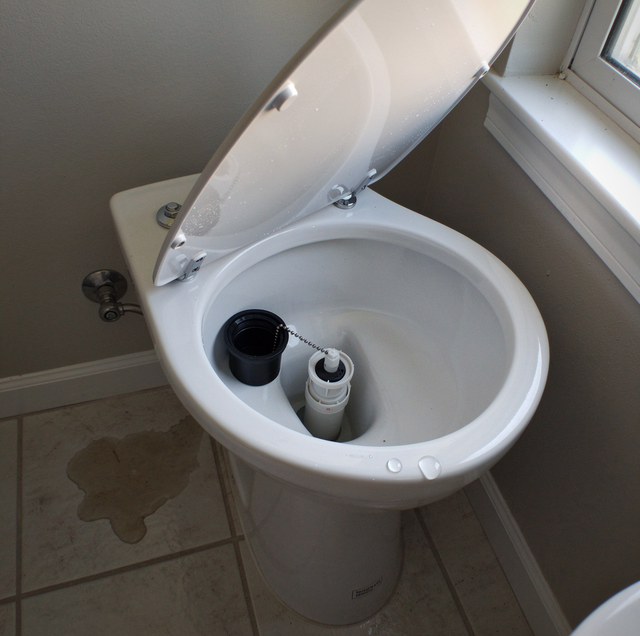
You hear it around midnight: a faint hiss that never quite stops, then a gulp of water refilling the tank every few minutes even though nobody has touched the handle since dinner. By morning it sounds like the toilet is talking to itself. That sound is the tank trying to hold a water level it can't hold, and the reason is almost always mechanical, not mysterious.
What's Actually Happening Inside the Tank
A toilet tank is a simple hydraulic system with three moving parts: the flush valve and flapper at the bottom, the fill valve (sometimes called a ballcock) on the side, and the float that tells the fill valve when to shut off. When you flush, the flapper lifts off the flush valve seat, water drops into the bowl, and the flapper is supposed to drop back down and seal once the tank empties. If that seal isn't perfect, water keeps trickling from the tank into the bowl, the water level drops below where the float wants it, and the fill valve keeps opening to compensate. You get a toilet that refills every few minutes because it thinks it's still low, even though the real problem is a slow leak past the seal.
The flush valve seat, the ring the flapper rests on, is usually plastic or brass. Over years of chlorinated water passing over it, that surface can pit, warp slightly, or collect a thin film of mineral scale that keeps the flapper from sitting flat. A flapper can look perfectly fine and still fail to seal because the seat underneath it isn't flat anymore.
Step One: Check the Flapper and Flush Valve Seat
Drop a few drops of food coloring into the tank water and wait ten minutes without flushing. If color appears in the bowl, water is passing through the flapper seal. Lift the tank lid and look at the flapper itself: rubber flappers soften, become gummy, or slightly swell after four to six years of constant water contact, and that softness is exactly what keeps them from sealing tightly. Run a finger around the seat's rim while the tank is empty. Grit, a hairline crack, or a spot that feels rough instead of smooth is enough to keep a brand-new flapper from sealing.
A flapper that has come loose from its mounting ears or that lets the chain catch underneath it on the way down will also stay propped open just enough to leak. Check that the chain has about half an inch of slack, not the flapper lying open across the seat.
Step Two: Look at the Fill Valve and Water Level
If the flapper seals fine but the toilet still runs intermittently, the fill valve itself may not be shutting off completely. Fill valves use a rubber-seated plunger or diaphragm that wears the same way the flapper does. A worn fill valve washer lets a thin stream continue even after the float says "stop," and that water goes straight down the overflow tube in the middle of the tank rather than into the bowl, so it's easy to miss unless you watch the water level for a full cycle.
The float should sit about an inch below the top of the overflow tube when full. A float set too high keeps the fill valve slightly open and causes water to trickle down the overflow tube constantly, which sounds identical to a flapper leak but has nothing to do with the flapper.
Step Three: Follow the Chain and Overflow Tube
The overflow tube is the tank's safety valve: if water rises above it, it drains straight into the bowl rather than onto the floor. A running toilet that's actually overflow-tube water usually means the fill valve float arm needs a slight bend downward, or the float itself has taken on water and lost buoyancy, sitting lower than it should and letting the valve stay cracked open indefinitely.
Trace the chain from the flush handle arm down to the flapper. A chain that's too long bunches under the flapper edge; one that's too short holds the flapper slightly open after every flush. Either mistake produces the exact same midnight hiss as a bad flapper, which is why homeowners often replace a perfectly good flapper twice before finding the real cause.
When a Running Toilet Points to a Bigger Problem
Most running toilets stop with a new flapper, a cleaned or replaced seat, or a fill valve swap, and any of those is well within reach for a patient homeowner with an adjustable wrench and twenty minutes. But a few signs mean it's time to call in a trade rather than keep swapping parts:
- The flush valve seat itself is cracked, warped, or corroded through, not just dirty (a new flapper will never seal against a damaged seat).
- The tank rocks or the bolts connecting the tank to the bowl are rusted solid, since forcing those loose without the right approach can crack porcelain that's decades old.
- Water shows up at the base of the toilet on the floor, which points to the wax ring seal below the bowl rather than anything inside the tank.
- The toilet runs even with the water supply valve closed, which means the leak is between the supply line and the fill valve inlet, not the flapper at all.
- You've replaced the flapper and fill valve, and it still runs, which usually means the tank itself has a hairline crack feeding water somewhere it shouldn't.
Older homes with toilets original to a 1970s or 1980s bathroom remodel often have flush valve seats made from a softer plastic than what's manufactured today. That older plastic pits faster, which is why a "simple flapper swap" on a decades-old toilet sometimes needs a full flush valve assembly instead.
Why Ignoring It Costs More Than the Part
A toilet that runs continuously can waste several hundred gallons of water in a single day, since the fill valve is essentially topping off the tank around the clock instead of once per flush. That's water through the meter with nothing to show for it, and on a well system it's also extra wear on the pressure tank and pump cycling far more often than normal use requires. There's also a quieter cost: a flapper that's failing slowly puts continuous strain on the fill valve, so a five-dollar rubber part left unaddressed can take the more expensive valve down with it.
Frequently Asked Questions
Not always. Some toilets, especially many two-piece models made in the last fifteen to twenty years, use a canister-style flush valve instead of a traditional flapper: a cylindrical seal that lifts straight up rather than hinging open, and that wears out from a cracked or warped seal ring rather than a flapper turning soft. Lift the tank lid before buying a replacement part; if there's a canister instead of a flat rubber flapper, the part and how it fails are different from what's described above.
Yes. Mineral scale builds up unevenly on the flush valve seat and on fill valve washers, creating a rough surface that a new flapper can't seal against even when the flapper itself is fine. Wiping the seat clean with a mild abrasive pad before installing a new flapper solves problems a flapper swap alone won't.
Most fill valves last eight to twelve years before the internal seal wears enough to cause a slow leak, though homes on well water with more sediment often see that shorten to five or six years.
It can be, if the running is paired with gurgling from other drains in the house when the toilet flushes. That combination points to a partially blocked vent stack rather than anything inside the tank, and it's worth mentioning to a plumber if you notice both together.
Yes, temporarily. Turning the oval or round shutoff valve clockwise shuts off the water supply entirely and is the safest move if you're leaving the house before a repair, since a stuck-open fill valve can run continuously for days.
Not directly, since running water drains through the bowl and never touches the floor. But a running toilet often gets ignored for months because it isn't dramatic, and by the time water actually shows up at the base, usually from that separate wax ring failing, the subfloor underneath can already be soft enough that the toilet has to be lifted and a section of flooring opened up rather than just the wax ring swapped. That's one more reason to fix a running toilet sooner rather than let it become background noise in the house.
Most running toilets are a twenty-minute fix once you know which of the three parts is actually failing, and figuring that out with food coloring and a look inside the tank beats guessing and replacing parts one at a time. When the seat is cracked, the tank is loose, or water's reached the floor, that's the point to stop troubleshooting and bring in someone who repairs this daily.
Schedule a plumbing repair — get a running toilet, worn fill valve, or leaking base fixed right the first time. Precision Home Worx serves Wilmington, Bear, and Newark. Call (302) 500-3676.


