

Hardwood Floor Repair in Wilmington, DE
- Boards Laced In to Match
- Squeaks and Loose Boards
- Solid and Engineered Wood
Stains, squeaks, and gaps are all seen in person first.
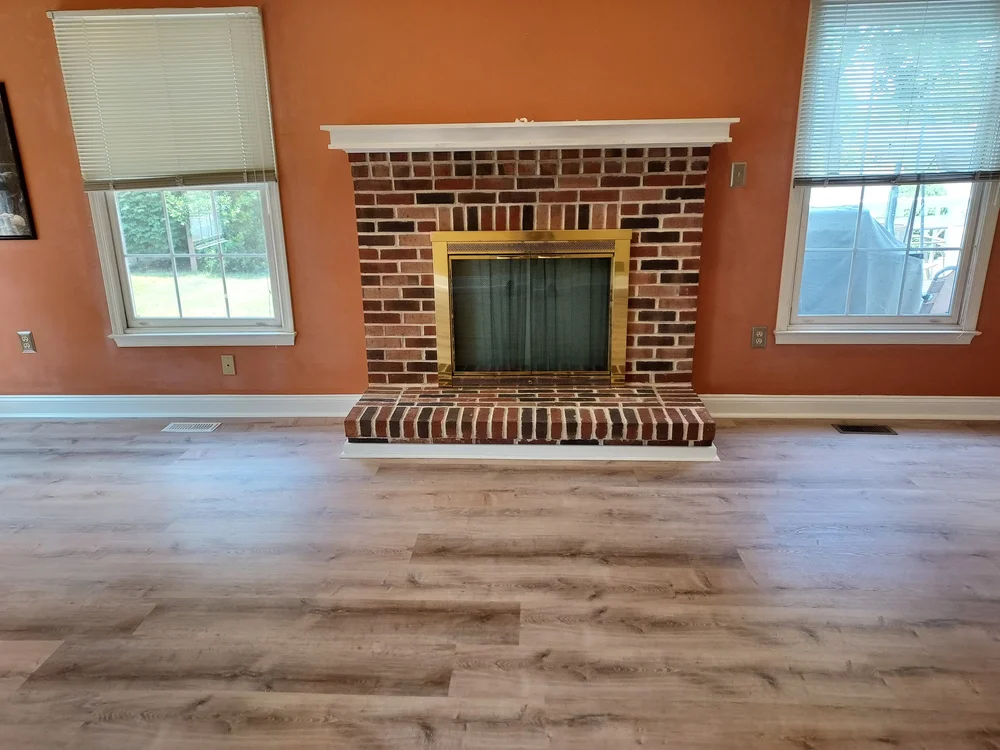
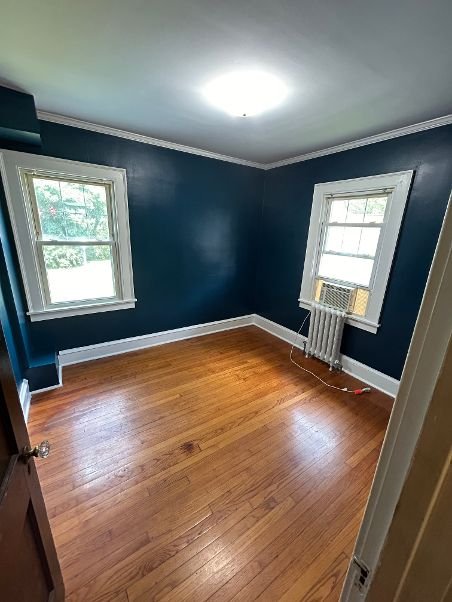
Hundreds of boards, locked together by their tongues and grooves, make up a wood floor, so damage in one spot does not mean the whole floor has failed. A dark stain by the back door, a gouge from a dropped pan or a patch of plywood where an old wall once stood can be cut out and rebuilt with new boards fitted into the old ones.
The floor around the damage stays down. The job is the repair itself: the right boards, fitted so the seams run like the rest of the floor. Sanding and refinishing an entire floor is not part of our work.
A Carpenter's Trade, Under Your Feet
Staggered seams
New boards end at different points, the way the original floor was laid.
Sound boards stay
Only the damaged boards come out; the rest of the original floor is kept.
Squeaks traced to their cause
A loose board or a gap at the joist is fixed where it starts.
Both kinds of wood floor
Solid and engineered floors are each repaired with boards of their own construction.
What Goes Wrong in One Part of a Wood Floor
Hardwood damage comes in three broad shapes. Each one calls for a different repair, and none of them calls for tearing out the whole room.
Boards that are stained, split or worn through
Water left standing by a leaky dishwasher or a plant pot, pet stains, burns and deep gouges ruin the boards they sit on. Dark stains in oak can run deep into the wood, so sanding the surface does not reach them. The fix is to cut out the damaged boards and replace them. A board is removed by cutting down its middle and splitting it out, so the tongues and grooves of its neighbors are not broken in the process.
Squeaks, bounce and boards that move underfoot
A squeak is wood rubbing against wood or a nail sliding in its hole. Boards work loose from the subfloor, or the subfloor lifts off a joist, leaving a small gap that closes with every step. Where the floor can be reached from a basement, the gap can be closed from below without touching the finished surface. Where it can't, the loose boards are fastened from above into the framing, and the fastener heads are set below the surface and filled. A soft spot that gives underfoot is a subfloor problem, and the subfloor gets repaired before boards go back over it.
Holes and patches from walls, radiators and registers
Where a wall came down, a radiator was removed, or a heating register was moved, the floor can be left with a gap, a pipe hole, or a square of plywood covered with a rug. Those spots are filled with full-length boards woven into the floor around them, so the repair reads as part of the floor rather than a box set into it.
Species, width and thickness
A repair only disappears when the new boards match on three counts. Species comes first. Red oak has a pinkish cast and open pores, while white oak is browner with tighter pores, so the two look different side by side even with the same finish. Width is next: a board a quarter inch off breaks the rhythm of the rows. Thickness matters because a board that sits a hair high or low catches the light and the foot. Original floors can come in widths and thicknesses that current stock does not match exactly. In that case, boards can sometimes be borrowed from inside a closet, where the wood has aged the same way as the rest of the floor, and the closet gets the new boards instead.
Lacing is what hides the seams. Original floors were laid with the end joints scattered across the room, so the old boards are cut back to different lengths and the new boards are laced in to overlap them. To get the last board into place, the bottom lip of its groove is trimmed off so it can drop in, and it is glued and face-nailed with the nail heads set and filled.
Oak under the carpet in Wilmington, strip floors in 1990s houses
When the carpet comes up in a Wilmington row home, there may be original oak underneath. A floor that spent decades under carpet carries the marks of it: a line of nail holes from the tack strip around the walls, pad staples, and stains that soaked through the carpet into the wood. The old boards were cut and milled to the sizes of their day, and the wood has darkened with age, so matching them is the slow part of the job. Narrow oak strips are the other floor we find, in Hockessin houses from the 1990s, either sanded and finished in place or bought with a factory finish already on. A site-finished strip floor can take new strips sanded flush, with the finish discussed in the estimate. A prefinished floor needs replacement boards from the same product line because the color, the sheen, and the small bevel at each board edge all have to line up, and a discontinued line narrows the choice.
A new floor in another room is a flooring installation.
flooring installationLacing New Boards Into an Old Floor
The spot on the floor
Say what's wrong with the floor and whether there's a basement under the room. A phone call or a text to (302) 321-3577 reaches Jimmy, who sets up an evening visit.
The floor is looked at in person
At an evening estimate, the species, board width, thickness, and finish are identified. The repair is priced at the day rate, based on how long it is expected to take.
Matching boards are found
Replacement boards are sourced to match the floor's species, width and thickness.
Cut out and laced in
The damaged boards are split out, the edges are cut back to staggered lengths, and the new boards are laced in, fastened, and filled.
Finish on the new boards
Whether the new boards are finished on site, and how close to the old color and sheen they can come, are options Jimmy goes over with you; the wood itself determines how close it gets.
What Gets Fixed When a Floor Is Repaired
| Part of the floor | In a repair | Worth knowing |
|---|---|---|
| Damaged boards | Cut out and replaced | Neighboring tongues and grooves kept intact |
| New boards | Matched for species, width and thickness | Closet boards borrowed where needed |
| Seams | Laced in with staggered end joints | No straight cut line across the floor |
| Squeaks and loose boards | Fastened at the cause | From below where a basement allows |
| Soft subfloor under the boards | Repaired before boards go back | Seen once the boards are up |
| Holes from old walls, radiators or registers | Filled with woven-in boards | Plywood patches looked at in person |
| Finish on the new boards | An option settled at the estimate | Prefinished floors need the same product line |
| Drying a wet floor or removing mold | Not included | Done by others before we repair |
We don't sand and refinish whole floors. Drying out a wet floor and mold removal happen before we start, and are done by others.
Hardwood and Squeak Repairs at a Day Rate
- Work
Hardwood floor repair
Rate$800 per day - Work
Squeaky floor and subfloor repair
Rate$800 per day
The number of days turns on how much floor is damaged. Replacing a few stained boards by a doorway is a shorter job than filling the long gap a wall left when it was removed from a room. Matching matters too. Boards that are easy to source go in faster than an old width that is hard to find, and a prefinished floor depends on finding the same product. The estimate sets out the days the repair should take.
Jimmy prices every project in person at your home, never from a photo or a text. Project estimates are free and are usually scheduled in the evening.
Our warranty
Our work carries a one-year workmanship warranty, dated from the day the job is finished.
A Wilmington-Area Reviewer on a Clean House Every Day
On time, careful work and a clean home each day
Lauren Crissman, Google review, February 2026
“They show up on time, do careful, high-quality work, and always make sure our home is left clean at the end of each day, even on multi-day projects.”
More reviews from our customers, straight from Google.
Gaps, Cupping and Other Floor Puzzles
Wood gives up moisture when the heat is running and the air is dry, so each board shrinks slightly across its width. Come the humid months, the boards swell and the gaps close again. That movement is normal for solid wood and is not damage. Putty pressed into those seasonal gaps can crack out when the boards move back.
Cupping means the bottom of the boards took on more water than the top, so the edges rise above the middle. Once the leak is fixed and the floor and subfloor have dried, boards can settle back toward flat. Boards that stay cupped, split, or stained after drying are the ones that get replaced.
Yes. Solid wood brought in from a warehouse holds a different amount of moisture than the floor it is joining. Left in the house for a while first, the new boards move toward the moisture level of the old ones, so they are less likely to shrink and open a gap once they are fastened down.
Yes. Engineered flooring is a thin layer of real hardwood on a plywood-style core, so the replacement has to be the same product with the same thickness and wear layer. Glued and nailed engineered floors are repaired board by board. A click-together floating floor can be taken apart from the nearest wall to reach a damaged board, or the board can be cut out and a new one glued in place.
Stain soaks into new wood differently than into wood that has been finished and worn for years, so the color builds up on the new boards until it matches the old. Expect the repair to read a little fresher at first. Oak keeps changing color in response to light over time, and the new boards move toward the old ones.
Pulling Up Old Carpet This Year?
A stained, patched, or squeaking section of oak is simplest to repair while the room is empty, so set up the visit before the rugs and furniture go back in.
Precision Home Worx · Based in Claymont, DE · (302) 321-3577 (call or text) · Monday through Sunday, 7 a.m. to 8 p.m.
Delaware business license #223872998 · General liability insurance and RLI surety bond #LMS1971327
Serving Wilmington, Claymont, North Wilmington, Hockessin, Pike Creek, Greenville, Newark, New Castle, Bear and the rest of northern Delaware.
Related services
The main service
Flooring installation and repairWhere we work
Other carpentry repairs
Where we repair hardwood floors
Hardwood floors repaired in Wilmington, Elsmere, Newport, New Castle, Claymont, Pike Creek, Newark and Bear.

