

Polybutylene Pipe Replacement in Wilmington, DE
- Gray Poly Supply Lines Traced
- Replaced in Copper
- Access Openings Patched
Pricing a repipe costs you nothing.
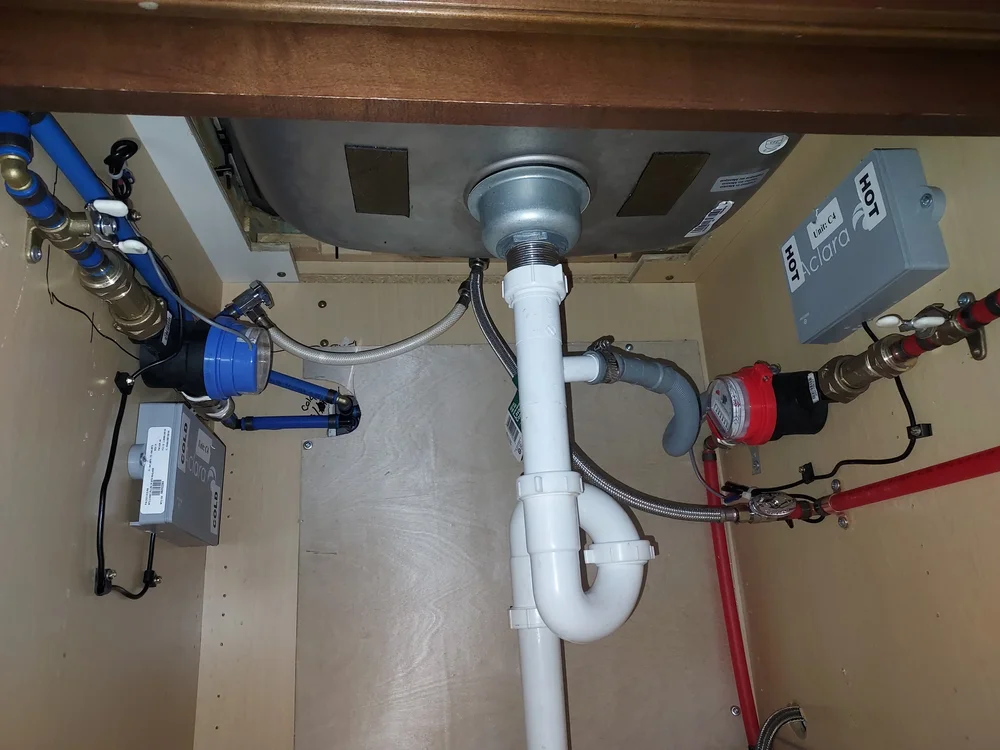
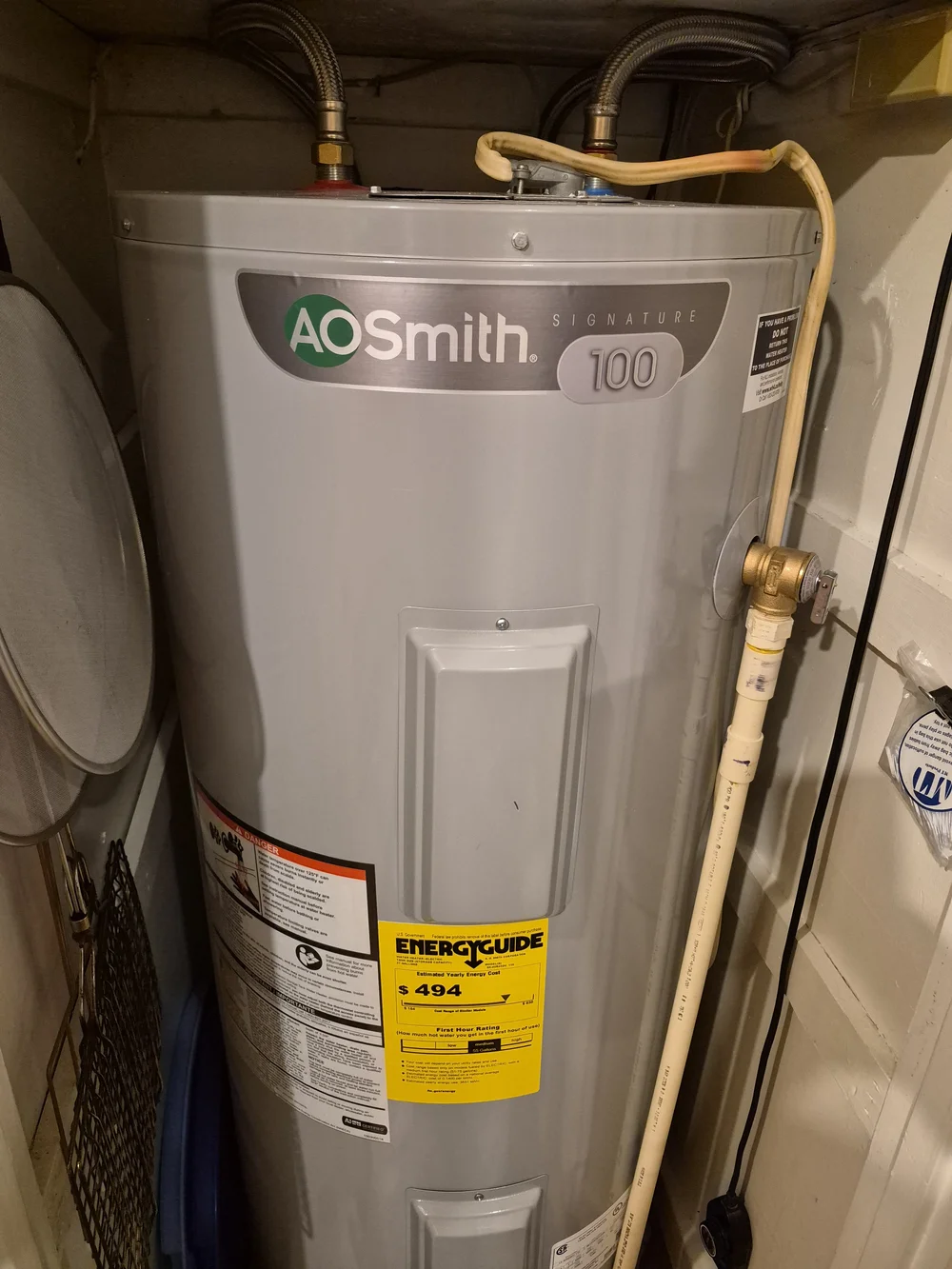
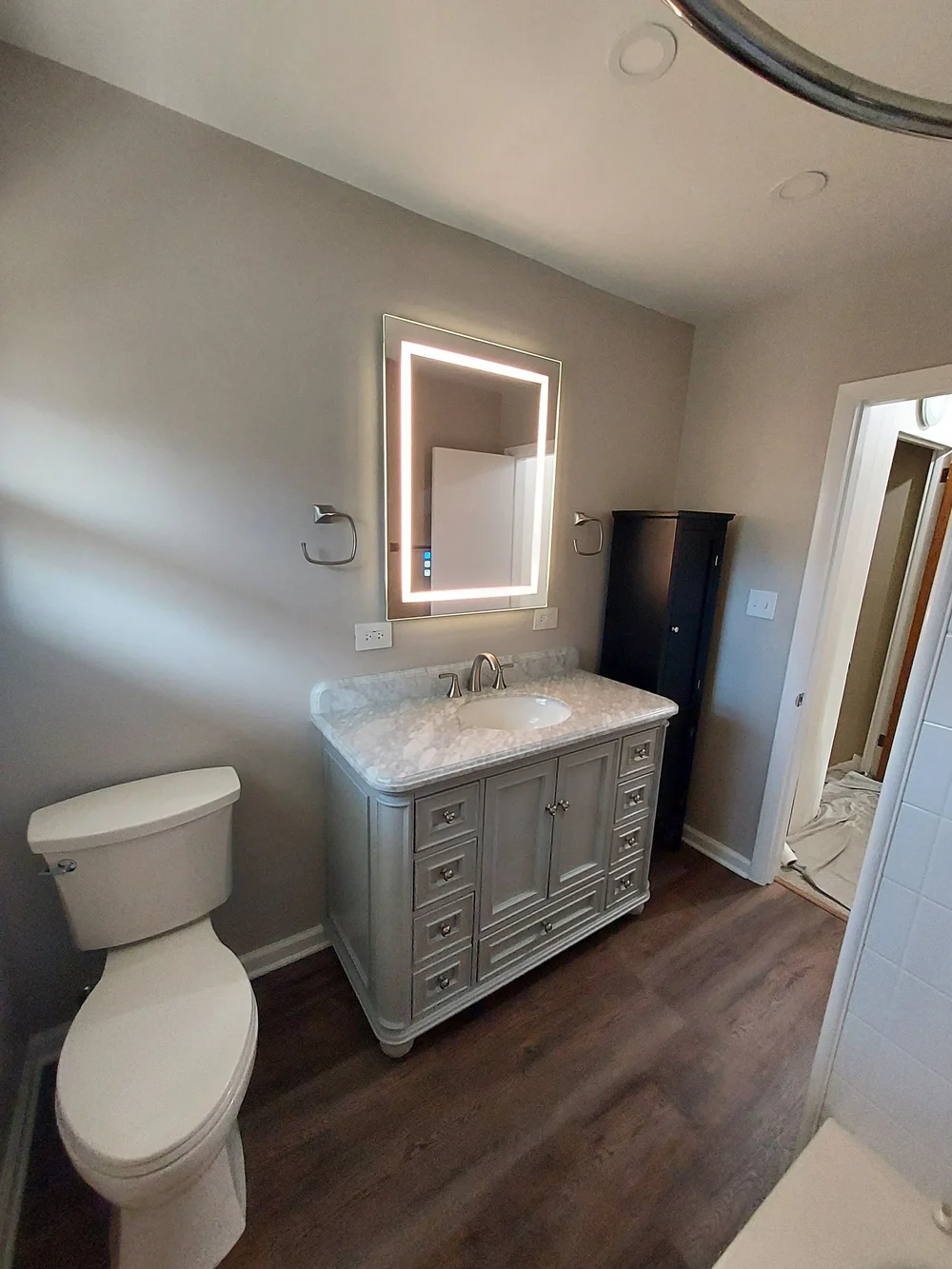
Polybutylene is a flexible gray plastic water supply pipe, joined with crimped metal rings, that was used in houses for a stretch of years before builders stopped using it. The chlorine used to treat drinking water attacks the plastic and its fittings from the inside. The pipe turns brittle with little to show on the outside until a joint lets go under full water pressure.
The plumbing on a repipe is Jimmy Grubb's own work. He finds where the poly runs in your house, replaces it with copper, and patches the openings we made to reach it.
Insured and Bonded for Work Inside Your Walls
A failed fitting gets priority
Active water leaks are the one call we try to reach the same or next day.
Openings planned with you
You see which walls and ceilings will be opened before any are.
Valves at the fixtures
Shut-offs are replaced where needed as the copper reaches them.
How Much Polybutylene Is in the House, and Where
A polybutylene system appears only in a few places: where the main line enters the house, at the water heater, and at the shut-off valves under sinks and behind toilets. Everything between those points runs through the basement ceiling, walls, and floors. The job grows with how much of that is closed in.
A short run at a fixture or the water heater
Sometimes the poly you can see is the poly that needs to go: a few feet at the water heater, or the lines feeding one bathroom. That section is cut out and replaced in copper. Whether the rest can stay and how the new copper joins it are gone over in the estimate. A partial replacement fixes the part that worried you, while the rest of the system stays as it was.
Open runs across an unfinished basement
Where a house has a basement, the main supply lines run along its ceiling, between or under the floor joists, and branch off up into the walls. In an unfinished basement, those runs can be reached without opening anything. The old pipe comes down, the copper goes up on hangers along the same path, and each branch is connected where it turns up into the floor above.
Branch lines behind finished walls and ceilings
The lines that rise to a bathroom or cross under a kitchen run inside finished walls and ceilings. Each turn in a copper run needs a fitting, and each fitting needs a hand on it, so access openings go where the pipe changes direction: behind a fixture, at the top or bottom of a wall or along a ceiling. Those openings are cut to the size the work needs.
drywall and plaster repairWe don't paint walls, ceilings, or trim. The patches are finished, so a painter can take it from there.
Gray pipe, crimp rings and the PB2110 print
At the estimate, Jimmy checks the basement, the water heater connections, and any fixture supply lines he can reach. The signs are gray plastic pipe, sometimes blue, with crimped copper or aluminum rings at the joints and the code PB2110 printed along the pipe. Color alone does not prove it, because the flexible plastic pipe used today comes in several colors too, so the printing and the fittings settle it. A short piece of copper coming out of the wall at a valve does not rule poly out either: some poly systems used copper stubs at the fixtures, with the plastic behind the wall. Blue poly was also used for the buried line from the street, so Jimmy looks at the pipe where it comes through the foundation.
Subdivision houses from the poly years, and their finished basements
Polybutylene shows up in houses built or replumbed during the years it was sold, which puts some subdivision homes across Bear, Hockessin, and Newark on the list. In those houses, the basement is where the main runs, and a finished basement changes the access. Under a drop ceiling, the tiles lift out, and the pipe is right there. Under a drywall ceiling, the run is reached through openings along its path.
Tracing the Poly and Running New Copper
Reach Jimmy with where you saw it
Phone or text Jimmy at (302) 321-3577, or reach him through the form, to let him know where the gray pipe showed up and whether your basement is finished.
Following the pipe
Jimmy traces the poly from where the main comes in, past the water heater and on to each fixture he can reach, and notes where it disappears into a wall or a finished ceiling.
Settling the scope
You and Jimmy agree on which runs come out and where the access openings will go, so you know which walls and ceilings will be opened before work starts.
Water off, copper in
The water is shut off at the main, the old pipe is cut out, and the new copper is run and joined, with shut-off valves at the fixtures replaced where needed.
Joints under pressure, openings closed
The water goes back on, and the new joints are checked under pressure while they can still be seen. Only then are the openings closed.
What a Polybutylene Replacement Covers
| Item | In a polybutylene replacement | Notes |
|---|---|---|
| Finding the poly | Traced at the estimate | Basement, water heater, fixture supply lines |
| Polybutylene supply pipe | Cut out and replaced in copper | Soldered or ProPress |
| Joints to poly that stays | Gone over at the estimate | Partial replacements only |
| Water heater connections | Replaced where poly connects | Checked at the estimate |
| Fixture shut-off valves | Replaced where needed | Under sinks and behind toilets |
| Drop-ceiling tiles | Lifted out and set back | No patching needed |
| Openings in drywall or plaster | Patched by us | Closed once the copper is tested |
| Painting the patches | Not included | Left for your painter |
If a failed poly fitting has already soaked a wall or ceiling, drying it out and any mold cleanup are done by others before the new copper goes in.
Already bought the fixture or the material? We can usually install it, as long as it suits the job. On customer-supplied materials, our warranty covers the labor only.
Poly Supply Line Replacement Pricing
- Work
Polybutylene pipe replacement
Range$500 to $2,500
This price follows what sits behind your finished surfaces. Poly along an open basement ceiling comes down and goes back up as copper with nothing to close. Poly inside a bathroom wall or above a drywall ceiling needs an opening at each turn. The range covers replacing runs and sections; a whole-house repipe is priced separately. How much of the line is hidden shows up only once it has been traced.
Jimmy prices every project in person at your home, never from a photo or a text. Project estimates are free and are usually scheduled in the evening.
Our warranty
Our work carries a one-year workmanship warranty, dated from the day the job is finished.
What Customers Around Wilmington Tell Google
More reviews from our customers, straight from Google.
If Polybutylene Turns Up in Your House
The damage happens inside the pipe and the fittings, so a dry system tells you little about how close a joint is to failing. When one fails, water runs at full pressure until someone shuts off the main. Replacing it on your schedule means planned openings and a dry house.
No. The water is off at the main while the old pipe is cut out and the new copper is joined, and it comes back on for the pressure check. On a larger job that can mean stretches of the day without water, so fill a few jugs before work starts.
Anything against the walls and ceilings marked for openings: furniture pulled a few feet out, pictures taken down, and boxes moved from under the basement runs, since the old pipe runs along that path.
Rigid pipe can knock when a fast-closing valve stops the water, if the pipe has room to move. That is why copper is held on hangers along its run. If a knock shows up later, tell Jimmy where you hear it.
Find it now. It sits where the water line enters the house, in the basement or utility area, close to the water meter if the meter is inside. A lever handle turns a quarter turn to close. A round wheel handle turns clockwise until it stops. Make sure everyone in the house knows where it is.
Gray Pipe at the Water Heater?
Found gray pipe? Ask for an estimate, and the look at your plumbing starts where you saw it and follows the pipe.
Precision Home Worx · Based in Claymont, DE · (302) 321-3577 (call or text) · Monday through Sunday, 7 a.m. to 8 p.m.
Delaware business license #223872998 · General liability insurance and RLI surety bond #LMS1971327
Serving Wilmington, Claymont, North Wilmington, Hockessin, Pike Creek, Greenville, Newark, New Castle, Bear and the rest of northern Delaware.
Related services
The main service
Plumbing and water heatersWhere we work
Closing up after
Where we replace polybutylene
Polybutylene replaced in Wilmington, Bear, Hockessin, Pike Creek, Newark, Stanton, New Castle and Claymont.

